The Man Outside the Midtown Hotel: A Trial That Feels Bigger Than a Crime
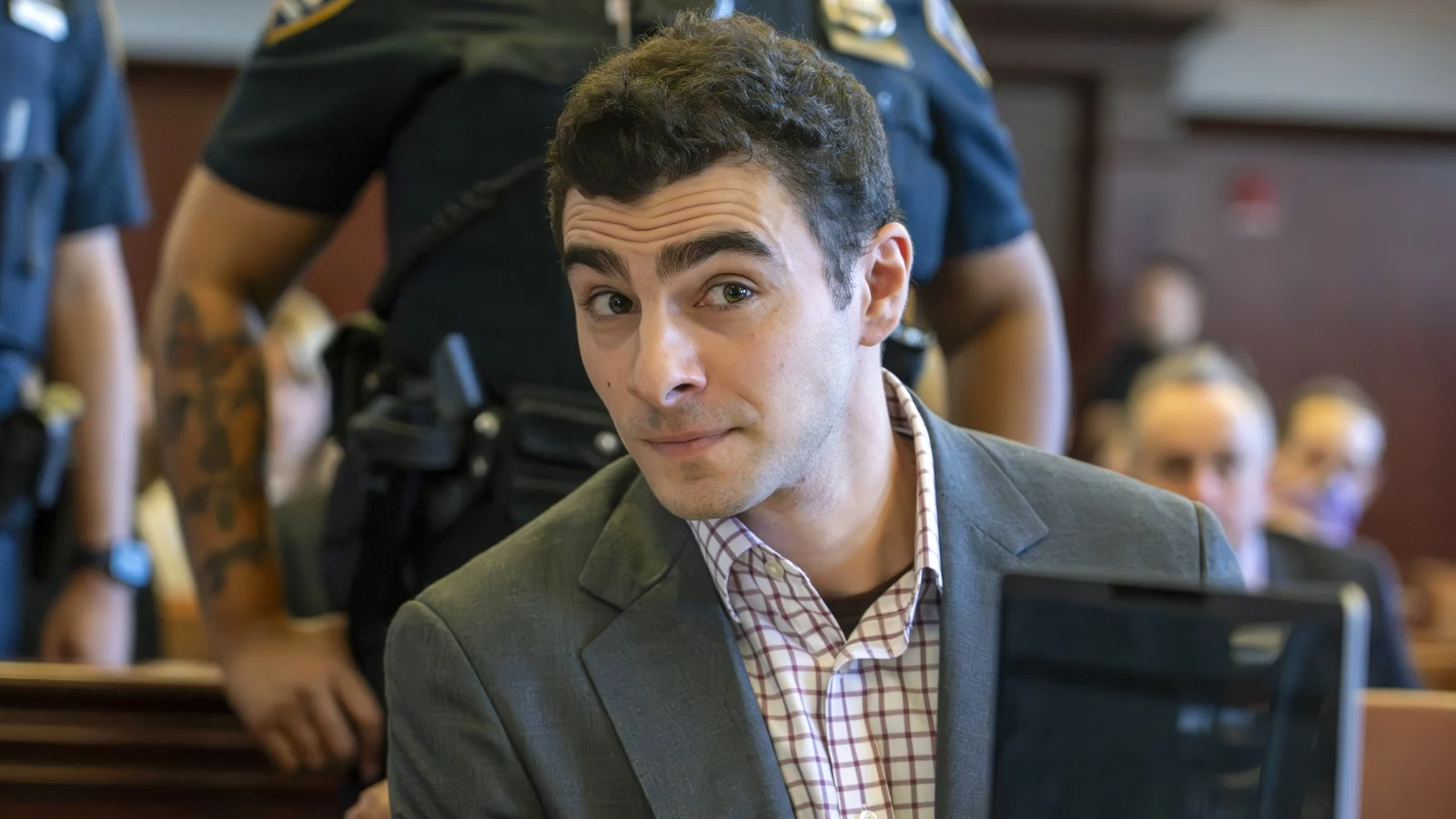
On a crisp Manhattan morning, the courthouse at 100 Centre Street hummed like the city itself — part rumor mill, part solemn temple of law. Under a bank of fluorescent lights and just beyond the metal detectors, Luigi Mangione, 27, sat at the defense table in a gray suit patterned with the kind of nondescript care that seems designed to disappear into a crowded room. He said nothing as officers unlatched his handcuffs and the day’s hearings began — hearings that may decide whether crucial pieces of evidence make it to a jury next year.
The charge that brought him here is stark and terrible: the fatal shooting of a UnitedHealthcare executive, Brian Thompson, on a Midtown sidewalk. Mangione was arrested in December 2024 at a McDonald’s in Pennsylvania, recognized from news photos, and accused of a crime that reverberated well beyond the narrow sidewalk where it occurred.
Not just a courtroom drama
This is not only a case about a single act of violence; it’s a flashpoint where anger about health care, the mechanics of policing, and the scope of criminal procedure collide. Outside the courthouse on the first day of hearings, a small crowd had gathered: one demonstrator in a Super Mario Bros. villain costume held a sign reading “When patients die, profits rise,” while a woman wearing a sash that said “Free Luigi” moved through the throng handing out pamphlets. What looked like a carnival tableau underscored something darker — a nation’s simmering frustration about access to care, skyrocketing premiums, and the personal toll of a system many feel is broken.
“People are desperate,” said Maria Gutierrez, a nurse from Queens who came to watch the proceedings. “They see people making billions while their neighbors choose between insulin and rent. It doesn’t excuse violence, but it helps you understand why someone might snap.”
What’s at stake in these hearings
In the next few days, before Judge Gregory Carro, lawyers will argue over the admissibility of what prosecutors say was found in Mangione’s backpack when he was arrested, and whether statements he made while in custody should be used at trial. The items in question — an allegedly 3D-printed firearm, a silencer, electronic devices and journal pages — are the prosecution’s narrative threads tying a suspect to a deed. The defense counters that the search violated Mangione’s rights and that any statements were taken without proper Miranda warnings.
“This is not about clever legal maneuvers; this is about constitutional guardrails,” said Daniel Rios, a defense attorney watching the courtroom. “If the police can circumvent these rules, every weak link in the system becomes a crack in the foundation.”
Arrest in a Pennsylvania McDonald’s
The arrest that followed the shooting reads like a piece of American folklore. Surveillance footage — played in court by a security camera technician — places Mangione inside a McDonald’s in Pennsylvania, eating and waiting, until someone in the restaurant recognized him from the news and alerted authorities. There is a cinematic logic to it: a man brought down not by detectives in a sting, but by the glare of coverage and the watchful eyes of strangers.
Yet even as a prosecutor prepares to stitch the evidence together, defense lawyers insist procedural defects tainted the whole tapestry. At stake in these pretrial hearings is whether the case proceeds with the prosecution’s strongest threads, or whether a jury will see a different picture altogether.
Charges and possible punishments
The scope of the legal jeopardy is substantial. If convicted of murder in the second degree — an intentional killing under New York law — Mangione could face life in prison. He also faces several weapon possession counts and a charge for possessing false identification. In a separate federal case, where prosecutors have signaled an intention to seek the death penalty, he has pleaded not guilty. Trial dates have not been set in either matter.
- Murder in the second degree — potential life sentence
- Multiple counts of criminal possession of a weapon
- Possession of false identification
- Separate federal case where the death penalty has been floated by prosecutors
When terror charges were ruled out
Not every arrow in the prosecutor’s quiver stuck. In September, Judge Carro dismissed two terrorism-related counts, finding insufficient evidence that Mangione intended to intimidate health insurance workers or influence government policy. That ruling narrowed the narrative: what remains is framed as a personal and criminal act rather than an explicitly political one.
“That decision reflected the law’s careful boundaries,” said Professor Leah Huang, a constitutional law scholar. “Terrorism counts carry an enormous label. Courts are right to demand clear proof that someone meant to send a political message, not merely to commit a violent act.”
The larger canvas: health care, anger, and a country’s fissures
To appreciate why the case generated headlines and, for some, martyrdom, you have to step back and see the larger American landscape. The United States spends more on health care than any other nation — roughly 18% of GDP in recent years — and per-person expenditures are far higher than in other wealthy democracies. Insurer power and the opaque calculus of premiums and denials have created a climate where frustration sometimes metastasizes into outrage.
“This is not simply about one man and one gun,” said Dr. Amina Farouk, a public health researcher. “It’s about a social contract that many feel is broken. When systems feel indifferent to suffering, some people look for catharsis in extreme ways.”
What a trial could reveal — and what it may not
Courtrooms are blunt instruments for truth: slow, meticulous, rhythmically procedural. They will parse the nuts and bolts of arrest procedure, forensic evidence, and chain-of-custody. They will not, however, settle the broader questions this case touches. They won’t fix a health care system where millions are underinsured, nor will they heal families bereft. What they will do is hold individuals accountable under the law.
As the hearings continue, you might ask yourself: what does justice look like in an era of structural grievance? Can the legal system address individual culpability while also illuminating systemic failure? And if a courtroom focuses our attention briefly on a broken system, who will carry forward the work of repair?
Outside the courthouse, a woman with a “Free Luigi” sash folds a pamphlet into a pocket. A man in a Mario-esque costume argues with a passerby about profits and lives. Inside, lawyers haggle over the admissibility of journal entries and a 3D-printed object. The city, as always, keeps moving — indifferent and intimate, brutal and brilliant.
What happens next will be measured in legal briefs and rulings; in the meantime, the case stands as a mirror. It reflects not just a sliver of criminal conduct but a broader national conversation about rage, responsibility, and the systems that shape both.