When Diplomacy Frays: A Secretary-General’s Stark Warning from the Rubble
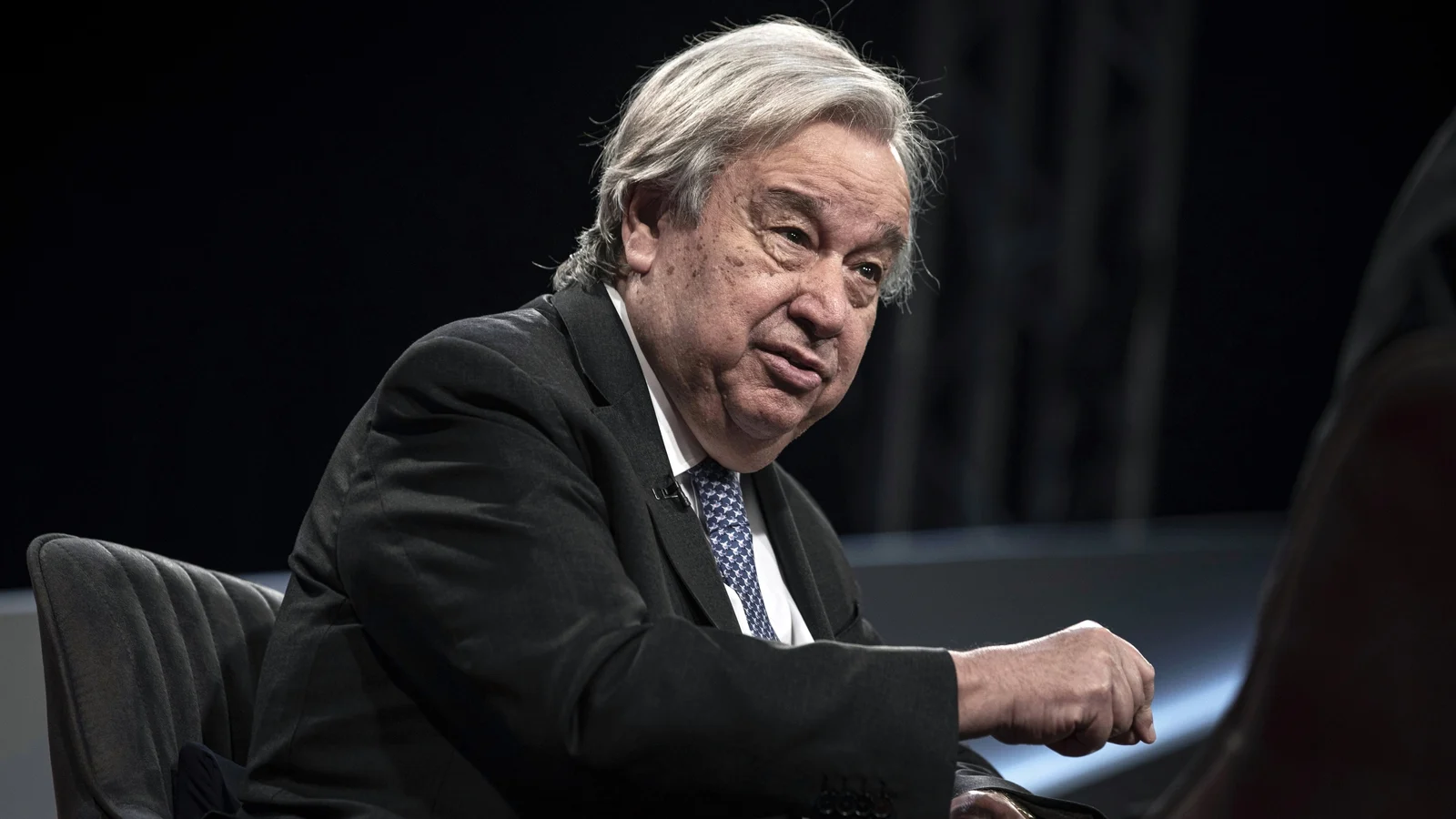
There are moments when a speech stops being a statement and becomes a tremor felt across continents. In a recent conversation in a New York conference room, UN Secretary-General Antonio Guterres did not mince words. He said the Gaza operation had been carried out in a way that was “fundamentally wrong” — not merely tactically flawed, but morally and legally troubling.
Those words landed like stones on a still pond. For residents of Gaza — where, according to the enclave’s health ministry, more than 70,000 lives have already been lost — the echo is both immediate and devastating. For diplomats and jurists, the remark intensified an argument about whether some actions in the war amount to war crimes. “There are strong reasons to believe that that possibility might be a reality,” Guterres said, cutting through the usual diplomatic hedging.
This is not abstract language. The conflict that began with the Hamas attack on 7 October 2023 — which killed around 1,200 people in Israel and saw 251 taken hostage — has spiraled, dragging civilians, infrastructure, and a fragile rule of law into its wake. Two years on, the landscape is a calculus of loss: demolished homes, shuttered hospitals, and families who measure time by the rattle of faraway strikes.
On the Ground: Voices with Dust in Their Lungs
Walk through any neighborhood in Gaza that remains standing and you will hear a chorus of small testimonies that together form a louder indictment. “We sleep with our shoes on because we never know when the next strike will come,” said Fatima al-Najjar, a mother of four who now makes and sells flatbread from a table perched among piles of concrete. “The children ask for stories, not rockets. They ask for school, not sirens.”
An aid worker who asked not to be named described convoys arriving late at night like pilgrimages. “The trucks roll in and people gather to see if the food will still be there,” she said. “Sometimes it is; sometimes it isn’t. The lines, the administrative checks, the accusations of looting — it all wears you down.”
For Israel’s diplomats, the calculus is different and raw in its own way. “We are dealing with a murderous organization that attacked our people,” said one Israeli diplomat. “But pointing at the enemy does not absolve us of responsibility for how we conduct ourselves.” Others are fiercer in their defense: “The only crime committed is the moral abomination of failing to acknowledge the 7 October massacres,” Israel’s UN ambassador responded publicly, accusing the UN of bias.
Humanitarian Access, Famine Risk, and the Machinery of Relief
Even the best-intentioned aid effort becomes a Rube Goldberg machine in a siege zone: trucks arrive, permits are negotiated, supplies are inspected, convoys rerouted. The UN and the United States have worked to pry open routes for humanitarian assistance; Guterres praised the U.S. role in improving aid access. Yet international monitors warned earlier this year that famine conditions had taken root in parts of Gaza.
According to a global hunger monitor report released in August, food insecurity reached alarmingly acute levels. The United Nations has repeatedly catalogued obstacles — roadblocks, security concerns, and an environment of lawlessness that hampers distribution. Israel counters that Hamas diverts aid and that insecurity on the ground is not solely a matter of policy but of failed local governance.
James O’Connell, a logistics coordinator for an international relief NGO, summarized the daily grind in stark terms: “We’re not just dropping pallets of food and walking away. We’re negotiating, monitoring, and sometimes watching supplies sit idle because routes are blocked. The result is that people die unnecessarily.”
The UN Under Pressure: Funding, Reform, and Fragile Credibility
Behind these headlines is another crisis: an institution operating with fewer resources as geopolitical winds shift. Under the current U.S. administration, funding cuts and a rhetoric of skepticism toward multilateral institutions have pressured the UN to reform — or to at least rethink priorities. “Do not make any concession that puts into question the fidelity of the values we defend,” Guterres said of his approach to a sometimes hostile U.S. leadership. “But we must avoid polemics that serve no purpose.”
There are consequences to this squeeze. Reduced aid budgets translate quickly into frozen projects and fewer tents, fewer medical supplies, fewer vaccinations. “A reduction in humanitarian aid makes many people die,” Guterres warned — a blunt, painful truth that brings statistics down to human terms.
Beyond Gaza: A World of Frayed Norms
The United Nations chief did not confine his concern to one theater. He warned that the erosion of international law in any corner of the globe sends a dangerous message everywhere: that borders, sovereignty, and the protections afforded to civilians can be set aside. He pointed to Ukraine, invaded by Russia in February 2022, as a stark example of how far from resolution major conflicts can drift.
“We are far from a solution,” he observed, noting that the endgame should, in principle, respect territorial integrity and international law — even if, in practice, the road to such an outcome looks rocky. That message hangs over negotiations across continents, from the Donbas to Gaza’s rubble-strewn streets.
The shadow is widening. Near Venezuela, U.S. strikes on vessels suspected of trafficking drugs have drawn criticism; at least 21 strikes in recent months and the deaths of more than 80 people have prompted questions about legality and proportionality. Guterres said clearly that such actions are “not compatible with international law,” even as he acknowledged the complex, fraught politics that drive these interventions.
What Does Accountability Look Like?
When senior officials speak of possible war crimes, the next question is not rhetorical: who investigates, and how? International criminal law is not a fairy tale of swift justice. It is a methodical, painstaking process — and one that requires evidence, access, and political will. “Accountability must be careful and credible,” said Professor Miriam Cohen, an international law scholar. “We need independent investigations, chain-of-custody standards, and impartial adjudication. Anything less risks politicising the work.”
But for survivors like Fatima, legal nuance is an abstraction. “I want the lights on, my children in school, the bakeries open,” she said. “I want someone to say our lives matter.”
How Do We Respond — As Governments, Institutions, People?
There are no simple answers. There are, however, choices. The world can invest in robust, impartial investigations and push diplomatic avenues for ceasefires that actually hold. It can shore up humanitarian funding and pressure parties to respect the laws of war. It can refuse to let crises become normalized headlines — tragedies etched into the background noise.
So I ask you as a reader: what kind of international order do you want to live in? One where the rules mean something, or one where power alone dictates outcomes? The Secretary-General’s words are not just a rebuke of tactics; they are a test of collective will. The rubble speaks. The numbers are brutal. The people are calling. Will the world listen?