Japa: The Great Nigerian Exodus — Stories from the Road North
There is a word on the lips of Lagos motorcyclists, in university halls, in the back rooms of Lagos bars and in WhatsApp groups across the country: Japa. It comes from Yoruba, literally meaning “to split” or “to run away,” but it has grown into something larger — a movement, a mood, a cultural pulse that tells you more about Nigeria than any statistic alone.
Walk down Broad Street in the old commercial quarter and you’ll hear it in the music bumping out of a roadside speaker. Sit in a lecture hall at the University of Lagos and students will tell you, with a mixture of swagger and sorrow, about plans to “go Japa.” It is shorthand for the decision that keeps families awake at night, the quiet hinge on which futures turn: to stay and try to build here, or to leave and gamble everything on a perilous road that promises work, safety, or simply survival.
A young nation, restless
Nigeria is no small place in the imagination of the world. With well over 230 million people, its population is overwhelmingly young — the median age hovers around 18, and roughly two-thirds of Nigerians are under 30. That demographic energy can be an engine of innovation, or a pressure cooker.
For many, the pressure has become unbearable. Despite intermittent economic growth and bullish headlines about an emerging market, poverty remains stubbornly widespread. Conservative estimates place more than 100 million Nigerians in conditions of poverty; other measures that capture multidimensional deprivation put that number higher, often cited around 130 million. When opportunities at home feel scarce, the road away can look like the only way out.
Dr. Alabi: “You can’t measure what you can’t see”
“The official numbers are always lagging an ocean behind reality,” says Dr. Tunde Alabi, a sociologist at UniLag who has spent years studying migration. “A lot of this is irregular, moving through Sahara routes that no census counts. But what we can see — the doctors, the lecturers, the nurses leaving — tells you that emigration is increasing.”
He points to two linked phenomena: a youth bulge with limited formal employment, and the erosion of institutions — security, health, education — that push talented people to look for greener ground. “When a surgeon tells me he’s applied for licensure overseas, we should be asking why,” he says.
Lives on the Line: Two Journeys
Sylvia: “I thank God I’m still alive”
Sylvia’s story is not unique, but it is unforgettable. She lost her parents in 2007 and, suddenly adrift, decided to leave. “My friend said Norway was peaceful,” she told me, staring at her hands as if tracing the path of memory. “So I started walking toward that light.”
She flew under the radar with a borrowed passport to Madrid, then boarded buses north until the snow of Oslo and the promise of asylum. A relationship developed with a Norwegian man; they married in Lagos in the hope of regularizing her stay. When authorities suspected a marriage of convenience, progress stalled. Despair nudged her back toward the desert route.
From Lagos to Agadez to Sabha: the journey reads like a geography of fear. “We walked for days,” she said. “The heat took everything. I saw people fall and never get up.” Traffickers crammed migrants into Hilux pickups, then doors opened on a more ruthless reality: bands of kidnappers, known in the region as Asma Boys, who snatch people for ransom; long stretches without water; trucks leaving groups to test the road ahead.
“We drank our own urine,” she whispered. “If you close your eyes you can still taste the salt of the sun.” They reached Sabratah and the Mediterranean, but not into the arms of the dream. Weeks of gunfire. Chaos. United Nations workers eventually pulled her from a site of violence; the International Organization for Migration helped her get back to Lagos.
Now she is back in the city she tried to escape. “I am grateful,” she says simply. “But am I happy? No. I bury my friends in my head. I cannot go through that again.”
Chiutu: “Don’t let them deport me”
Then there’s Chiutu, who took a different route and for a while tasted a more ordinary immigrant life. He flew to Frankfurt on a tourist visa in 2014, applied for asylum and learned German. He qualified as a carer and found work in a nursing home during a brief period when Germany was opening doors to migrants under the banner of “Wir schaffen das.”
“I was one week from residency,” he said, the frustration in his voice still raw. A workplace dispute — a patient left in soiled sheets — led to his dismissal. He fell into casual, exhausting labor and, after five years away from his children, made the decision to return voluntarily.
“I told my wife, ‘If I die there, I die alone.’ I missed my children too much. But sometimes I look back and think, maybe I left too soon.” He is both relieved and regretful, a tidy portrait of the dilemmas that haunt returnees.
Voices from the Lecture Hall
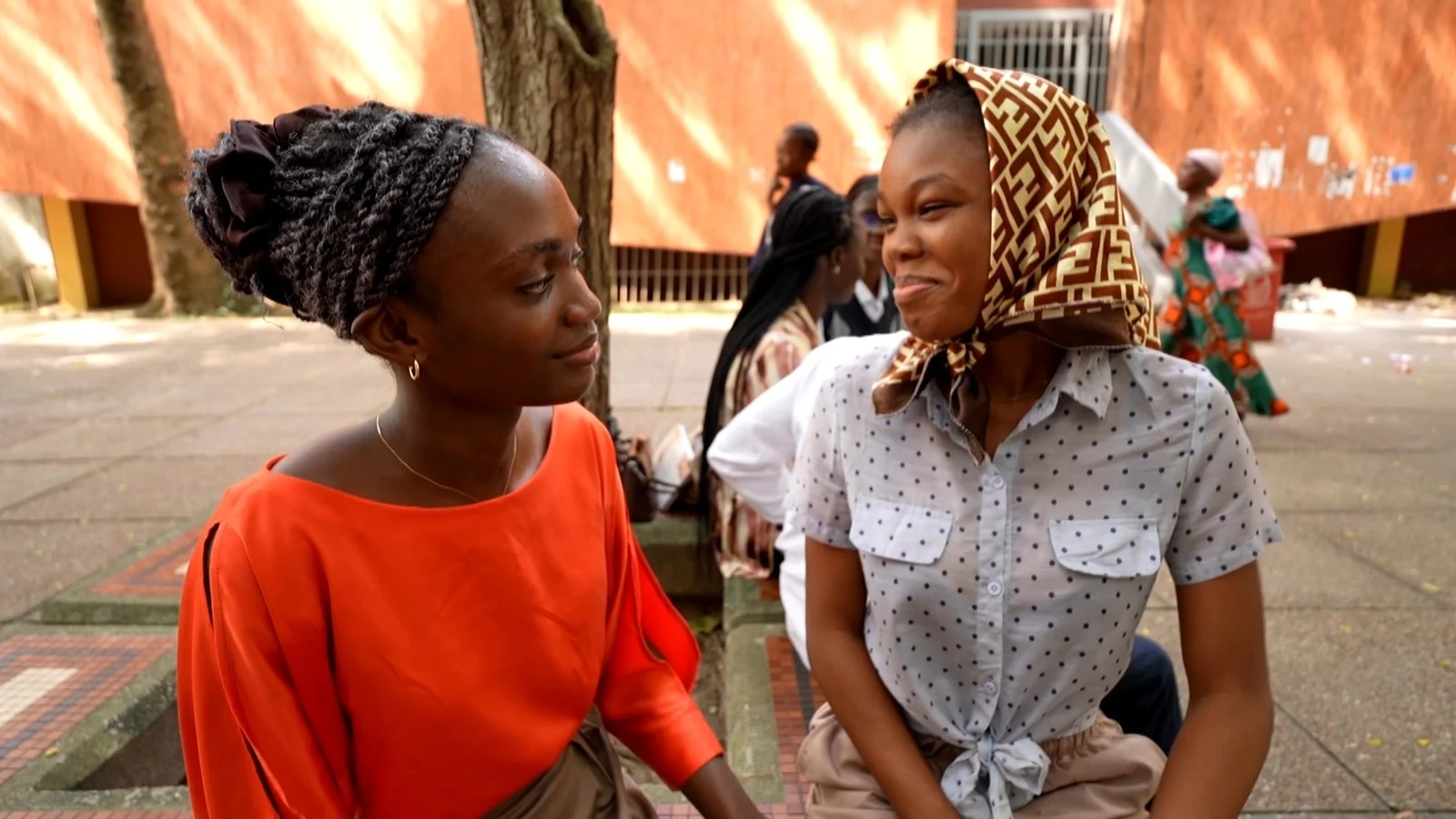
At UniLag, students give a kaleidoscope of reasons for wanting to go. Florence said, “Lots of people Japa because they’re scared — insecurity is everywhere.” Jaqueline spoke of education and skills; Benjamin wants a stint in the UK so he can bring knowledge home afterward. Wuraola said plainly: “If you go and learn, come back. Build.”
These contradictory attitudes — leave versus return, escape versus investment — are important. Migration is not only a loss. Diasporas send remittances, open networks, and sometimes return with capital and ideas. But the flip side is clear: when doctors and professors leave en masse, the institutions that nurture a nation get hollowed out.
Why it matters beyond Nigeria
What’s happening in Nigeria is part of a larger global narrative: the movement of people shaped by inequality, climate stress, insecurity and changing labor markets. Europe, North America and parts of Asia are destinations; smugglers and perilous routes are the corridors. The policy challenges are enormous. How do destination countries balance humanitarian obligations and border control? How do origin countries create enough opportunity to keep their best people?
As you read this, ask yourself: if you were 22 and promising, with few chances to build a life where you were born, what would you do? Would you risk dunes and desert, or the uncertainty of asylum courts? Would you leave a child behind for five years in search of a future?
Paths forward
The answers will not be simple. Economists point to investments in education, healthcare and security. Experts urge better legal migration pathways and faster recognition of foreign qualifications. Diasporas can be bridges, not drains. “Policy that harnesses migration instead of just trying to stop it wins twice,” Dr. Alabi told me. “You keep the human potential connected to the homeland.”
And on the ground? Lagos keeps humming. In the markets, traders haggle over peppers and suya, young entrepreneurs hack on laptops beneath buzzing fans, and mothers whisper prayers against another empty seat in a family home. Japa is as much a symptom as a story of stubborn resilience — people trying, in whatever way they can, to carve dignity out of hardship.
So the next time you hear the word — on a bus, in a song, in a student grad speech — remember this: Japa is not just about leaving. It’s about longing, about the cost of staying, and about the kind of societies we are building. How we answer those questions will shape the next chapter of a nation that refuses to be defined only by the headlines.