On Greenland’s Edge: An Island of Ice, Identity and Geopolitics
Nuuk looked like a watercolor this morning — soft light pooling between corrugated tin roofs, the harbor dotted with fishing boats, a dog trotting along the quay with the casual air of someone who has watched centuries of ships come and go. Yet beneath that timeless scene there was a new, modern tension: the American ambassador to Denmark had flown in, and in the rooms where policy is spoken in polite Danish and blunt Greenlandic, conversations about sovereignty, security, and respect were being painstakingly rehearsed.
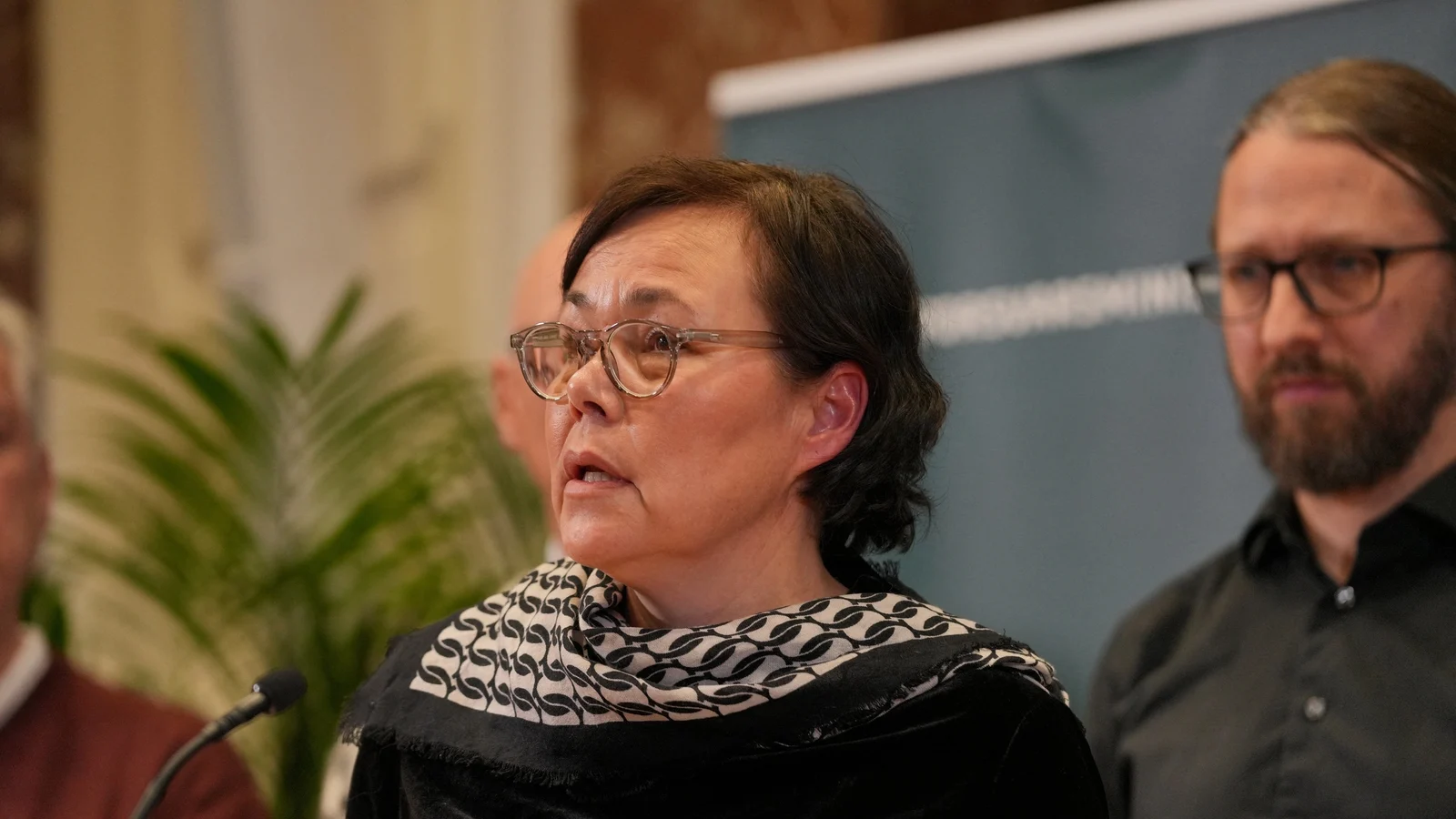
“We need a conversation that rebuilds trust,” said a Greenlandic minister I met outside the government house, pulling her collar against a wind that smelled faintly of diesel and cod smoke. “Eighty years of cooperation doesn’t erase the shock people felt when a president mused about buying our home.”
Why Greenland Matters — and Why It Hurts to Be Talked About Like Real Estate
The island is vast — roughly 2.16 million square kilometers, dominated by an ice sheet that still blankets about 80% of its landmass — yet sparsely populated, home to roughly 56,000 people. For decades it has been a quiet player in a noisy game: the location of Thule (Pituffik) Air Base, a key node in North American early warning systems; a place where Arctic warming is reshaping coastlines and livelihoods; and a repository of minerals and potential fossil fuels that have suddenly jumped to the top of strategic shopping lists.
It was when ideas about “buying” Greenland bubbled into public view that the island’s people recoiled. “You don’t put a price on where your grandparents were buried,” a fisherman told me, his hands still smelling of sea and smoke. “That’s not how we talk about land.”
President Donald Trump’s public suggestion in 2019 — that the United States could acquire Greenland — was a diplomatic grenade. Denmark and Greenland both said no; Greenlanders were outraged. The aftershocks linger. So when Kenneth Howery, Washington’s new ambassador to Denmark and a co-founder of PayPal, made his first visit to Nuuk for the U.S.-Greenland Joint Committee, the mood was cautious but purposeful. The committee issued a statement that spoke of “mutual respect” and the desire to “build on momentum,” yet those are words more salve than solution for many locals.
“Mutual Respect” — A Short Statement, a Long Road
“We reaffirmed our commitment to a strong and forward-looking relationship based on mutual respect,” read the joint communiqué. To a diplomat’s ear, that is precisely the kind of phrase that lubricates ongoing cooperation. To a Greenlander’s ear, it can ring hollow unless followed by real policy changes.
“Respect starts with listening,” said Dr. Aqqaluk Petersen, a political scientist at the University of Greenland. “It’s not enough for outsiders to decide what is best for us while treating us as a strategic asset. We want partnerships — not purchases.”
There are concrete reasons for the U.S. interest. Greenland’s geography places it on the shortest aerial route between parts of Europe and North America; it hosts early-warning radar infrastructure that helps detect ballistic missile launches; and melting Arctic ice is opening sea lanes and access to untapped resources. Those realities have made Arctic territories the subject of renewed attention from Washington, Moscow, Beijing — and other capitals.
Faces of Nuuk: People, Place and Pride
Walk through downtown Nuuk and the politics are not abstract. Children in bright parkas leap over puddles; an elder mends a net on a bench; a café hums with students arguing about language policy. Greenlandic (Kalaallisut) pushes up alongside Danish signage. The cultural confidence is new, fragile, and fiercely guarded.
“We are not a pawn,” said 27-year-old Inuuteq, who works in a Nuuk tech start-up. “We want investment. We want security. But you can’t treat us like an object. We’re trying to build our own economy, and that means hard choices.”
Greenlandic self-rule, introduced in stages with major reforms in 1979 and again with the Self-Government Act in 2009, has handed Nuuk more authority over internal affairs while Denmark retains control of foreign policy and defense. The arrangement is complex: Greenland manages many domestic matters but remains tied to the Kingdom of Denmark, with Copenhagen supplying a sizable annual block grant that supports public services.
Economic Realities and Environmental Dilemmas
Natural resources loom large in any discussion about Greenland’s future. Mineral deposits — from rare earth elements to uranium and potentially hydrocarbons — promise economic opportunity, yet they also threaten social and environmental upheaval.
“Resource development must be guided by our values,” said a community elder from Qeqertarsuaq, who asked not to be named for fear of political fallout. “We cannot sell tomorrow for short-term gains today.”
At the same time, warming in the Arctic is not some distant phenomenon. Greenland’s ice melt contributes to global sea-level rise, and the consequences ripple across continents. Local hunters notice shifting migration patterns of seals and whales; municipal planners scramble to adapt infrastructure to thawing permafrost. These environmental changes are a global warning and a local emergency.
Geopolitics, Indigenous Rights and the Global Arctic
What happens in Nuuk matters far beyond the fjord. The Arctic is a stage for broader tensions: great-power competition between the United States, Russia and China; new shipping routes that could shorten transit times between Asia and Europe; and debates over who gets to shape the future of climate-vulnerable places.
“There’s a pattern of big powers framing the Arctic as a strategic chessboard,” said Dr. Sigrid Hult, a defense analyst in Copenhagen. “But indigenous voices are central. Any long-term strategy that ignores Greenlandic agency will fail.”
That point is also an echo of a larger global trend: communities seeking decolonization of governance and economy, indigenous groups asserting rights over lands long governed by colonial powers, and nations scrambling to update defense doctrines in a changing climate. Greenland is at the nexus of all of those currents.
Paths Forward: Questions for the World
The conversations this week in Nuuk — between Ambassador Howery, Greenlandic ministers, and Danish officials — were not dramatic. They were the work of smoothing, clarifying, promising. But promises require proof. Greenlanders want concrete commitments: respect for their agency in any security or economic deals, investments in local defense capacity (which Denmark admits it has under-prioritized), and guarantees that resource development will follow environmental and social safeguards.
What would true partnership look like? Perhaps it includes:
- Joint investment in local infrastructure and emergency services, not just bases;
- Transparent, Greenland-led decisions on resource projects with benefit-sharing;
- Collaborative climate adaptation programs informed by indigenous knowledge;
- Clear mechanisms to ensure that military and strategic discussions include Greenlandic representatives.
Are those demands unreasonable? To many Greenlanders, they are simply the basics of dignity and self-determination.
Closing Thoughts: Listening as Strategy
Outside the committee rooms, Nuuk goes on. Children play; nets are mended; elders tell stories in kitchens where the smell of coffee mingles with the wind off the fjord. The island will continue to be desirable for reasons that go beyond spice-laden headlines — geography, resources, climate and strategic positioning. But more than anything, it is home.
As you read this from wherever you are, consider this: how should powerful states behave toward places that are small in population but large in consequence? Is “mutual respect” enough, or must it be backed by policies that recognize history, culture and rights? Greenland’s answer will shape not only its future, but how the world treats the places it wants most when the ice thins and the horizons open.