Smoke, Potatoes and a Trade Deal: Brussels Becomes the Stage for a Global Fight Over Food
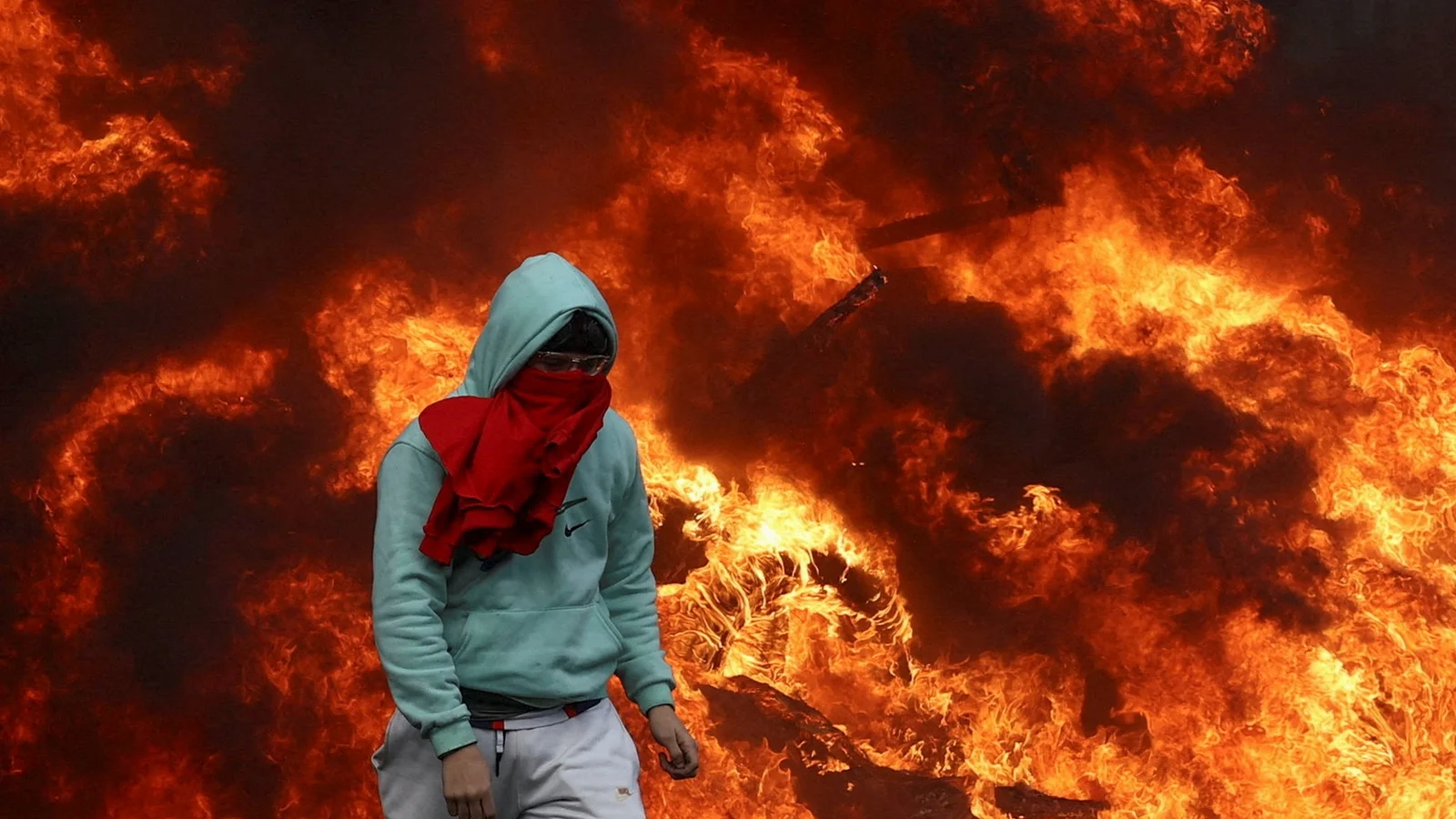
By midmorning the air above Brussels smelled of smoke and diesel. A line of tractors — the iron throaty heartbeat of the European countryside — pushed into the city like a slow-moving tide. Farmers in orange vests tied scarves around their faces as black smoke curled from burning tires and baled hay. Vegetables flew. So did words: angry, weary, defiant.
This was no ordinary protest. Around 7,000 farmers and some 1,000 tractors had converged on the European quarter to send a message: do not sign the EU-Mercosur trade agreement without protecting our livelihoods. What began as a march intended to influence summit-room diplomacy turned, by afternoon, into a volatile standoff outside the European Parliament — and a snapshot of a much bigger debate playing out around the world.
The Deal, in a Nutshell
The agreement under discussion would stitch together the European Union and the Mercosur bloc — Argentina, Brazil, Paraguay and Uruguay — opening up trade on an unprecedented scale. If finalized, it would bind markets representing more than 700 million consumers and aim to ease duties on cars, machinery, wines, and farm products, among other goods.
For EU policymakers it’s about strategic positioning: keeping export markets open in the face of rising trade friction with other global powers, and securing commercial ties with a region rich in raw materials and agricultural produce. For many farmers on the ground, however, it’s existential.
What farmers fear
“This isn’t theory for us — it’s food on the table and futures for our children,” said Maxime Mabille, a dairy farmer who drove his tractor into the city. “When cheaper beef or soy comes flooding in, prices fall and we are squeezed out.” His hands, crusted with hay, punctuated the point.
Protesters warned that imports of beef, sugar, rice, honey and soy — products where Mercosur countries have competitive advantages — could undercut European producers. Beyond price competition, many cited environmental and sanitary worries: Can we ensure the same deforestation standards, animal welfare rules, and pesticide controls? Who bears the cost of those gaps?
Politics in the Summit Room
The timing was fraught. EU leaders gathered in Brussels to discuss several pressing matters, including support packages for Ukraine. The European Commission had hoped to press the Mercosur accord across the finish line this week, but political lines hardened. Italy joined France in demanding a postponement so that tougher safeguards could be negotiated, striking a blow to a planned signing trip to Brazil.
French President Emmanuel Macron captured the mood in blunt terms on his arrival: “We consider that we are not there yet,” he said, voicing a determination to block any forced ratification without stronger protections. Germany, Spain and many northern states pushed back, arguing that the EU must remain a reliable trade partner. “If the European Union wants to remain credible in global trade policy, then decisions must be made now,” Chancellor Friedrich Merz said.
With Paris, Rome, Hungary and Poland resisting, the bloc no longer had a clear pathway to approval. Diplomats whispered of a tactical pause — signing postponed to January — giving negotiators time to fold in additional safeguards and assuage angry constituencies.
Voices from the Ground and the Experts
“We’re not Luddites opposed to trade,” said Florence Duarte, who milks cows in Picardy. “We want fair rules. If Mercosur producers follow the same environmental and sanitary rules as we do, we’ll compete. But right now there’s too much uncertainty.”
Trade analysts point to a tangle of real concerns. “The agriculture chapter matters, but so do enforcement mechanisms,” said Dr. Ana Silva, who studies international trade and sustainability. “Certification and traceability systems are improving globally, but they’re only as good as the political will to enforce them. The EU has leverage — and critics say it should use it to demand higher standards, not just lower tariffs.”
Environmental groups have their own alarms. They warn that historical patterns show soy expansion and cattle ranching have driven deforestation in parts of South America — a point Brazilian leaders contest, insisting they have concrete plans to curb forest loss. The debate exposes a paradox: Europeans want cheaper, diverse imports but also demand climate responsibility and strong labor protections abroad.
Beyond Brussels: The Global Stakes
What happens in Brussels matters beyond food prices. It is a referendum on globalization in an era of fractured geopolitics. As multilateral trade frameworks face pressure from domestic politics, nationalistic impulses and climate imperatives, the Mercosur saga is a case study.
Consider the Common Agricultural Policy (CAP), the EU’s multi-billion-euro program that underpins farming across the bloc. The CAP — with a budget running into the hundreds of billions across budget cycles — has long shielded farmers from the vagaries of the market. But proposals to reform subsidies, aimed at greening agriculture and shifting payments toward environmental public goods, have left many producers anxious about future incomes.
“We feel squeezed from both sides,” said Florian Poncelet of the Belgian farm union FJA. “Farms face new environmental rules at home and competition from abroad that doesn’t always play by the same rules. We aren’t asking to stop trade. We want fairness.”
What Could Happen Next?
Officials now face a delicate choreography: find legally binding safeguards that satisfy skeptical governments and farmers, while keeping the door open to a deal that would bolster exports in sectors such as automotive and wine. Brazil, whose president has pressed for closure, warned that delay could imperil political momentum on his side, calling the window of opportunity “now or never.”
Negotiators could pursue a range of measures: stricter sanitary checks, enforceable anti-deforestation clauses, phased tariff liberalization, or compensation mechanisms for sectors hit by displacement. Each carries trade-offs, and each will be scrutinized in village cafés and city markets alike.
Questions to Carry Home
As you read this, ask yourself: how do we value food? Is cheap food truly cheap if it comes at environmental or social cost elsewhere? And in democracies that must balance local protection with global engagement, who deserves to be heard at the table — farmers with tractors at the gates, or ministries signing documents in distant capitals?
Brussels will quieten in time. The tractors will roll home. But farmers who brought their livelihoods into the heart of Europe left an unmistakable message: in the age of global trade, local voices still pack force. Whether those voices reshape a pact, or are placated with promises, remains to be seen. The decision will affect plates, pastures, and political fortunes across continents — and it will tell us something about the kind of globalization we are willing to live with.
Quick Facts
- Mercosur full members: Argentina, Brazil, Paraguay, Uruguay.
- Combined market: more than 700 million consumers between the EU and Mercosur.
- The EU’s Common Agricultural Policy (CAP) spans billions in support across member states and is central to farmers’ economic security.
- Estimated turnout at the Brussels protest: about 7,000 farmers and roughly 1,000 tractors.