A night split by a bang: two officers killed near the city’s hush
It was the kind of hour when Moscow slows to a sibilant whisper: late, cold, streetlights throwing pale pools onto wet pavement. Then, just after 1.30am, a sound that does not belong to the night — a sharp concussion, a scatter of glass, a sudden flurry of feet — and the city remembered how raw things have become.
Russia’s Investigative Committee said two police officers died when an explosive device detonated as they approached a suspicious person near their service vehicle. The blast happened close to where Lieutenant General Fanil Sarvarov was killed earlier this week, the same general who headed the General Staff’s training department and whose death has already shaken corridors of power.
Images shown on state television that morning felt cinematic in their grim familiarity: a cordon of blue tape, riot vans clustered like metal sentinels, forensic technicians in white suits moving with the clinical choreography of someone trying to stitch together a story from dust and blood. “They were doing what officers do — checking, asking,” said one witness speaking under the strain of shock. “And then everything went white.”
What investigators are saying — and what they aren’t
The official line has been terse. “An explosive device was triggered” near a police vehicle, the Investigative Committee said, confirming forensic and medical examinations are under way. Telegram channels aligned with mainstream outlets carried the committee’s statement and pictures of investigators combing the scene. Authorities cordoned off the area and called in specialists for “medical and explosive examinations.”
There are few hard answers yet about motive, the origin of the device, or the person who drew the officers’ attention. State media have been careful with conjecture; Kyiv, which has acknowledged responsibility for some previous attacks on figures it deems complicit in Moscow’s war policy, has not commented on this particular incident.
On the streets: fear and weary resolve
Outside the cordon, the city’s normal late-night rhythms interrupted abruptly. A kiosk owner, Maria, who has run the same tea and cigarette stall for 28 years, stood with a cup clutched in both hands. “You learn to live with the sirens,” she said, voice low. “But you never get used to feeling like you could be the next person who looks out the window and wishes they hadn’t.” Her hands trembled not only from cold.
A neighbor who declined to give his name muttered about the way the city used to be: quieter, less watched, less militarized. “You used to be able to argue politics over borscht without thinking about someone listening,” he said. “Now you check the locks twice and keep your voice down. Fear is the loudest thing in Moscow.”
And yet there is a different, quieter strain of defiance, too. An older man in a wool cap, standing by the metro steps, shrugged and said, “We will keep living. That’s what people here do. We drink our tea, we quarrel, we go to work. Terror won’t turn this into a ghost town.” His tone was stubborn, like the iron handles on the city’s tram doors.
Local color: a city at the intersection of ordinary life and geopolitics
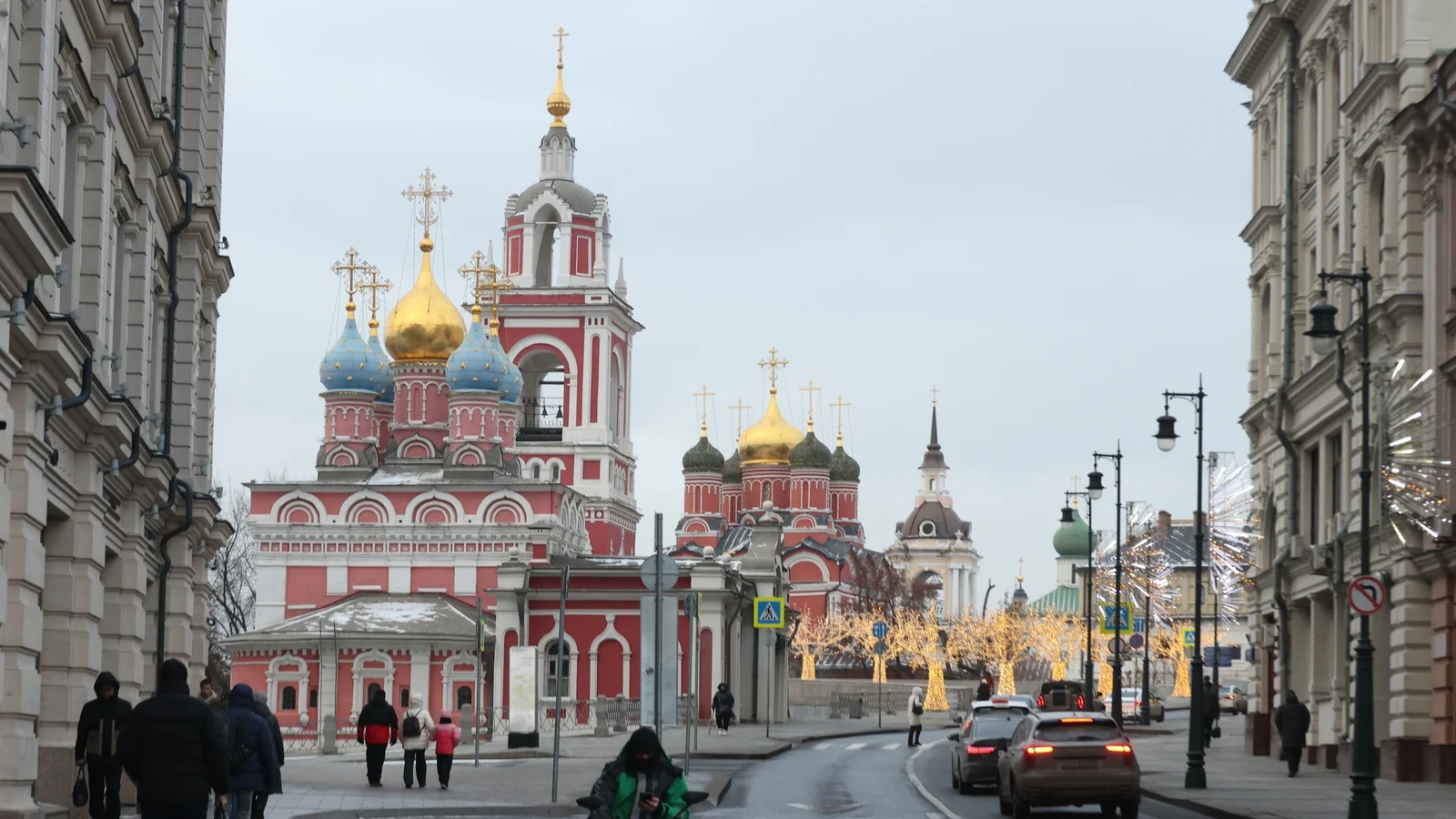
Moscow’s neighborhoods are stitched together from the everyday and the extraordinary. One block will hold a monastery whose bells peel out like timbrels, the next a government building menaced by concrete barricades and cameras. On a night like this, you can feel how tight that seam is — how domestic routines and high-stakes geopolitical conflict are now neighbors.
Residents speak of the oddities that have bled into daily life: more checkpoints, police cars parked at metro exits, a heightened presence of military badges in supermarkets and trains. Grandmothers carrying grocery bags pass soldiers on patrol; teenagers scroll news feeds that keep rewriting what they thought was stable. When a blast occurs, the city does not merely respond — it remembers, cataloguing the new event into a long ledger of unease.
Context: a blurred border between battlefield and home
Since Russia’s full-scale invasion of Ukraine in February 2022, the line separating the battlefield from the homefront has been eroded. Attacks that might once have been concentrated in a war zone now reverberate in city streets, in parked cars, in residential drives. Russian authorities have regularly blamed Kyiv for strikes on officials and pro-Kremlin figures both inside Russia and in occupied territories. Kyiv has at times taken responsibility for specific operations, but not for all incidents that Moscow attributes to it.
Those dynamics have a ripple effect. For state security services, every explosion is both a criminal case and a potential political crisis. For citizens, each incident is a reminder that the war is not a distant headline but a force that can rearrange the furniture of ordinary lives without warning.
Voices from the security and academic worlds
“This pattern indicates an expansion of tactics by actors who want to make the costs of the war palpable inside Russia,” said Dr. Elena Morozova, a defense analyst at a European security think tank. “Whether that is an intentional strategic policy of Kyiv, freelance militants, or something else, remains to be established. But the psychological impact is clear.”
“The use of IEDs in urban settings carries a high risk of collateral damage and creates a climate of pervasive insecurity,” said Captain Viktor Petrov, a retired police instructor. “Our officers are trained for many things, but approaching a suspicious person in the middle of the night is one of the hardest moments — limited visibility, ambiguity, the pressure to act.”
Questions we’re left holding
When I walked the perimeter later in the day, residents asked the same questions I suspect many readers will now ask: How many more such incidents before the city changes in ways that will not be reversible? Who is responsible, and how will justice be served? How does a society balance security and liberties when fear stalks even routine interactions?
We should also ask what it means when places long considered safe domestic spaces become contested zones in a wider conflict. When a general is killed and then, days later, two police officers die in the same vicinity, patterns begin to form — or at least to appear. They prod us to think about escalation, about how wars seep across front lines, and about the human costs that are not neatly counted by military statistics.
Looking forward: investigations, grief, and the hush that follows
Investigators will continue their work: collecting fragments, analyzing residues, interviewing witnesses. For the families of the two officers, that forensic attention will be no comfort at all. For a city, it is the hope of answers. For the wider world, it is another unfolded layer in a conflict that refuses to stay in distant fields.
As the sun rose the next morning and the scene cleared, there was a quiet that felt less like relief and more like a collective inhalation. People resumed their routes to work, to shops, to school. Life, stubbornly, insisted on continuing. But the echo of the blast lingered in conversations, in the way neighbors checked in with each other, in the extra pause when a passerby noticed a uniform.
What will you imagine when you hear of another blast somewhere far away? How close does a distant war need to come before it reshapes the way you think about safety at home? In Moscow tonight, those questions are not abstract. They are the breath between one siren and the next.