When Diplomacy and Destruction Meet: A Night of Missiles, Meetings and Fragile Hope
There are moments when the world feels split in two: one half bent over negotiation tables, the other lit by the orange glow of distant fires. Last week offered exactly that uncomfortable duality — Ukrainian President Volodymyr Zelensky sitting down, in essence, with envoys dispatched by the White House’s inner circle, while across the border Ukrainian forces struck deep into Russian energy hubs.
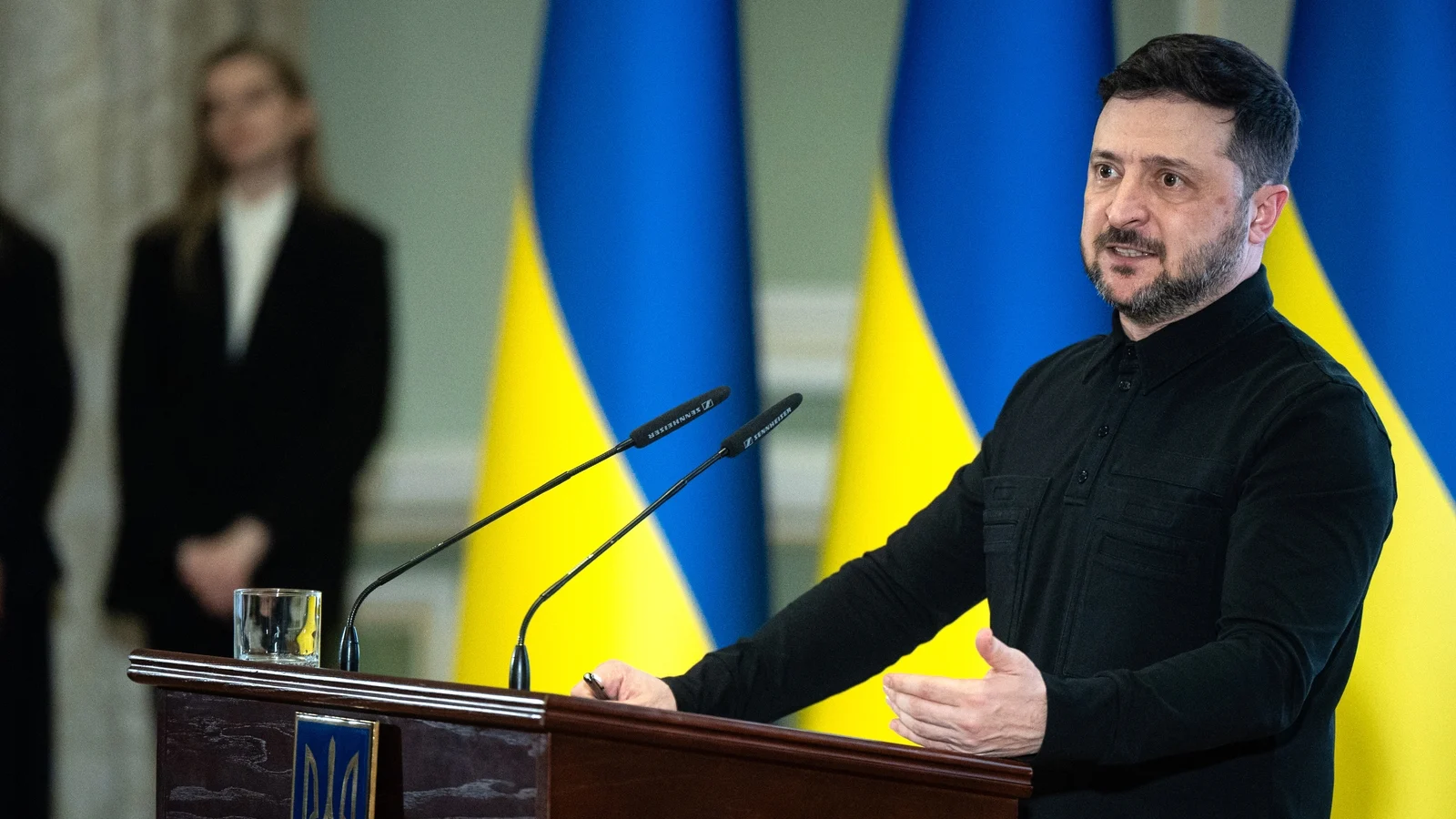
“We had very good conversations,” Zelensky posted, the words clipped but hopeful, speaking of talks with Steve Witkoff and Jared Kushner — envoys representing U.S. interests and a determination, by all accounts, to wring an end to what he called “this brutal Russian war.” He thanked them for “constructive approach, intensive work, and kind words.” It was the kind of message that reads like a bargaining chip: public optimism, private pressure.
Behind closed doors — and on screens
The envoys’ visit and the discussions they reportedly had with Ukrainian negotiators are part of a broader, painstaking process. Kyiv says it and Washington agreed on a draft 20-point plan outlining a pathway toward peace; Russia is now reviewing that text. Zelensky acknowledged that not everything in the draft was to his liking, but celebrated some important deletions — notably any immediate requirement for Ukrainian withdrawal from parts of Donetsk or formal recognition of Moscow’s territorial gains.
“These are small victories in a very large war,” said one Kyiv-based diplomat, speaking on condition of anonymity. “Removing the immediate withdrawal clauses is crucial. It buys Ukraine time and preserves options.” Rustem Umerov, Ukraine’s chief negotiator, is expected to continue talks with the U.S. envoys, an acknowledgment that this is a marathon, not a sprint.
Not everyone, though, sees papyrus as peace. Maria Zakharova, the Russian Foreign Ministry spokeswoman, framed talks with the United States as “slow but steady progress” — a diplomatic phrase that can mean many things. She also accused Western European states of trying to “torpedo the process,” and urged Washington to counteract these spoilers.
Explosions miles away: warfare and the economics of conflict
While diplomats shuffled paper, Ukrainian forces reportedly launched British-made Storm Shadow cruise missiles and long-range domestic drones against several Russian oil and gas facilities. The Ukrainian General Staff reported a strike on the Novoshakhtinsk refinery in Rostov; Russian regional authorities reported fires after drone hits at the port of Temryuk in Krasnodar. Ukraine’s security service said a gas-processing plant in Orenburg — some 1,400km from the Ukrainian border — was also targeted.
“Multiple explosions were recorded. The target was hit,” the General Staff wrote on Telegram. Images and videos circulating on social media showed columns of black smoke, firefighters silhouetted against roaring flames — the kind of images that strip diplomacy of its soothing veneer.
Why the refinery? Because energy is not just infrastructure; it is cash. International analysts have long pointed to oil and gas revenues as vital for Moscow’s war machine. Hydrocarbons have historically supplied a substantial share of federal revenues — often estimated in the low-to-mid tens of percent. Cutting that tap, Kyiv reasons, could blunt Russia’s capacity to sustain operations.
Night-watchers, villagers and soldiers
On the ground, ordinary people mark these strategies with a mix of resignation and defiance. “We woke up to the sound of sirens and then the smell of smoke,” said Olga, a nurse in a small town near Rostov, voice tight with exhaustion. “We don’t talk politics here; we talk about how to get the kids out if the house burns.” A Russian refinery worker, speaking to a regional news outlet, described a “harrowing” night as crews fought flames. “We are not soldiers. We are mothers, fathers, sons,” he said.
On the Ukrainian side, a junior officer in the air force who asked to be identified only by first name, Dmytro, said: “Every target is chosen because it sustains the enemy’s ability to fight. We don’t celebrate the fires. We calculate.” His words carried the weary resolve of someone living inside a calculus of survival.
Border jitters in Europe: balloons, jets and a frayed security tapestry
Elsewhere this week, Poland scrambled jets to escort a Russian reconnaissance plane seen near Polish airspace over the Baltic Sea. At the same time, dozens of objects reportedly crossed into Polish airspace from Belarus overnight — some were identified as likely smuggling balloons. Polish authorities warned the incidents, occurring during the holiday season, could be provocations.
“The mass nature and timing of these incursions make it hard to call them accidental,” said a Polish border official. “There’s a pattern of pressure along NATO’s eastern flank.” Vilnius, too, has reported smuggler balloons disrupting air traffic in recent months — incidents it characterizes as a “hybrid attack” by Belarus, which denies responsibility.
For Polish villagers near the Belarusian frontier these events are not abstract. “We keep our children inside when the drones come,” said Marta, who runs a small grocer’s in a border town. “In the winter, we cannot assume safety.” This is the small-scale human terrain where geopolitics becomes daily fear.
The human ledger: counting costs — and doing the math
The exact human toll of the war remains contested, but independent estimates — and the daily witness of hospitals, refugee centers and bereaved families — point to tens of thousands of lives upended. Millions more have been displaced inside Ukraine or forced to seek shelter abroad. Every broken refinery, every flicker of black smoke, translates into lost jobs, disrupted logistics and further displacement.
As for the peace process itself, the questions multiply. How do you negotiate with a state that insists on territorial concessions as precondition? How can mediators ensure any agreement is verifiable and durable? And what role will external powers play when their own domestic politics are often part of the calculation?
What happens next — and why you should care
For the rest of the world, this is not a distant dispute. It is a test of whether diplomacy can coexist with deterrence, whether economic tools — sanctions, gas-price politics — can be made to count, and whether war-era innovations like long-range drones will rewrite the rules of conflict. It is also a humanitarian challenge: winter is coming each year in this war zone, and civilian needs remain stark.
“Peace is not a single document,” an international relations scholar told me. “It’s a tapestry of guarantees, verification mechanisms, and most importantly, political will. You can draft a plan in any capital, but implementation requires states to accept short-term pain for long-term stability.” That, he shrugged, is the trickiest currency of all.
So what should you watch for? Look for follow-up talks involving Rustem Umerov and the U.S. envoys, for any Russian response to the 20-point plan, and for further kinetic activity around energy infrastructure. Listen to voices on the ground: whether in Kyiv, Rostov, Temryuk, Maikop or the small towns along Belarus’s border, because they will be the ones to live with any peace — or any continued war.
And finally, ask yourself: if diplomacy is to succeed, how much discomfort are countries prepared to absorb today to prevent another decade of devastation tomorrow? The answer will shape not just a region, but a world increasingly connected by energy, weapons, and the fragile hope that talks can matter. Will they?