When a President Was Taken: Caracas Breathes, the World Holds Its Breath
There are moments when time stretches thin, when a city pauses mid-breath and the simplest acts—buying bread, spinning a bike wheel, a child sprinting across a plaza—feel like acts of defiance against a larger, roiling uncertainty. That was Caracas this morning: muted, watchful, alive with the uneasy hum of people trying to move forward while history rearranges itself around them.
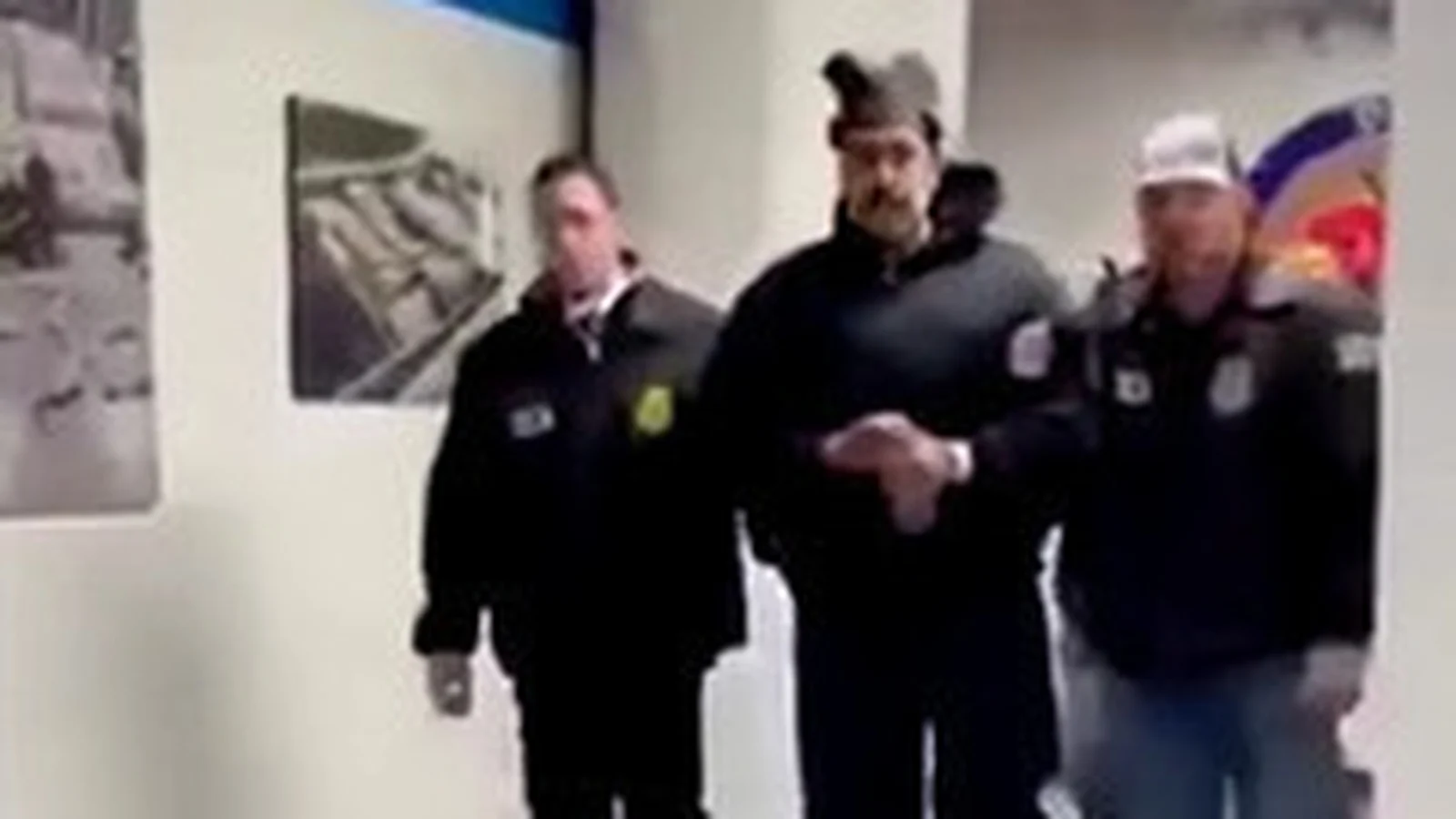
Late yesterday, word broke that Venezuelan President Nicolás Maduro had been taken into custody and transported to the United States. The image—of a 63-year-old man, blindfolded and handcuffed, entering a U.S. detention facility—landed like a thunderclap. For millions of Venezuelans, it was both surreal and painfully familiar, the latest chapter in a decade-long story of political turbulence, mass migration and economic collapse.
The quick, sharp facts
Here’s what matters, at a glance: Mr. Maduro was placed in a New York detention center to face drug-related charges and is awaiting court proceedings. The U.S. president signaled a willingness to “run” parts of Venezuela, including its oil sector, a line that has set off alarm bells across Latin America and beyond. In Caracas, the vice president—Delcy Rodríguez—has been endorsed by the country’s top court to act as interim leader, even as she insists Mr. Maduro remains the legitimate president.
Numbers give this moment context. Venezuela, once a regional powerhouse whose oil fields were the envy of the world, today counts more than 7 million people displaced abroad since the start of its crisis, according to UNHCR and IOM estimates. Its oil reserves are among the world’s largest—measured in the hundreds of billions of barrels—yet production has collapsed to a fraction of its former self, weighed down by sanctions, mismanagement and years of underinvestment.
Unity, defiance, and a chorus of alarm
Inside the ruling party, there is a determined refrain: unity. A recording released by party channels quoted a senior figure declaring that the revolution was unbroken and that there was “only one president: Nicolás Maduro.” Elsewhere, defence officials said forces had been mobilised to “guarantee sovereignty” and alleged that the U.S. operation had killed members of Maduro’s security detail.
“This cannot be framed as a simple arrest,” said a senior PSUV official speaking on condition of anonymity. “To us, this is aggression. It is a violation of our people’s dignity. But we are not defeated. We never will be.”
In Washington, the rhetoric was blunt. U.S. officials said the operation was a law enforcement mission rooted in longstanding indictments related to narcotrafficking. A State Department spokesperson emphasised the need to keep Venezuela’s oil out of the hands of hostile powers and to end the flow of illicit drugs. “There are legitimate national security interests at stake,” the spokesperson said.
Regional fury and a fragile consensus
Across Latin America and in Madrid, leaders reacted with alarm. Brazil, Chile, Colombia, Mexico, Uruguay and Spain issued a joint statement rejecting outside attempts to seize control of Venezuela or its resources. “We reject any attempt at foreign administration or appropriation,” the statement read—language that speaks to a deep, historical sensitivity about interventions on the continent.
“For countries that remember painful military interventions, what happened here is a red line,” said Mariana López, a political analyst in Bogotá. “Even if one dislikes Maduro, the appearance of foreign boots—or foreign hands—on national resources mobilises very raw memories.”
On the ground: muted streets, loud fears
Walk the streets of central Caracas and you’ll notice small acts that reveal a city grappling with fear and the ordinary necessities of life. A corner bakery in El Paraíso kept its ovens busy; an elderly man ordered two empanadas and discussed the news in clipped, weary tones. A mother in Maracaibo filled a plastic bag with rice and tuna, saying she had been too afraid to go out the previous day.
“Yesterday I stayed inside; I was terrified,” said Ana Rosa, a single mother who travelled to town to buy groceries. “Today, I had to come. We have children. People are used to fear here—but being used to something isn’t the same as accepting it.”
Supporters of the government still marched at a state-organised rally, waving red flags and chanting slogans about sovereignty and resistance. “This country will not be a colony,” declared one marcher, his voice hoarse from shouting. “Our oil is ours. Our dignity is ours.”
What about the opposition?
Across the political spectrum, cooler heads have been wary. The U.S. president dismissed the leading opposition figure—Maria Corina Machado—as lacking the support to lead, limiting the immediate prospect of a clean transfer to an opposition government. Many opponents, while relieved at the prospect of change, are reluctant to celebrate an arrest that smacks of foreign intervention.
“We want democracy,” said an opposition activist who asked not to be named. “But we also want sovereignty. There is no easy path from a seized president to a functioning, legitimate government.”
Oil, geopolitics and the long shadow of history
Venezuela’s oil is the axis around which much of the international debate spins. Economically, politically and symbolically, crude is not simply a commodity here—it is identity, leverage, and livelihood. U.S. officials have openly discussed keeping Venezuelan oil out of the hands of rivals, while Venezuelan leaders frame those comments as proof of imperial designs.
OPEC+, the grouping that influences much of global oil policy, recently opted to keep production steady amid a market that has seen significant swings. The group includes heavyweights like Saudi Arabia and Russia and collectively accounts for roughly half of the world’s oil output. None of its recent statements mentioned Venezuela directly, but the capture of a president from one member state sent ripples through global energy markets.
“If outside powers try to administer Caracas or control its resources, the consequences will be felt in markets and in geopolitics,” said Elena Vázquez, an energy economist. “But more importantly, the risks are human—we have to ask who will pay the price on the streets, in hospitals, in the pockets of ordinary people.”
So what’s next?
In the short term, the immediate questions are painfully practical: how long will a U.S. presence be asserted, if at all? How will Venezuela’s military, fragmented and influential for years, react to orders from Caracas? How will ordinary Venezuelans—already drained by years of scarcity and migration—cope with another geopolitical shock?
There are broader questions too: What does the world owe a nation whose internal collapse has spilled refugees across borders and whose resources are coveted on the global stage?
History, it seems, is not content to repeat itself neatly. It is messy, loud, and stubbornly human. For the people living through it, the abstract language of “sovereignty,” “law enforcement” and “energy security” is measured against empty supermarket shelves, the ache of families split across borders, and the daily choreography of survival.
Will Venezuela find a path that respects its people’s will without inviting new wounds? Can the region, scarred by past interventions, forge a principled response that protects citizens above geopolitics? And for those watching from afar—what responsibility does the global community shoulder when a nation’s fate is intertwined with the appetites and anxieties of powerful states?
There are no simple answers. There are only the slow-making of decisions, the cough of engines on city streets, and the resilience of people who, after more than a decade of upheaval, still wake up and go to market. Watch them now—they are the ones who will live with the consequences.