In Kyiv’s Cold Light: Allies Gather, Maps Spread, and a Fragile Peace Plan Hangs in the Balance
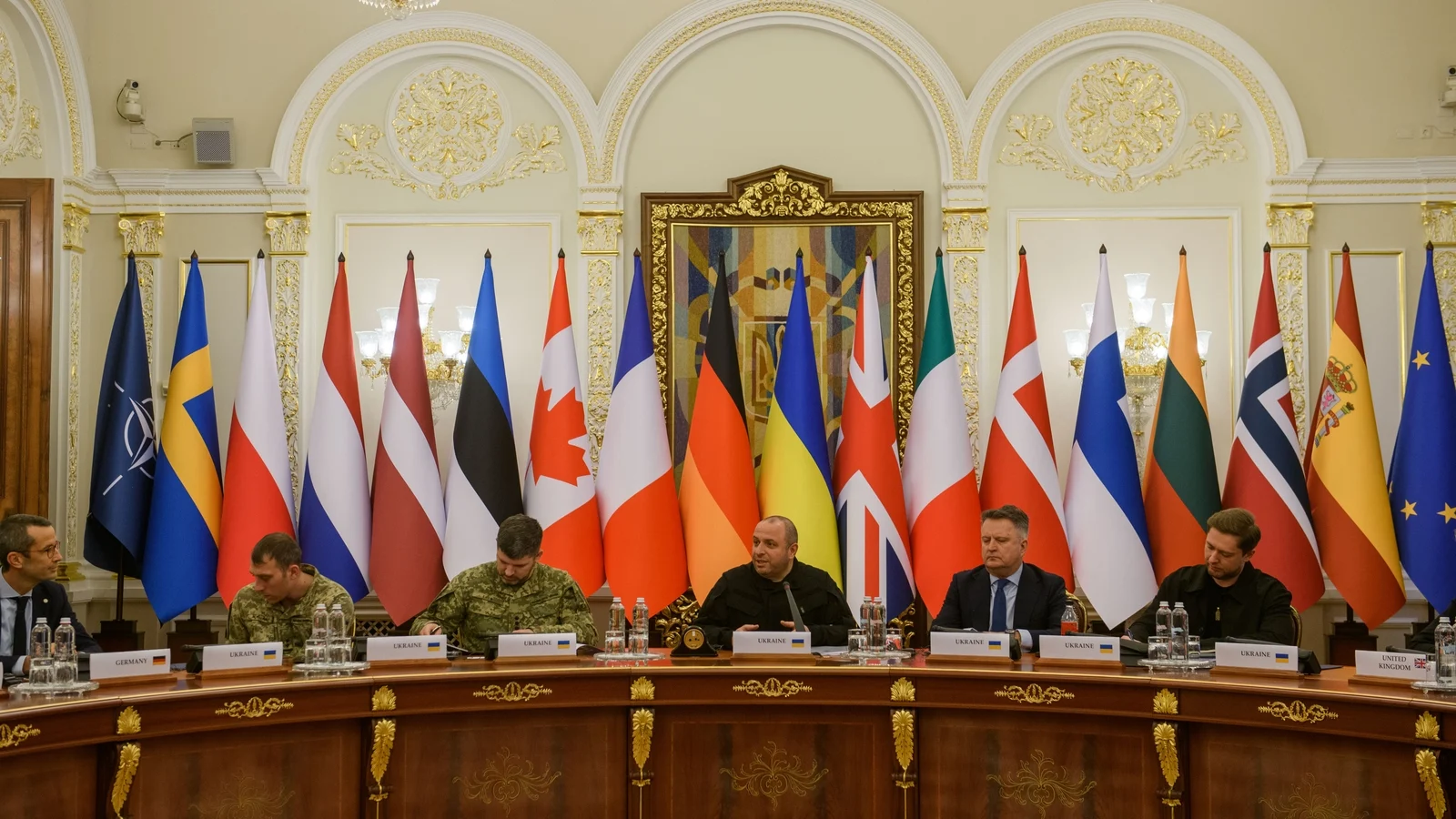
Snow sifted through the avenues of Kyiv as security advisers from across Europe and beyond filed into a glass-walled conference room with the wary grace of people who have seen too many maps redraw themselves. Britain, France, Germany, representatives from NATO and the European Union — even a US special envoy dialled in remotely — came together this week not to celebrate, but to stitch together a way out of Europe’s bloodiest war since 1945.
“We are here to turn words on paper into a plan that the people on the front lines can believe in,” Rustem Umerov, Ukraine’s chief negotiator, told journalists in a short statement. Later he would describe the first session as a focus on “framework documents” — security guarantees, economic measures, sequencing of steps — the kind of granular, bureaucratic scaffolding that, if it holds, can bear the weight of nations.
What was on the table
Delegates clustered around a long table where maps were pinned like constellations. Conversations darted between high-level principles and knotty details: how to define “security guarantees,” what economic rebuilding would look like, and — the most combustible question — who would keep which strips of land when the guns finally fell silent.
- Security guarantees: size, nature, and enforcement mechanisms.
- Economic packages: reconstruction financing, sanctions relief sequencing.
- Sequencing: the order of withdrawals, demilitarised zones, and elections.
“We need guarantees that are realistic and enforceable, not just fancy words for press conferences,” one senior Western security adviser told me over coffee outside the meeting room, asking to remain anonymous because of the sensitivity of the talks. “Ukraine cannot accept a deal that looks like capitulation on the ground.”
A plan “90% ready” — and fraught with caveats
President Volodymyr Zelensky has voiced optimism: he wants a leaders’ summit in the United States by the end of January to put muscle behind proposals. “We are preparing for a meeting at the leadership level,” he said, laying out a timetable. But optimism and the arithmetic of territory are uneasy companions.
Russia currently occupies around 20% of Ukrainian territory — a figure that haunts every negotiation. Moscow insists on formal control of large parts of the east, including the Donbas. Kyiv says surrendering those lands would be a strategic mistake that only invites future aggression. “If you give up land to stop the guns for a week, you hand over the keys for the next invasion,” a Ukrainian frontline commander told me by satellite phone. “We want peace that sticks, not a pause that cleans the slate for Moscow to strike again.”
Violence and diplomacy — the uneasy choreography
The meeting in Kyiv did not happen in a vacuum. This week has been marked by deadly strikes that drive home how brittle the ceasefire prospects remain. In Kharkiv, Ukraine’s second city, regional authorities reported a woman and a three-year-old child killed by missile fire. In the Kherson region, Russian bombardment of Ukrainian-held territory left two civilians dead, according to local officials.
Meanwhile, Moscow accused Kyiv of launching drones at a New Year gathering in a Moscow-held part of Kherson — a claim Ukraine denied, saying the target was a military meeting. And in another headline-grabbing allegation, Russia said Ukrainian drones reached a presidential residence outside Moscow; Kyiv denied responsibility. These are not mere talking points; they are the daily arithmetic of grief and recrimination.
An analysis by the Institute for the Study of War, cited in reporting by AFP, concluded that Russian forces made larger territorial advances last year than in any year since the invasion began in February 2022. That military momentum adds pressure on negotiators: battlefield gains change leverage, and leverage changes the shape of compromise.
Shifts in Kyiv’s inner circle
Against this backdrop, President Zelensky has been reshuffling his own team — new chief of staff, a new defence minister, and plans to replace several regional leaders. “We need fresh energy and a clear line between diplomacy and defence,” said a senior Ukrainian official. The message was plain: the country is preparing for both the negotiating table and the next round of fighting.
Voices in the city: fear, hope, and weary humor
Walking the streets around the conference venue, you hear a cross-section of Ukraine’s ethos — resilient, blunt, irreverent. An elderly tea seller in a market near Maidan, her hands browned by years of boiling water, shrugged at talk of summits. “We hear promises, we see shells,” she said with a laugh that had no joy in it. “If they sign something good, we’ll drink to that. If not, we’ll drink anyway.”
A university student pushing a stroller wore a wool hat knitted by her grandmother and told me she supported diplomacy but not at any cost. “My brother is in the east,” she said quietly. “You can’t write him out of the map and pretend that’s peace.”
Local color is not distraction here; it’s context. It is the clink of samovar teacups that marks a night of debate, the Orthodox church bells that keep time through air-raid sirens, and the careful way people fold newspapers to check which towns were shelled today. These details matter because who we imagine as stakeholders — not only diplomats and generals but bakers and teachers — shapes what compromise can endure.
Global echoes and fraught alliances
This is not just Kyiv’s problem. A peace agreement in Ukraine would shift strategic calculations across Europe and beyond. NATO’s role, the EU’s economic clout, and Washington’s political will all factor into whether guarantees are credible. “Security guarantees without credible enforcers are hollow,” said Dr. Elena Karpova, a Prague-based expert on European security. “If the United States and European capitals are not willing to risk sanctions relief or boots on the ground, deterrence collapses.”
Meanwhile, political rhetoric abroad complicates matters. Former US President Donald Trump — speaking this week in Florida — said he was “not thrilled” with Vladimir Putin about the ongoing bloodshed, adding a terse human note to a row of diplomatic chess moves. Such statements, alongside shifting US domestic politics, underscore that any final settlement will be tangled with politics far beyond Kyiv’s boulevards.
Questions beyond the map
As advisers polish documents and project timelines, some questions remain stubbornly open: Can Ukraine’s territorial integrity be reconciled with practical security arrangements? Will a post-war order lock in peace or simply delay another war? How much are Western allies prepared to bind themselves, and for how long?
These are not abstract queries. They are moral and strategic dilemmas: the calculus of deterrence against the cost of endless occupation; the promise of reconstruction against the pain of displacement. “We need more than treaties,” said a volunteer medic who has ferried wounded civilians into Kyiv for months. “We need institutions that make breaches costly. People need to know — not just hope — that they will be protected.”
What to watch next
In the coming days, delegates will reconvene in Paris for a European leaders’ meeting, and Zelensky hopes the tempo will carry the talks to Washington by the end of January. Whether that timetable holds depends on many moving parts: battlefield dynamics, allied cohesion, and, crucially, whether negotiators can draft guarantees that feel both immediate and lasting.
So ask yourself: if you were at that table, what would you demand as proof that peace would endure? What price is acceptable for a pause — or a settlement — and who pays it? Those are the questions the negotiators must answer, not only in legal language but in terms people’s lives can rely on.
For now, Kyiv waits. Outside, the snow keeps falling, each flake a small, indifferent witness to the human calculations inside the conference room, where the difference between a workable peace and another tragedy may be written in the fine print.