When Home Is 250 Miles Up: An Emergency Return from the ISS and What It Reveals About Human Fragility in Space
There are moments when the language of astronauts—calm, clipped, professional—breaks for something more human. On a winter morning in Washington, that break arrived in a short, urgent press briefing: an astronaut aboard the International Space Station was sick enough that there was only one reasonable option—bring them home now.
NASA Administrator Jared Isaacman told reporters the decision came after medical staff concluded, bluntly and with startling clarity, that “the capability to diagnose and treat this properly does not live on the International Space Station.” It is a rare admission of vulnerability for a program built on years of engineering hubris and routine heroics.
What happened, in plain terms
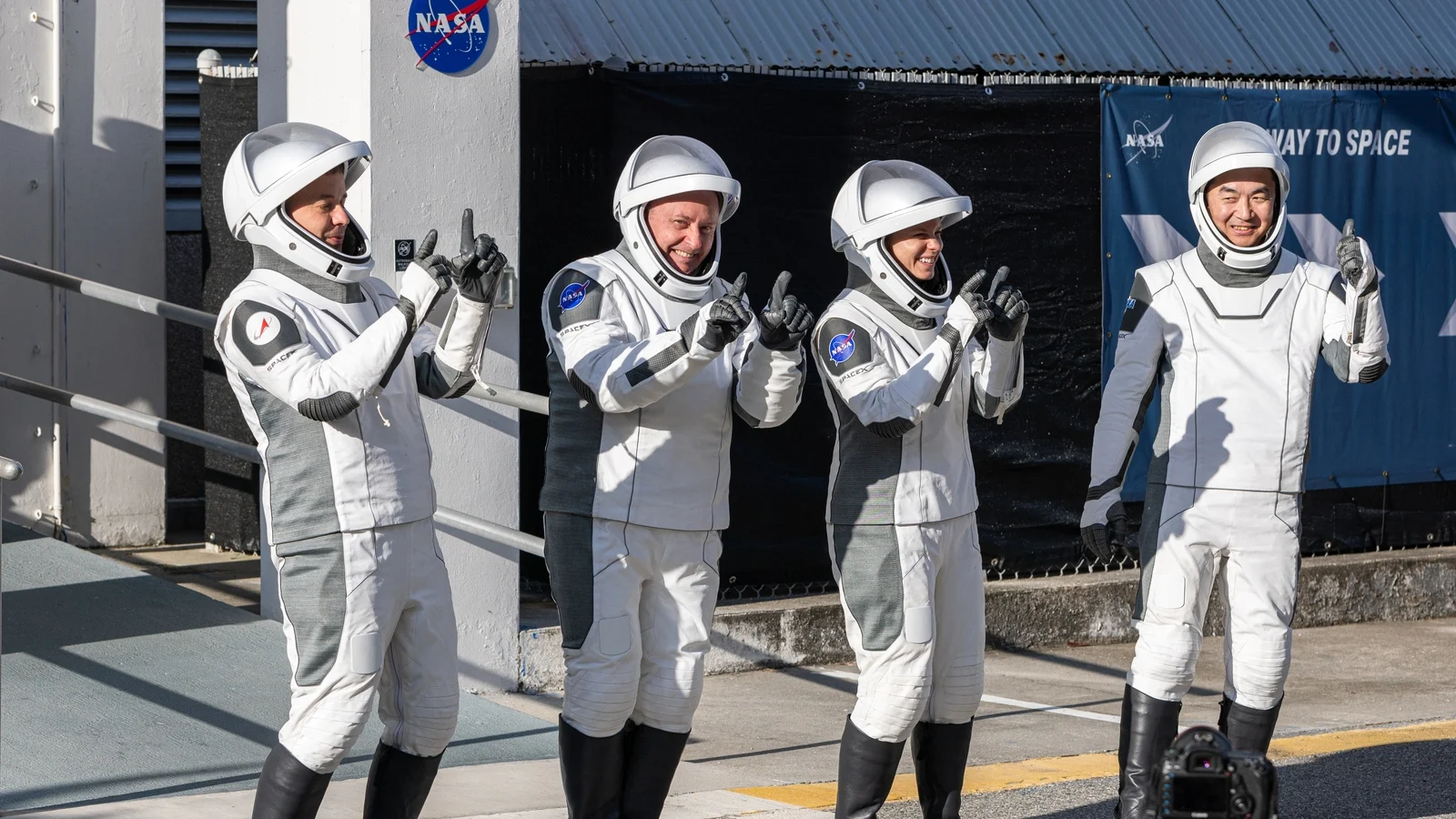
Late last week, NASA announced the unprecedented: an early evacuation of one member of Crew-11 and three crewmates, cutting short a mission that had launched from Florida in August and was slated to run through May. The quartet—U.S. astronauts Zena Cardman and Mike Fincke, Japanese astronaut Kimiya Yui and Russian cosmonaut Oleg Platonov—have been living and working in microgravity, orbiting the planet every 90 minutes, for months.
Chief medical officer James Polk added a detail meant to steady nerves: “this was not an injury that occurred in the pursuit of operations.” In other words, this did not happen while floating outside the station, tethered to the void. But Polk’s careful reassurance only underscored the larger reality: once you are above Earth, certain diagnostic tools and treatments are simply out of reach.
Why this matters
The International Space Station has been continuously inhabited since November 2000—more than 25 years of people living off-planet. In that quarter-century, thousands of experiments have been run, and the ISS has hosted more than 260 people from dozens of countries. Yet, until now, there had never been an emergency medical evacuation of an astronaut mid-rotation.
Space is a laboratory, yes, but it is also a home. And like any home, it must be prepared for the messy contingencies of human life: sudden illness, unseen infections, the unpredictable fragility of a body long adapted to gravity.
Inside the capsule: the limits of care in orbit
Life on the station is designed for resilience. Medical kits on board are sophisticated by terrestrial wilderness standards: they include supplies for suturing, dental care, emergency airway management and kits for treating everything from severe burns to cardiac events. Telemedicine connects crew to doctors on the ground who can walk them through procedures. Yet microgravity complicates even routine care—blood doesn’t pool the same way; imaging is limited; operating tables are non-existent.
“We can do a lot remotely,” said a NASA flight surgeon who asked to remain unnamed, “but not everything. An X‑ray is not the same in microgravity. A CT scan? Impossible. At some point you have to bring the person to a hospital.”
- Typical ISS medical resources: basic surgical tools, medications, emergency airway equipment.
- Limitations: no on‑board CT or MRI; limited capacity for invasive diagnostics or surgeries.
- Evacuation timeline: shuttle and capsule schedules, weather, and landing windows all influence how fast a crew member can return.
These constraints are not theoretical. In 2024, NASA scrubbed a spacewalk when an astronaut complained of “spacesuit discomfort.” In 2021, a planned Extravehicular Activity (EVA) was aborted due to a pinched nerve. Each instance was treated as confidential, private—an adult negotiation between agencies, crews and families. The secrecy is protective, but it also leaves the public with little sense of how precarious life in orbit can be.
The canceled spacewalk: a small image for a big problem
Part of the drama unfolded in almost cinematic fashion: Mike Fincke and Zena Cardman—suited, trained, tethered—were scheduled for a six-and-a-half-hour spacewalk to install hardware outside the station. The EVA was called off at the last minute. For the crew, it was a disappointment; for mission planners, it was a reminder that human health dictates the schedule, not a calendar or a checklist.
“It’s a sobering thing when you have to unstrap people from their tools and bring them back inside,” said a mission operations specialist. “You train for anomalies, for contingencies, but every human event is a test of our protocols.”
Voices from the ground
Back on Earth, reactions ranged from clinical concern to quiet anxiety. At Cape Canaveral, a retired technician who has watched launches for decades paused, hands in his jacket pockets.
“You never get used to the idea that someone is closer to the stars than to a hospital,” he said. “It hits different when it’s someone you know—or someone who could be anyone’s kid.”
In Tokyo and Moscow, partners in the multinational endeavor offered terse statements of support. The space program is, at its best, an exercise in shared risk: astronauts from different nations live together, eat together, rely on one another. An illness aboard the station is thus a diplomatic, logistical and human problem all at once.
What experts say
Space medicine is evolving. With an eye on Artemis lunar missions and future Mars expeditions, both of which will demand months or years of autonomy, experts argue that on‑site diagnostic capability must improve.
“If we expect to send humans farther from Earth, we must build healthcare that can travel with them,” said Dr. Elena Russo, a professor of aerospace medicine. “That means portable imaging, better tele-robotic surgery interfaces and perhaps, eventually, autonomous medical AI systems.”
She notes that even on the ISS, many health events are manageable. Most crew members experience nausea and muscle atrophy; some report skin issues or dental problems. But catastrophic events, while rare, require contingency planning that stretches current capabilities.
Beyond the headline: what this reveals about our aspirations
There is a temptation to treat space as a test of technology alone: rockets, life-support, propulsion. But this episode scrapes at a deeper theme: the human body is not an instrument to be optimized indefinitely. It is a living system, messy and fragile, especially when removed from the ecological cradle of Earth.
What does this mean for the future of commercial spaceflight? For space tourism? For missions that will place crews months away from Earth-based hospitals? It raises urgent questions about consent, risk tolerance, and equity. Who gets access to advanced in-orbit medical care? How do we weigh scientific goals against the sanctity of a life?
Those are questions for policymakers, engineers and ethicists. But they are also questions for readers: if someone offered you a seat on a private flight to low Earth orbit tomorrow, would you go? And what would you demand in terms of medical safeguards?
Closing thoughts: a planet watching, and waiting
For now, the astronaut is coming home. The mission that was meant to run to May has become, instead, a case study in humility. We will likely never know, and rightly so, the private medical details of the person whose health prompted this decision. Privacy matters. Compassion matters more.
What remains public is a lesson: even at the pinnacle of human achievement—living and working in orbit—our species is bound by the frail biology we carry. Our technology can stretch us, lift us, and amaze us. But in moments of crisis it is human judgment, not hardware, that decides when to cut a mission short and bring someone back into the messy, generous, forgiving air of home.
Will we learn from this? Will future stations and lunar gateways be outfitted with the medical tools that make emergency returns less likely? Keep watching the sky. And keep asking hard questions about what it means to take our lives, with all their needs and vulnerabilities, beyond the blue.