When the Sky Turned Copper: Fires, Heat and the New Normal in Victoria
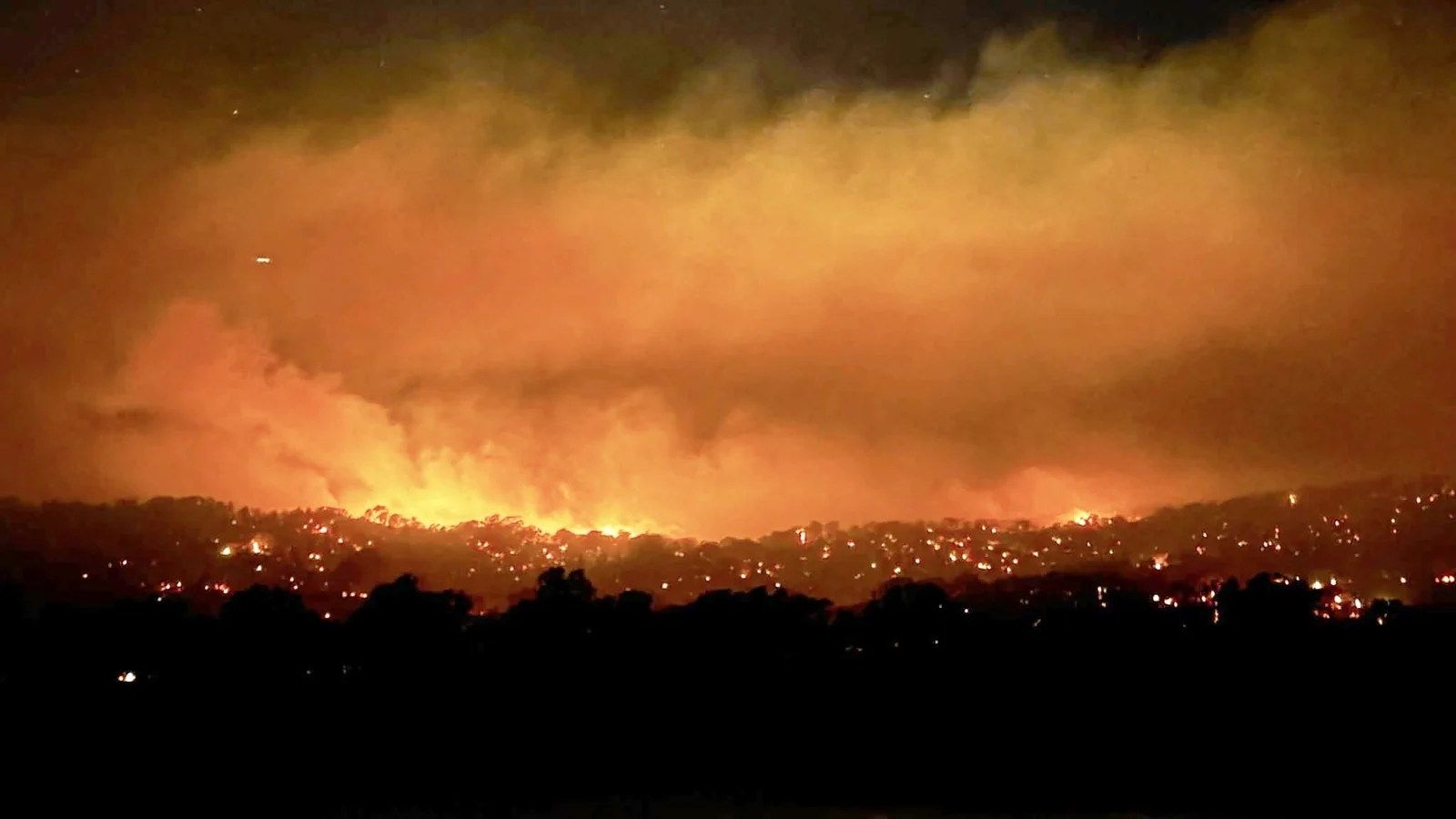
The horizon above Longwood looked like a painting scorched at the edges — a low, seething rim of smoke blotting out the late-afternoon sun and turning the whole world the color of old copper. Embers skittered across paddocks, tumbling like angry sparks from a blacksmith’s forge. For people here, life moved between the smell of eucalypt and the taste of dust: the two had always been companions. This week the dust carried something darker.
Victoria’s southeast has been living inside a heatwave that pushed thermometers beyond 40°C, whipping hot, dry winds across ridgelines and turning tinderbox patches of native forest into fast-moving infernos. One blaze alone ripped through nearly 150,000 hectares around Longwood — a swath of country where sheep, gums and small towns have long shared an uneasy treaty with fire.
Emergency powers, forced evacuations and a grim tally
On Thursday, state premier Jacinta Allan declared a state of disaster, handing firefighters broader powers to order evacuations and move resources with speed. “It comes down to one thing: protecting Victorian lives,” she said, her voice steady but edged with the strain of a leader trying to keep ahead of an element that has never been entirely tamed.
Emergency Management Commissioner Tim Wiebusch told reporters that at least 130 structures had been razed across the state — houses, sheds, farm buildings — and that agricultural assets, from vineyards to cropping land and livestock, had suffered heavy losses. “We’re looking at tens of thousands of hectares impacted, communities disrupted, and a long recovery ahead,” he said.
Ten major fires were still burning even after a brief easing in conditions. Hundreds of firefighters from interstate had arrived to bolster local crews; many on the ground were volunteers who know their fire trails and the quirks of the wind here better than anyone. “There’s no template for a night like this,” said one volunteer firefighter, wiping ash from his beard. “You just keep moving, you keep talking, and you keep the people safe.”
Lives interrupted—stories from the front line
Cattle farmer Scott Purcell, from a farming district near the worst-affected areas, described the moment flames first took the skyline. “There were embers falling everywhere. It was terrifying,” he told the ABC, voice tight with memory. His description is familiar in towns with few hundred residents, where the pub, the local school and the CFA brigade form the spine of community life.
Three people who had been reported missing within one of the state’s most dangerous firegrounds were located — a momentary relief amid ongoing anxiety. In Walwa, a town tucked into alpine foothills, lightning strikes helped ignite a fire that was so intense the heat itself created a localised thunderstorm, an eerie phenomenon firefighters call a “pyro-cumulonimbus.”
Across the border in South Australia, wildlife carers sounded the alarm after hundreds of baby bats perished when the heat reached levels animals simply could not withstand. “It’s not just homes and fences,” said a wildlife rescuer. “It’s the tiny, fragile things — the neonate bats, the ground-dwelling lizards — that pay the heaviest price and don’t make the headlines.”
What the numbers tell us — and what they don’t
Some figures are blunt instruments. Nearly 150,000 hectares scorched near Longwood. More than 130 structures destroyed across Victoria. Ten major fire grounds still active as crews fight to contain lines. Temperatures surging past 40°C. Hundreds of firefighters mobilised from around the country.
Other truths live in smaller, quieter numbers: the number of windows blackened by smoke in a primary school, the count of neighbourly offers of a spare room, the days a vineyard will take to recover or fail. These metrics will shape how communities rebuild, how insurers decide, and how farmers measure loss.
- Longwood fire: ~150,000 hectares affected
- Structures destroyed across Victoria: at least 130
- Active major fires: 10 (as conditions eased)
- Temperatures: above 40°C across parts of the state
- Wildlife losses: hundreds of baby bats reported dead in South Australia
Memory, ecology and the long shadow of Black Summer
For many Australians, the phrase “Black Summer” does something raw to the throat. The 2019–2020 fires burned millions of hectares across the eastern seaboard, destroyed thousands of homes, and tainted city skylines with smoke for weeks. The memory of that season is not just historical; it is a sore, constant reminder that this landscape can flip from serene to catastrophic in a matter of hours.
Scientists say the pattern is no accident. Australia has warmed by an average of 1.51°C since 1910, a figure that does not live in isolation but as part of a global trend that fuels longer fire seasons, more extreme heat events, and the sort of “fire weather” that made this week so dangerous. “Climate change doesn’t cause every fire,” says Dr. Aisha Kumar, a wildfire ecologist at the University of Melbourne, “but it stacks the deck. We’re now playing a game with different rules.”
Questions the crisis forces us to ask
When communities gather at recovery centres to swap stories and tools, what will resilience look like in ten years? Should we be redesigning towns, changing building materials, and rethinking how we farm? And perhaps the hardest question of all: how do we balance the deep cultural place of fire in Australian ecology — some native species rely on fire to regenerate — with the fact that hotter, more intense blazes are pushing systems past breaking points?
“There’s no single answer,” Dr. Kumar says. “It has to be policy, land management, community planning, and a global effort to cut emissions. All of those pieces are necessary.”
Local color, small acts of kindness, big questions
In the small towns ringed by charred gums and battered fences, people are doing what they always do: making scones for displaced neighbours, opening church halls, hauling water, and loaning trailers. A butcher in one hamlet donated packs of sausages to volunteers; a local school teacher turned her classroom into a donation drop-off. These are the human stitches that hold communities together when the world frays.
Yet the mood is not simply stoic. It is tired. People speak about a future where summers are longer, where insurance premiums rise, where younger generations ask whether staying on country is worth the risk. “We love this place,” an elderly woman who declined to give her name said, standing near a row of burnt greenhouses. “But we’re not foolish. We know what can happen.”
Where to from here?
There are practical steps: better early warning systems, defensible space around properties, and strategic fuel-reduction burns timed with ecological sensitivity. There are policy steps: investment in resilient infrastructure, support for rural mental health, and national coordination on emergency response. And there are global steps: accelerating the transition away from fossil fuels, meeting emissions targets, and helping vulnerable regions adapt.
But beyond plans and budgets lies a more human demand: the need to listen. To the volunteer who slept in her car to keep a pump running. To the farmer who counted his losses in the hollow of his hands. To the young people who came back to clear a neighbour’s fence without asking for payment. Their stories are not just anecdotes — they are a ledger of what communities will accept as normal and what they refuse to lose.
So when you look at a map this evening and see the smudge of fire along Victoria’s border, think beyond the headline. Think of the man who can’t sleep because of the smell of smoke in his brush, the child who will wake with ash in their hair, the rescuer who works another shift with no end in sight. And ask yourself: what is the role I can play — locally, nationally, globally — in a world that is warming and learning, often painfully, how to live with fire?