When Bondi Fell Silent: A Shoreline Ritual of Grief and Resolve
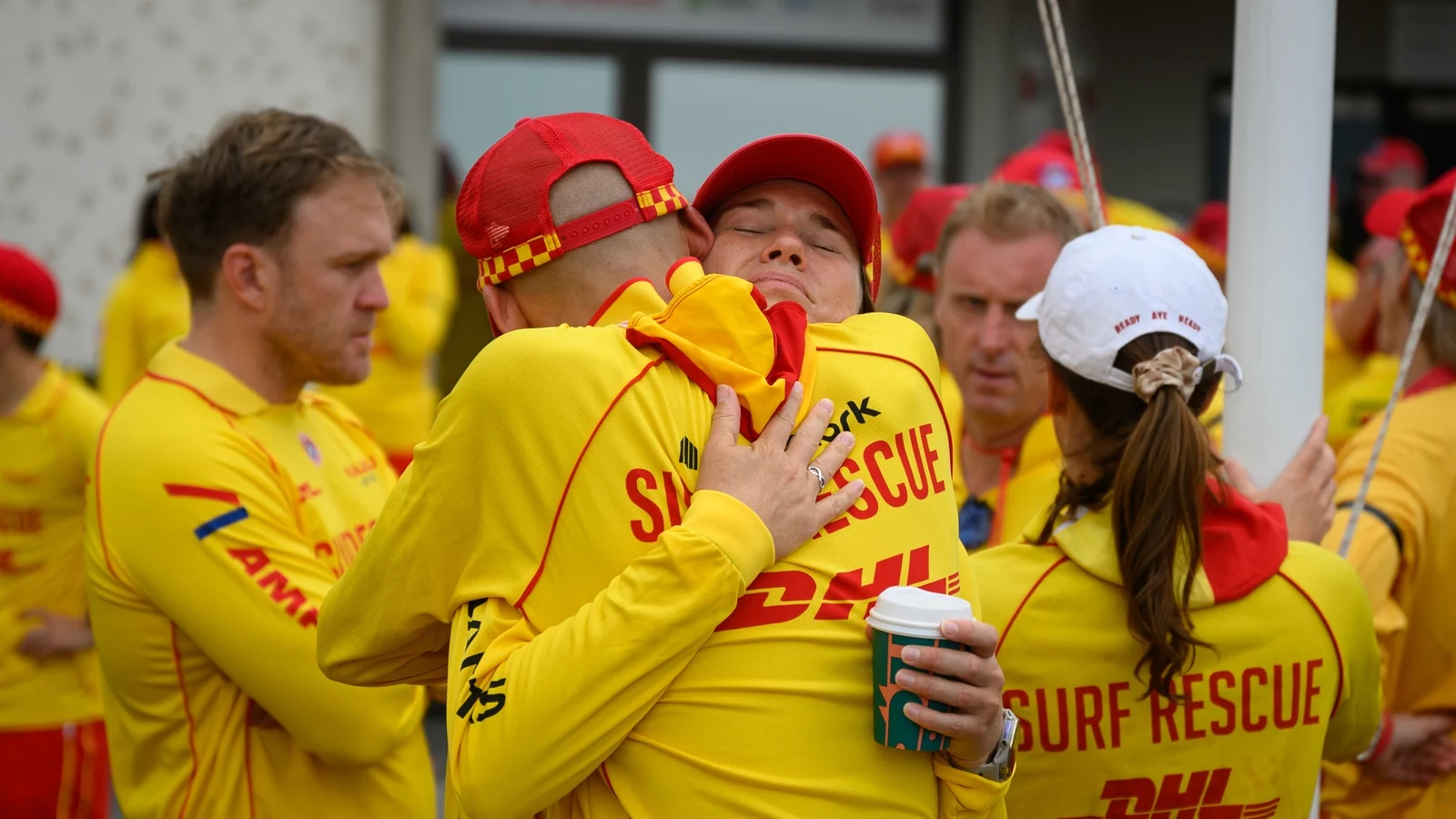
There are moments when a place you think you know—its light, its smells, the rhythm of its tides—suddenly shifts and feels unfamiliar. On an early Sydney morning, the iconic stretch of sand at Bondi lost its usual soundtrack: no surf boards clacking, no buskers, no laughter carried on salt-thick wind. Instead, hundreds of red-and-yellow uniforms stood motionless, facing the ocean, and the world felt a fraction quieter for it.
For three minutes, surf lifesavers—men and women who usually patrol the break and joke with swimmers—held a vigil. Some bowed their heads. Some clutched one another. A helicopter hovered low, its rotor wash a distant drum, like breath being held across the city. It was a public act of mourning for the 15 people killed when gunmen opened fire at a seaside celebration of Hanukkah last week—one of the deadliest mass shootings in Australia’s history.
The faces behind the uniforms
“We don’t wear the red and yellow for show,” said Ella, a volunteer who started training in junior surf club at ten. “We wear it because someone might need help at any moment. Today that meant we needed to stand still and remember, even though every instinct is to run back into the water and do something.”
Among them were career lifeguards, teenagers in training, and grandparents who still volunteer patrols. Their silence was not a media moment; it was a heartbeat of collective grief. Across the continent, lifesaving clubs matched the homage—small, somber gestures before their morning patrols began.
What happened at the celebration
On 14 December, a seaside gathering to mark Hanukkah turned to horror when two men opened fire into the crowd. Nationals and visitors alike now know the names associated with the attack: Sajid Akram, 50, who was later killed during a police shootout, and his son Naveed, 24, who survived and has since been charged with terrorism-related offenses and 15 counts of murder. Families are grieving. A community bound by ritual and welcome has been wounded.
“We are heartbroken,” said Rabbi Miriam Katz, standing near a table of flowers and candles set up by local residents. “This was an attack on our celebration, on our sense of safety. The support from strangers—people who came up to us with a sandwich or a blanket—reminds us that love can be louder than fear.”
Everyday heroes at the water’s edge
It’s impossible to tell the story of that night without the lifeguards. They were among the first people on the scene—pulling people out of panic-swollen waves, applying dressings, performing CPR on unfamiliar bodies under the flicker of streetlights. An image that spread around the world captured one of those moments: a young lifeguard, Jackson Doolan, sprinting barefoot down the road from Tamarama to Bondi carrying a defibrillator, intent on saving lives.
“That photo says it all,” Waverley Council Mayor Will Nemesh told reporters. “Our lifeguards show selflessness every day in keeping our world-famous beaches safe for surfers and swimmers, but what we saw on Sunday night should be commended and celebrated.”
Across Australia, volunteer surf lifesaving clubs trace their roots back to the early 20th century—born of local communities coming together to tame a dangerous coastline. Today they are a national institution.
- More than 200,000 people are members of surf lifesaving clubs across Australia.
- In the past year those volunteers carried out over 8,000 rescues.
Numbers like that are not abstract; they are a ledger of lives watched over. “We train for waves, but we also train for the moment a person needs immediate care,” said Marcus Chen, a senior lifeguard who has patrolled Bondi for 12 summers. “That night tested every part of our training—and our hearts.”
A nation asked to pause
On the week mark of the attack, the country was asked to stop. Prime Minister Anthony Albanese called for a national day of reflection and urged Australians to light candles at 6.47pm on 21 December—exactly one week after the assault began.
“Light a candle, remember those lost, and stand with the Jewish community and with the bravery of those who tried to save others,” a government spokesperson said, echoing the prime minister’s appeal. The precise time—6.47pm—has acquired ritual significance; a small, synchronized act of remembrance in homes, synagogues, town halls, and on balconies.
It is a fragile form of solidarity, but an important one. In a world where grief can be privatized by scrolling feeds and algorithmic news cycles, synchronized gestures invite shared sorrow and say: we are paying attention.
Local color and small kindnesses
Around Bondi, ordinary acts of care cropped up like small beacons: café owners making free coffee for stunned lifeguards, surfers leaving bouquets on the lifeguard tower, a retired nurse setting up a quiet place for people who needed to sit. “We had people come in shaking, asking if they could just sit and be,” said Rosa Martinez, who runs a corner bakery. “We made them a croissant and wrapped their hands around a mug. It’s what you do. You keep each other warm.”
A father who had been at the celebration, his voice still thin with disbelief, told me, “You’re supposed to come here and feel the sea clean your lungs. That night, the water couldn’t wash it away. But when the lifeguards came—when strangers picked up strangers—that gave us something to hold on to.”
Beyond the sand: larger questions
Grief here is local and global at once. Bondi is a postcard for millions, but this incident reverberates beyond Australia’s sandy arc. It raises questions about targeted violence against minorities, the responsibilities of communities to protect public spaces, and the emotional labor volunteers carry during crises.
What happens when the people we trust to keep us safe—volunteer and professional—become the ones who must extract our neighbors from harm? How do communities heal when the site of celebration becomes a crime scene?
We won’t find simple answers in ritual alone. But small rituals—candles, silence, the presence of a volunteer with a defibrillator—are not nothing. They are the halting, human scaffolding we build when we don’t yet know how to stand again.
How to respond
If you live in Australia, consider the practical: show up to vigils, offer blood if there are calls for donation, show support to local Jewish organizations and mental health services. If you’re abroad, light a candle in solidarity, speak out against antisemitism and violence, and remember that the impulse to help is not confined by borders.
As I left Bondi that morning, the tide slowly swallowing footprints, a teenage surf patrol member tucked a single tea light into his pocket. “For tonight,” he said. “We’ll light it at 6.47.”
Will you join him? Will you let a moment of silence and a single flame move you toward renewed care for strangers, toward building communities that can both celebrate and protect? The shore remembers. The sea keeps its own counsel. But it is the people—rescuers, neighbours, strangers—who stitch the coastline back together, one small act at a time.