A nation holds its breath: the arrest of Australia’s most decorated soldier
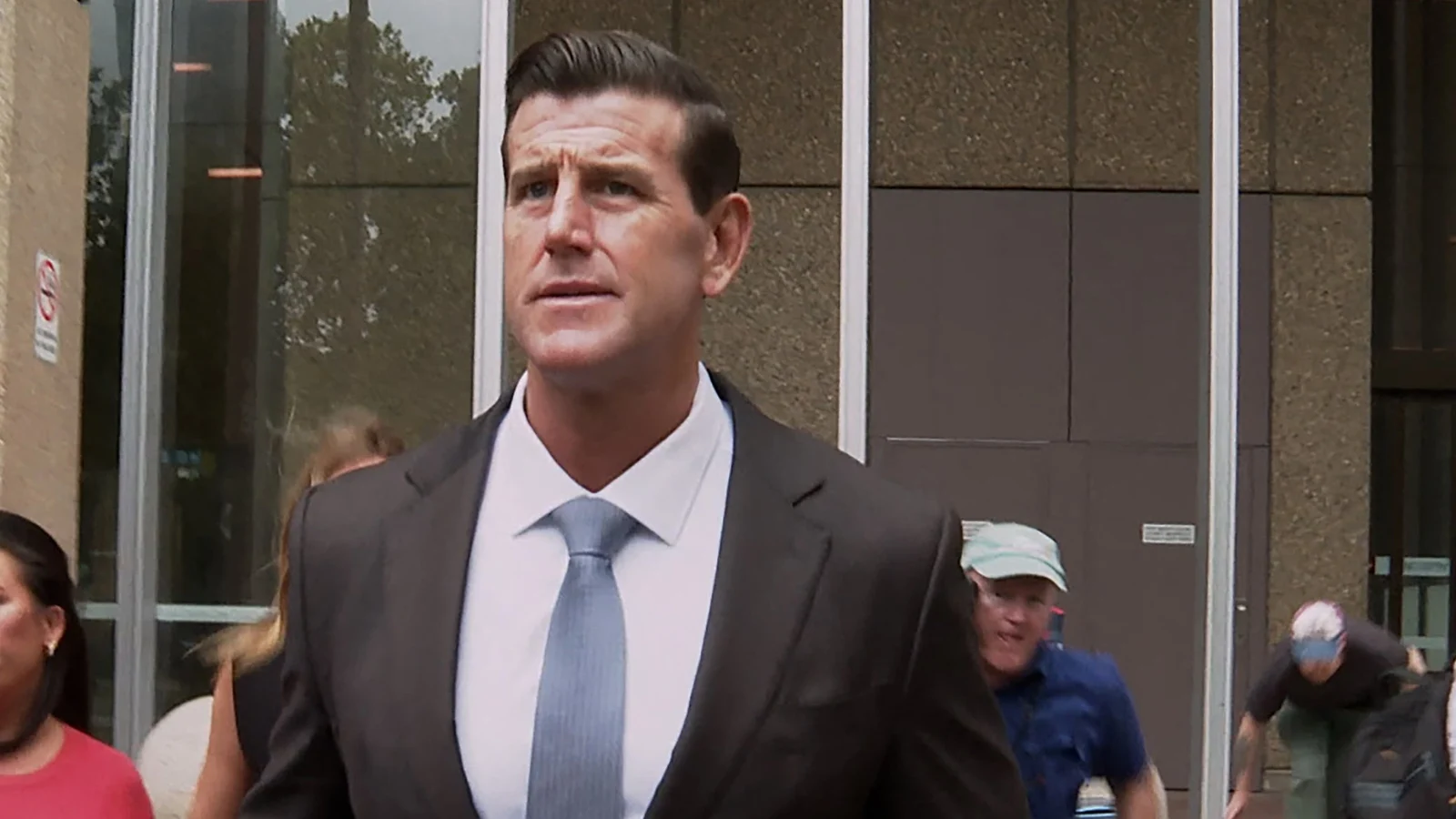
The sharp, fluorescent glare of Sydney Airport’s arrivals hall softened into a different light on a rainy morning as officers led a man in handcuffs across the tarmac and into a waiting police car. The footage, terse and unemotional, cut through the usual churn of travelogues and vacation snapshots: this was not the image of a returning hero it once might have been.
At 47, Ben Roberts-Smith — once feted as one of Australia’s most decorated soldiers — was arrested on charges that would, if proven, rewrite pages of the country’s military history. The Australian Federal Police say he faces five counts of alleged war crimes, connected to the killing of five unarmed people in Afghanistan between 2009 and 2012. Each charge, the officials reminded the country, carries a possible sentence of life imprisonment.
“It will be alleged the victims were not taking part in hostilities at the time of their alleged murder in Afghanistan,” AFP Commissioner Krissy Barrett said at the press conference, her voice steady, the words clinical and chilling. “It will be alleged the victims were detained, unarmed and were under the control of ADF members when they were killed.” She added that police would allege the victims were shot either by the accused or by subordinates acting on his orders and in his presence.
How a hero became the center of an unfolding legal storm
Roberts-Smith’s medals — including the Victoria Cross — were once worn as proof of extraordinary bravery. He served multiple tours in Afghanistan with the Special Air Service Regiment, the kind of covert, high-stakes deployments that forge legends and also, sometimes, shadows. For many Australians, he was the embodiment of courage; for others, his reputation had already been clouded by persistent allegations that began to surface publicly in 2018.
Those allegations, first reported in a series of newspaper articles, accused him of atrocities ranging from the fatal shooting of an unarmed teenager to ordering the execution of detainees. Roberts-Smith fiercely denied the claims and took the publishers to court in a defamation case that became the nation’s most expensive of its kind. In 2023 a Federal Court judge found that four of six murder allegations had been proven. A final appeal to the High Court was dismissed in September 2025.
“When the courtroom doors closed, people thought the legal chapter was over,” said Dr. Aisha Rahman, a legal scholar who has followed the case. “But the criminal process is different. A civil ruling and a criminal charge are separate paths to truth and accountability, and this arrest signals that path is now being walked.”
Investigations hamstrung by distance, complexity and the fog of war
The Office of the Special Investigator and the AFP opened their probe into alleged war crimes in 2021. The pair have since worked through a labyrinth of evidence, witnesses and operational records. Their task has been made agonizingly difficult by geography and time: investigators cannot travel to the original scenes in Afghanistan to gather forensic evidence the way they would in a domestic homicide.
“We don’t have access to the crime scenes, we don’t have photographs, site plans, measurements, the recovery of projectiles, blood-spatter analysis — all of those things we would normally get at a crime scene,” Ross Barnett, director of investigations at the OSI, told reporters. “It makes this process complex and very time-consuming.” Despite that, he said, the joint OSI-AFP effort has been methodical: they have opened 53 investigations into allegations against Australian Defence Force members for actions in Afghanistan, with ten still active and at least one other former special forces soldier due to face trial next February.
For families in Afghanistan — many of whom live with grief that stretched across borders — the arrival of charges in Sydney is a small, fragile echo of justice. “We cannot go back in time,” said one interpreter who worked alongside Australian forces and asked to remain anonymous for safety reasons. “But for the relatives, seeing that there is an investigation gives them a moment of recognition. It says: your loss was seen.”
Voices in Australia: a country divided, searching for answers
Among veterans, reactions were varied and raw. In a suburban football club in Brisbane, where Roberts-Smith once coached junior players, a woman who had known him since childhood wiped rain from her face and said, “He used to come and help at the barbecues, teach the kids to kick the ball straight. You never think the person who helps your kids could be accused of something like this.” Her voice held both disbelief and fatigue.
“We served together,” said a former SAS comrade, speaking on condition of anonymity. “We are shaken. Not because we don’t want accountability — of course we want the truth — but because this could stain an entire generation of soldiers who put their lives on the line.”
Amnesty International, whose campaigners have long pressed for investigations into alleged violations, hailed the arrest as “a critical step toward global justice and accountability efforts.” “Australian authorities must now ensure all credible allegations are fully investigated and, where appropriate, prosecuted,” Zaki Haidari, Amnesty International Australia’s strategic campaigner, said. The plea is clear: this is about more than one person’s fate; it is a test of institutional will.
Why this matters beyond one courtroom
At stake is the broader question of how democratic societies confront the darkest allegations within their own institutions. How do militaries balance secrecy and security with transparency? How do nations ensure accountability while supporting troops placed in extraordinary danger?
These are not abstract questions. The 2020 inquiry into Australian special forces’ conduct in Afghanistan — which uncovered credible evidence that dozens of unarmed prisoners had been unlawfully killed — prompted sweeping cultural and procedural reviews. Reforms aimed at oversight, commander responsibility, and the mechanisms for reporting misconduct followed, but critics say progress has been slow.
“This case is a crucible,” Dr. Rahman said. “It will test whether reforms are substantive or merely symbolic. If the process is robust and fair, it can strengthen the rule of law and public trust. If it’s bungled, it can deepen cynicism.”
Questions to carry with us
As the defendant appears at a bail hearing, and as witnesses — some of them far away and difficult to access — are sought and scrutinized, Australians and readers worldwide alike are left to wrestle with uncomfortable truths. What does justice look like for victims thousands of kilometers from where cases are tried? How do communities reconcile pride in military service with the imperative to investigate wrongdoing? Can institutions both protect soldiers and hold them accountable?
These are not questions with neat answers. They are, instead, the contours of a national conversation that will shape policy, military culture, and the lives of many people — from veterans who served beside the accused to families in Afghanistan who may have waited years simply to be acknowledged.
For now, the rain has stopped at Sydney Airport. The police car pulled away. Inside courtrooms and in small houses in distant valleys, lives will pivot on testimony, documents and the slow, deliberate machinery of justice. Whether this chapter closes with conviction, acquittal or further complication, the arrest has already reopened a wound that Australia, and democracies everywhere, must confront sincerely.
What do you think justice should look like in times of war? How should societies balance loyalty to their soldiers with accountability for wrongdoing? I invite you to reflect, discuss, and keep watching — because this story is not just about one man. It is about how we, collectively, face the hardest parts of ourselves.