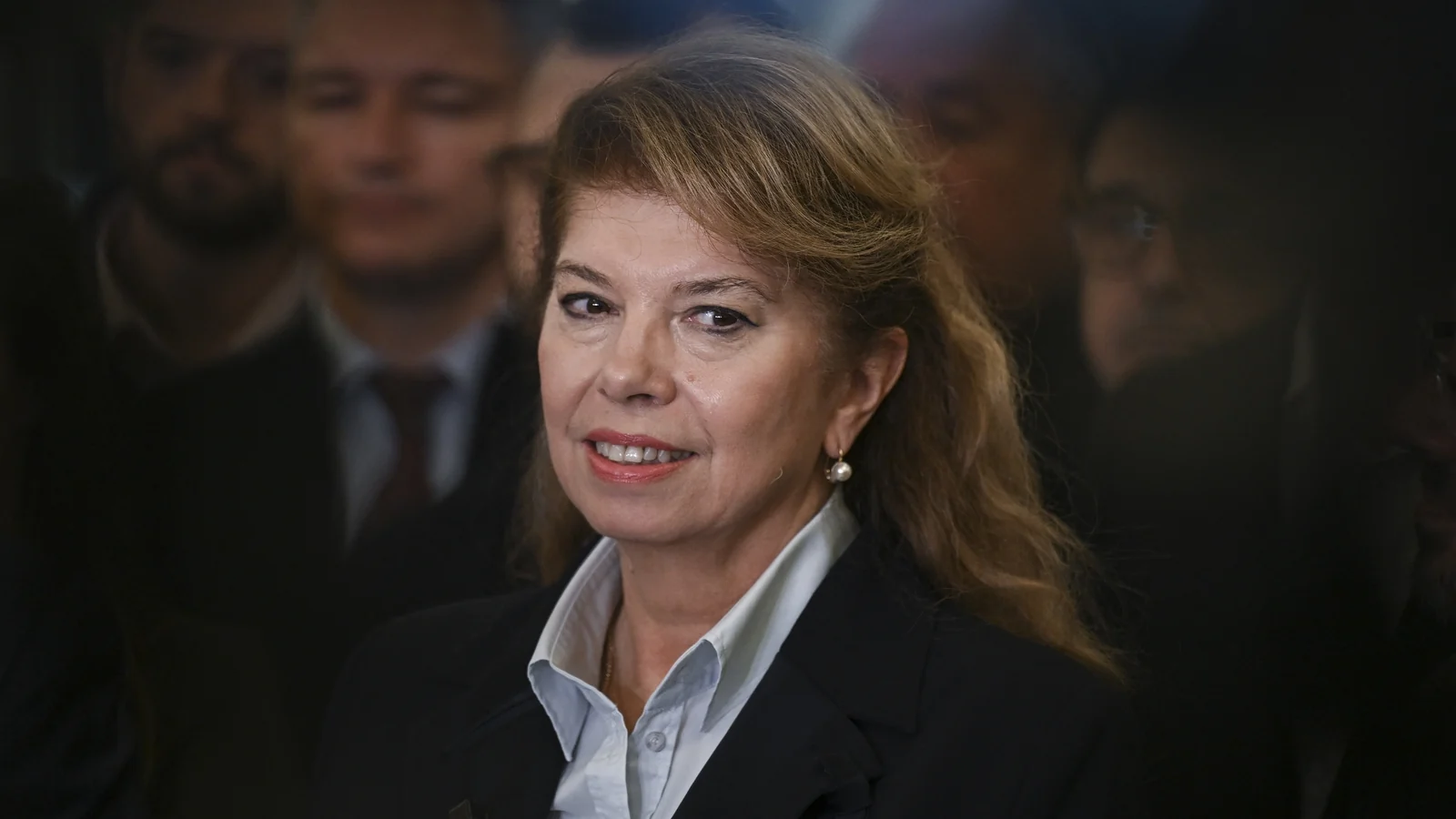
Bulgaria’s voters have handed Iliana Iotova a clear win in a presidential runoff, elevating a leader known for urging dialogue with Moscow and opposing military aid to Ukraine.
The contest for the largely ceremonial presidency set Iotova, an ally of Prime Minister Rumen Radev, against Andrey Gyurov — a banker and former caretaker prime minister supported by the pro-Western opposition.
According to estimates from several polling institutes, Ms Iotova secured between 57.4 percent and 58.2 percent of the vote. Mr Gyurov trailed well behind on between 38.6 percent and 39.6 percent.
Standing beside Mr Radev, a beaming Iotova told supporters she had prevailed with a campaign message centred on “incomes, peace and the challenges that lie ahead”.
European Union chief Ursula von der Leyen offered congratulations to Ms Iotova.
“From security and defence to our competitiveness and energy independence, I look forward to continuing our joint work. For a strong Bulgaria in a strong Europe,” she wrote on X.
Congratulations to @IlianaIotova on her victory in the presidential elections. From security and defence to our competitiveness and energy independence, I look forward to continuing our joint work. For a strong Bulgaria in a strong Europe.
— Ursula von der Leyen (@vonderleyen) November 1, 2026
‘Clear path forward’
The runoff unfolded under heightened tension following a string of drone attacks on commercial shipping in the Black Sea, incidents that have sharpened worries about regional security.
Several vessels were hit off Bulgaria’s Black Sea coast in October, leaving 21 people missing, in what is believed to be spillover from the Russia-Ukraine war.
Although centre-left Mr Radev said the strikes appeared to align with Russian interests and summoned Russia’s ambassador, his government has maintained there is still no evidence directly tying the attacks to Moscow.
“Today, the Bulgarian people have chosen the future over the past,” Mr Radev said. Like Ms Iotova, he has argued for dialogue with Moscow.
“They have opted for normalcy and a stable, clear path forward.”
Ms Iotova was flanked by Bulgaria’s Prime minister Rumen Radev as she addressed the media
Ms Iotova, 62, assumed the presidency earlier this year after Mr Radev stepped down to campaign in parliamentary elections.
With her victory now confirmed, she is poised to become the first elected woman president in the country of 6.4 million people.
Mr Gyurov, 50, a former deputy governor of the Bulgarian National Bank, told reporters he accepted “the results as they are.”
“We have laid a solid foundation upon which we can build,” he said, stressing the need to pursue unity despite the polarised race.
‘Chord of fear’
Long linked to Russia by history and culture, Bulgaria remains sharply split over how to manage its relationship with Moscow.
“The sensitive chord of fear regarding war was exploited. Even today, Iotova presented herself as the ‘president of peace,’” said sociologist Boryana Dimitrova of the Alpha Research institute.
For Mr Radev and his allies, she added, the election was “crucial for the stability of their hold on power”.
After casting her ballot in Sofia, Ms Iotova said she wanted “Bulgaria to be strong in a strong Europe” and to stay “sovereign in its decisions”.
Bulgaria has been historically close to the Kremlin
A longtime political partner of Mr Radev, she backs Bulgaria’s membership in the EU and NATO while insisting that peace in Ukraine can come only through negotiations.
Ms Iotova, a former journalist and ex-member of the European Parliament, previously won election as vice-president alongside Mr Radev in 2016 and again in 2021.
Mr Gyurov said after voting that his choice was for a “secure, stable and European Bulgaria”.
The first round — narrowly won by Ms Iotova — saw turnout slump to a record low of 23%. Participation in the runoff was projected at around 27%.
Petar Doitchinov, a 67-year-old retired engineer, said he had stayed home in the first round because he expected a second vote.
He said he backed “the lesser evil”, explaining that neither candidate fit his “vision of democracy.”