Crans-Montana in Mourning: A New Year’s Night That Echoes Through the Alps
On New Year’s morning, the celebratory clang of glasses and the breathless cheers that normally greet the first sunrise of the year were replaced by an ache so large a mountain town could feel it. In Crans-Montana — that beloved, picture-postcard ski resort in Switzerland’s Valais canton, where chalets slope into pine forests and luxury hotels face the glaciers — 40 lives were extinguished in a single, merciless instant.
The blaze, which tore through a basement bar in the early hours of 1 January, left more than 100 people injured and a community stunned. Most of the victims were teenagers; the youngest was only 14. Families from across Europe — France, Italy and beyond — are now counting names rather than celebrating the year ahead.
What Happened
Prosecutors say investigators believe “fountain” sparklers — the small, decorative candles that spout glittering jets and are often used on celebratory cakes — ignited the bar’s low ceiling. In a cramped, soundproofed basement crowded with revelers, flames found a ready home and moved with terrible speed.
Two people who ran the bar are under criminal investigation on suspicions that include negligent homicide. Authorities told reporters the pair are not currently being held in custody and do not appear to be a flight risk, while probes continue into inspections, safety systems and compliance with local rules.
Numbers That Won’t Fit in a Headline
Statistics alone feel thin against personal loss, but they matter. Forty dead. More than 100 injured. Teenagers among the dead. These are the hard facts the town must reconcile with the human stories behind them.
The Town Responds: Silence, Candles, Questions
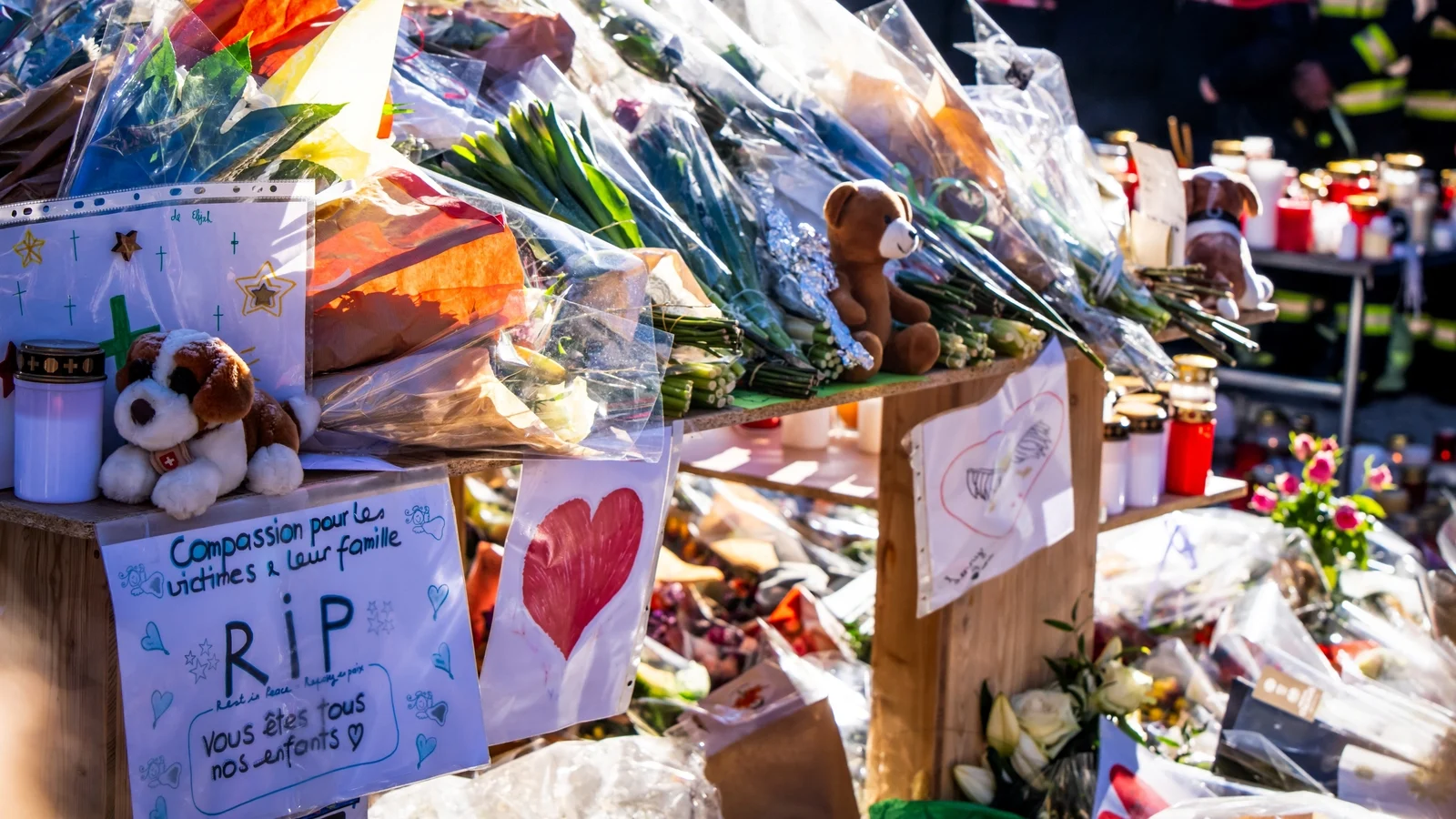
Crans-Montana has always thrummed with a particular mix of Alpine luxury and youthful abandon — après-ski in one hour, classical concerts the next. But yesterday the main street hosted a silent procession. Residents wrapped scarves tight against the chill, faces flushed from cold and grief, while small groups left flowers and handwritten notes outside the bar’s shuttered façade.
“I came because we must remember,” said Marie-Claire, a local schoolteacher who joined the march. “We owe it to the young ones who went out to celebrate to make sure their laughter isn’t turned into silence for future generations.”
Across town, a makeshift memorial grew with each hour: wool hats, little ski gloves, Polaroids, and teddy bears placed against the chew of neutral stone. The sight of teenage sneakers lined up like offerings is the sort of image that lingers.
Rising Questions: Rules, Inspections, and Responsibility
Beyond grief sits an urgent, unglamorous set of questions: Had annual inspections been performed? Were ceiling materials and soundproofing compliant with fire codes? Were age checks and capacity limits enforced on a night when the crowd skewed very young?
One of the bar’s operators told local media that the venue had been inspected three times in the last decade and “everything was in order.” Canton authorities say they are reviewing whether the bar had undergone mandatory annual building inspections and whether any complaints had been lodged to the town.
Not everyone is satisfied with answers that may take weeks to arrive. “This isn’t just about one sparkler,” said Luca, a parent whose daughter was injured but survived. “It’s about whether we expect bars to be safe or whether we accept risks when there are young people in crowded spaces.”
Key Areas Investigators Are Scrutinizing
- Fire-safety compliance: materials, exits, fire suppression systems
- Inspection records and the frequency of official checks
- Use and regulation of pyrotechnics in indoor venues
- Age verification and crowd-control procedures on high-risk nights
Voices: Anger, Grief, Demand for Change
Political speech quickly followed the tragedy. Some leaders called for accountability; others urged restraint until investigators complete their work. A high-profile political figure in Italy argued publically that those responsible must face prison if negligence is found — a sentiment mirrored by many who feel justice should be swift.
“We need to know whether rules were skirted for profit,” said an emergency-room doctor in Sion who treated dozens of burn victims. “When young bodies come in with severe burns or smoke inhalation, it tests both the hospital and the community.”
A local youth worker, who preferred not to give his name, spoke of a different loss: “These kids weren’t just clients in a bar. They were our neighbors, our students. We don’t want to ban joy — but we do want to guard it better.”
Local Color and the Wider Frame
Crans-Montana is multilingual and cosmopolitan — French is dominant, but German and Italian voices are never far. In winter, the town is a collage of ski suits, fur-lined hoods, and the smell of melted cheese at every corner. That very tourism economy — the bars, the late-night venues, the event-driven calendar — is being reassessed now in light of the disaster.
This asks a broader question: how do mountain resorts balance the pulse of nightlife with the rigors of safety? Switzerland, like many European countries, has strict building codes and a layered municipal-canton regulatory structure. Yet when an establishment serves intoxicated crowds of mixed ages, enforcement gaps and the informal tolerance of youthful revelry can create dangerous seams.
Global Lessons: Nightlife, Regulation, and Youth Safety
Accidents like this reverberate far beyond the Alps. In recent years, incidents in nightclubs, festivals and public celebrations elsewhere have exposed similar fault lines: poorly maintained venues, unchecked pyrotechnics, and a mismatch between safety regulations and the reality of crowded, late-night spaces.
What does a responsible nightlife look like? It includes better training for staff, routine and transparent inspections, strict limits on indoor pyrotechnics, and clear enforcement of age and capacity rules. It also demands that locals and visitors alike recognize the human cost when corners are cut.
How You Can Reflect or Act
What should travelers consider when they go out in resort towns? How should communities protect young people who are exploring nightlife? These are not easy questions.
But when you next raise a glass in a foreign town, maybe ask: who checked the exits here? How many people could leave this room in a minute? These small, awkward questions can be the beginning of a culture that prizes safety over spectacle.
After the Smoke Clears
For now, Crans-Montana mourns. Investigations will attempt to stitch together timelines, to find a legal arc of responsibility, to name failures and recommend reforms. Families will try to bury their dead. Survivors will carry scars — seen and unseen.
And somewhere between grief and accountability, a town and a tourism industry must decide how to honor those lost: in stricter rules, better enforcement, and in a shared vow that a joyful night shouldn’t become a final one.
How do we build nightlife cultures that celebrate without endangering those who come to them? The answer will shape not just one Alpine town, but communities everywhere that gather to mark life’s milestones under low ceilings and bright sparks.