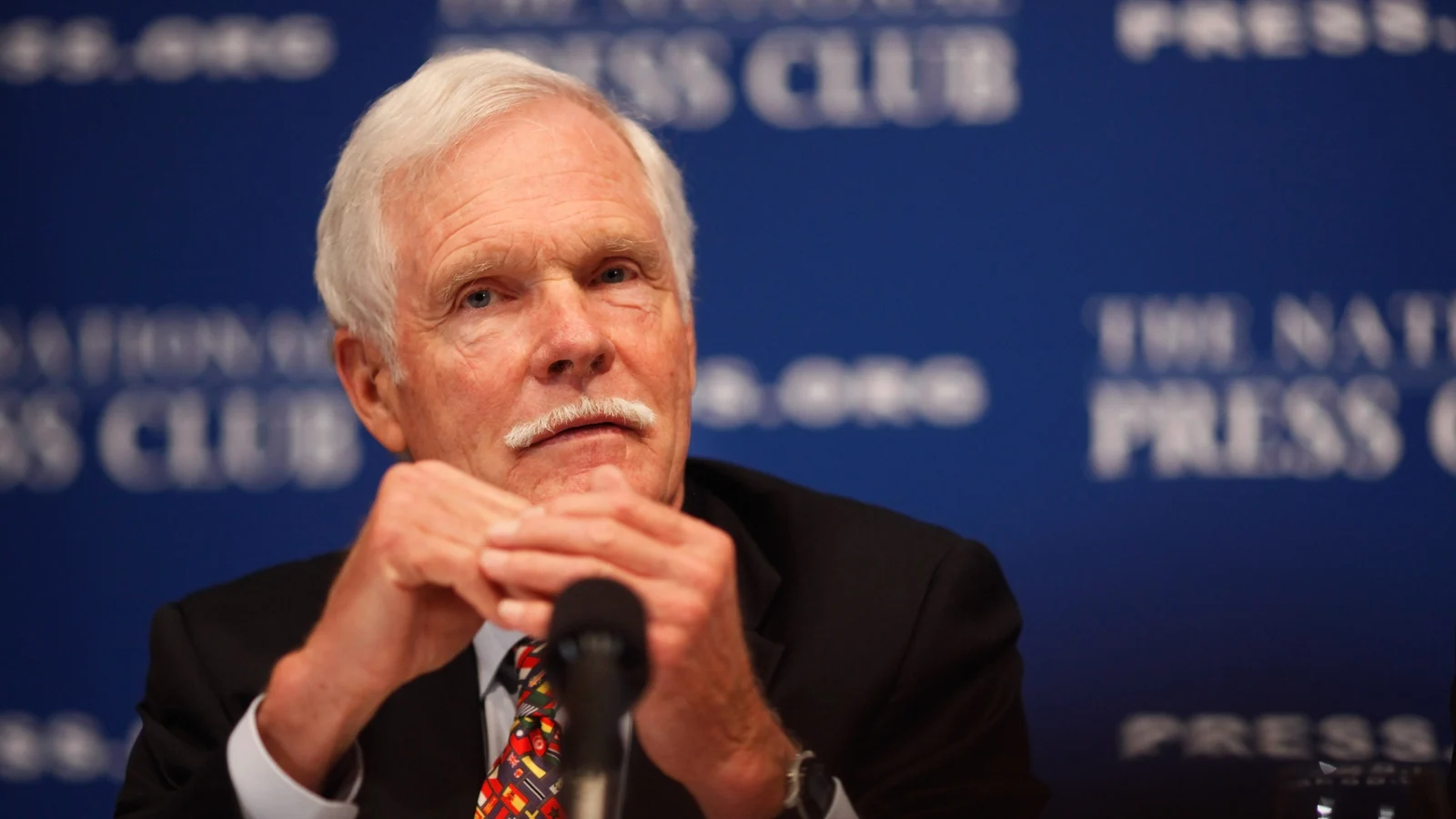
The Man Who Turned News Into a Round-the-Clock Pulse
Walk into the old CNN Center in downtown Atlanta on a quiet afternoon and you can still imagine the hum: blinking consoles, anchors pacing in front of banks of monitors, producers barking orders that no one in a print newsroom ever dreamt of hearing. That hum—equal parts adrenaline and obsession—was the world Ted Turner built.
Ted Turner, the audacious Southern entrepreneur whose name is woven into the architecture of modern television, has died at 87, his network said. He had been living with Lewy body dementia, a degenerative condition that robs people of memory, movement and the steady thread of the life they once knew.
From an Atlanta UHF station to a global newsroom
Turner’s idea was wildly simple and impossibly bold: why shouldn’t news be available all the time? On 1 June 1980, Cable News Network—CNN—went on air and turned that rhetorical question into a new reality. Where once news arrived in the morning paper or at the evening bulletin, Turner insisted on immediacy: live, continual, relentless.
That gamble matured into a global habit. CNN’s large-screen, live-from-the-scene coverage—most famously during the Gulf War of 1990–91—recast the public’s expectations. Viewers watched the world in real time, and networks around the globe scrambled to catch up. “He changed the tempo of journalism forever,” said Mark Thompson, chairman and CEO of CNN Worldwide. “Ted is the giant on whose shoulders we stand.”
Turner’s media empire didn’t stop at nonstop news. From his small start in a struggling Atlanta television station in the early 1970s—WTCG, a channel that would later become the national powerhouse TBS—he sprouted a constellation of channels that touched nearly every corner of American living rooms: TBS and TNT for entertainment and sports, Turner Classic Movies for cinephiles, Cartoon Network for children and the nostalgic adults who never quite grew out of Saturday morning cartoons. Forbes has estimated his fortune at roughly $2.8 billion.
A complicated, unmistakable figure
He was a native of Cincinnati, born Robert Edward Turner III in November 1938, a Southerner by temperament if not always by birth certificate. He went to military school in Tennessee, studied at Brown University before being expelled, then found himself thrust into a family advertising business after a personal tragedy—his father’s suicide. Turn the wheel hard enough and reinvention followed: radio stations, then that small Atlanta television outlet, then a platform that would speak to the world.
People remembered Turner for his contradictions—a gruff mustache and a public persona that could be larger than life; a love of yachts and a fierce environmental streak; a billionaire with a soft spot for causes. “He’d buy a yacht and then use it to talk about marine conservation,” said a longtime Atlanta resident. “That was Ted: showy and principled, sometimes at the same time.”
Local color and the man behind the myth
In Atlanta, where Turner’s footprint is still visible in the skyline and old studio spaces, his legacy lands in small, human ways. At the Peachtree Café—steeped in the kind of Southern hospitality Turner was born into—a waitress recalled the first time her parents stayed up all night watching live coverage from Baghdad. “We didn’t know what real-time meant until CNN,” she said. “It felt like the world had suddenly moved into our living room.”
Another neighbor remembered Turner’s taste for sports and spectacle. He owned the Atlanta Braves for decades, turning a regional baseball team into a national brand that traveled the country on television and in the imaginations of millions of fans.
Why a 24-hour news cycle matters — and what it costs
It’s easy to look back and call Turner visionary; it’s harder to account for the cultural ripples he set loose. The 24-hour news model accelerated the demand for immediacy in reporting—and with it, a series of trade-offs. Stories no longer waited for reflection; they had to be packaged for the next commercial break. The appetite for speed sometimes outpaced the appetite for verification.
Turner’s innovation also invited competition. Cable gave rise to networks with overt frames and political identities—Fox News and MSNBC being notable examples—each responding to an audience that wanted not only breaking facts but interpretation, affirmation, and at times, outrage. We live with the consequences: an information ecosystem that is faster and far more fragmented.
“Ted invented the rhythm of modern news,” said a journalism professor who studies media ecosystems. “That rhythm has democratized information access—hundreds of millions of households, around the world, now expect news immediately. But the tempo also stresses institutions of verification and shared reality.”
An illness that reminds us of human fragility
Turner’s final public chapter was defined by a disease many know little about. Lewy body dementia is one of the more common forms of progressive dementia after Alzheimer’s. Symptoms can include visual hallucinations, tremors, mobility issues and shifts in attention and alertness. For a man who once thrived in the electric clarity of the newsroom, the slow fog of dementia was a cruel contrast.
“We think of powerful men as invulnerable until the end,” said Dr. Lena Park, a neurologist who works with dementia patients. “Lewy body dementia can be merciless in how quickly it changes someone’s sense of self. Ted Turner’s struggle is a reminder that behind every public persona is a person who ages, fears and grieves.”
Legacy: an empire and its echoes
Ted Turner’s influence is stitched through business, culture and politics. CNN’s model sparked an entire industry. His cable channels reshaped family viewing habits. His philanthropy—he donated millions, and once pledged a $1 billion donation to the United Nations—added texture to an already complex public image.
But beyond the channels and the balance sheet, there’s a cultural inheritance that is harder to quantify: the habit of watching the world as it happens. That habit has informed everything from global awareness to political polarization; from activism that rallies around live footage to markets that react to minute-by-minute developments.
So how should we remember a man like Ted Turner? As a bold entrepreneur who gave us new ways to see? As a provocateur whose innovations reshaped public discourse in ways both constructive and corrosive? Perhaps the answer is both. Human beings are rarely simple—and the most consequential figures are often messy, paradoxical, fiercely generous and occasionally infuriating.
Parting questions
As you scroll past headlines on your phone or queue up a rolling-news channel, ask yourself: what do we want from our news in an age of instant access? Do we hunger for immediacy at the cost of context? How do we honor the inventors of our information age while learning from the strains their creations introduced?
Ted Turner remade the news. He also left us with the obligation to steward that transformation with care. If nothing else, his life is a prompt to think more critically about how we watch the world—and how, in the watching, we shape it.