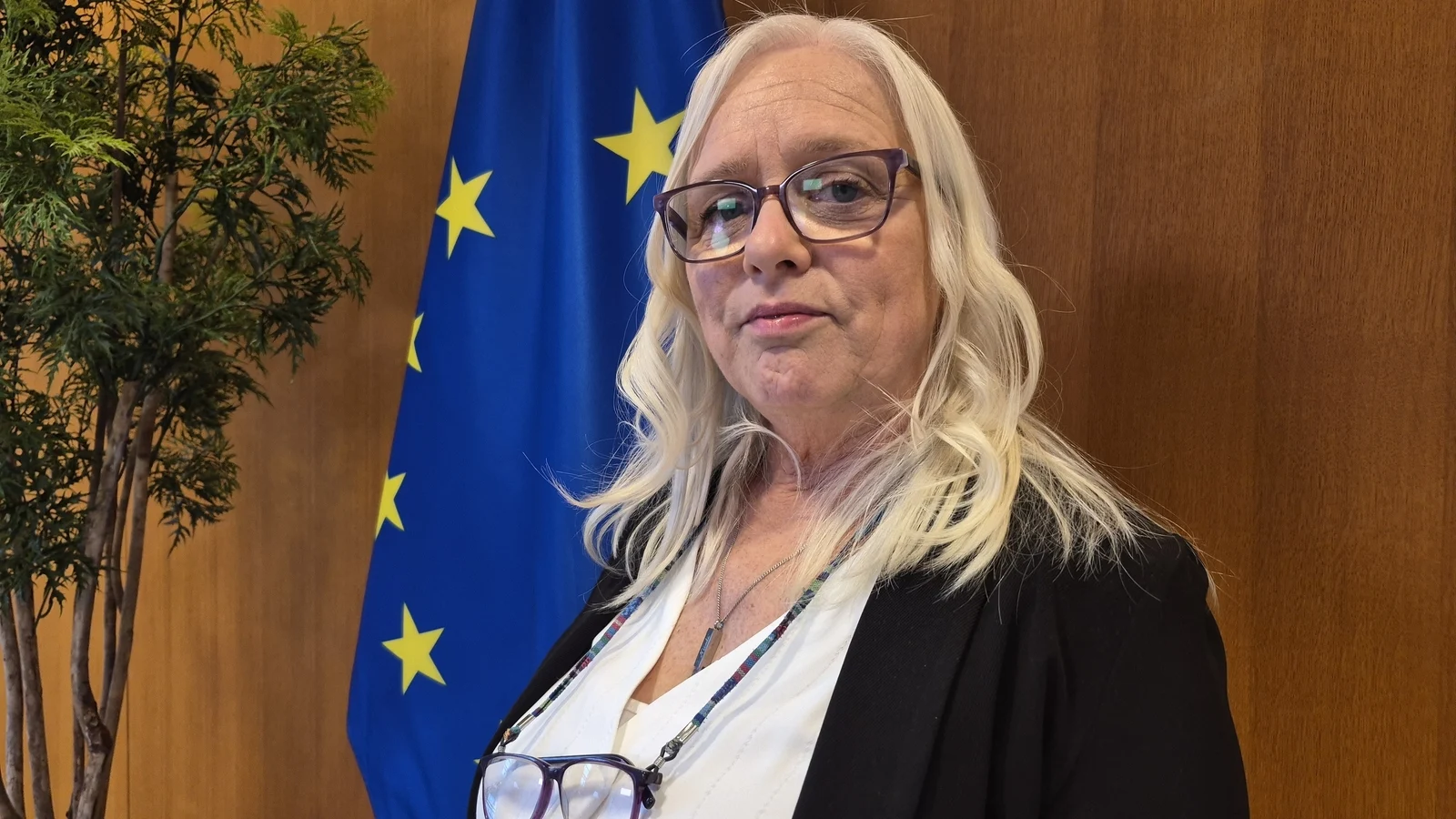
Strasbourg, a mother’s plea, and the quiet revolution she carried with her grief
When Jackie Fox stepped into the European Parliament chamber in Strasbourg on International Women’s Day, she did not come with statistics or slick policy briefs. She came with a photograph of her daughter, Nicole — known to friends as Coco — and with a sorrow so raw it made the room hush.
“She was a vibrant, funny, bubbly young woman… But she was targeted by relentless physical and online abuse for three and a half years,” Jackie told MEPs, her voice steady with the kind of clarity that grief sometimes brings.
I listened to that testimony and watched a modern institution pause. Members of the Parliament rose to their feet. Some wiped their eyes. Roberta Metsola, President of the European Parliament, called Jackie “one of Europe’s heroines” — a title that feels both right and painfully inadequate.
Coco’s story: small details that become unbearable
Nicole’s story is intimate in the worst sense — the circulation of images, whispers turned torrent, the endless humiliation that migrated from playgrounds to private messages to public humiliation online. Jackie described nights when she could not breathe from sorrow. “I couldn’t even breathe, I was crying that much,” she said.
This is the architecture of modern harm: a single post, a doctored image, or a coordinated campaign can magnify cruelty beyond the reach of traditional protections. For Jackie, that harm ended in the unthinkable. For others, it is an ongoing nightmare.
How grief became policy in Ireland
Out of Jackie’s campaigning came a law now widely known as Coco’s Law: the Harassment, Harmful Communications and Related Offences Act 2020. It criminalises serious online harassment and the sharing of intimate images without consent — an explicit recognition that virtual violations can have deadly, real-world effects.
Since the law’s passage, Ireland has seen at least 240 prosecutions under the act. Those numbers do not convey the full texture of change — a parent who once felt powerless now watches courts take action; victims who feared silence see their abusers held to account. But they do illustrate that when legal frameworks adapt, behavior can shift.
Why Jackie asked Europe to listen
Standing in Strasbourg, Jackie did not stop at Ireland. “Coco’s Law is bigger than one country,” she told MEPs. “Protect every adult and child before it’s too late. Please let Nicole’s story be the reason we change the future.”
Her plea is simple and urgent: patchwork protections across 27 member states leave gaps. A survivor in Dublin might have options a week earlier than one in another capital. Jurisdictional barriers, inconsistent criminal laws, and platform policies that vary wildly across borders mean perpetrators can find safe harbors.
There are signs Brussels is listening. The Digital Services Act, which came into force in 2023, tightened responsibilities for online platforms to address illegal content and dangerous misinformation. But laws like the DSA are about platform responsibility; they do not universally criminalise the spectrum of harassment Jackie described. That is why a legal baseline across the EU matters.
Voices from the room
“We can legislate, but we also have to educate,” a mental health counselor who works with cyberbullying survivors told me after Jackie’s speech. “Nothing replaces a community response: schools, parents, platforms, and lawmakers all must play their part.”
“What’s different now is the weaponisation of technology — the way algorithms amplify cruelty,” said an EU policy adviser who asked to remain unnamed. “We can tighten laws, but we must also pressure platforms to change their incentives.”
The new frontier: AI-manipulated intimate images
Jackie also warned of a dark new turn: AI-altered intimate images. The same tools that can generate art and assist medicine are being misused to place people’s faces onto bodies, to strip clothing from photographs, to create hyper-realistic fakes that humiliate and erase consent.
“There needs to be a law to prosecute people who think it’s okay to share an intimate image of someone or to change someone’s face or remove their clothes,” Jackie said. She welcomed Ireland’s intention to amend Coco’s Law to include AI images — but she urged the rest of Europe to follow.
Experts warn the problem is expanding. A growing body of research shows that deepfake images and videos are increasingly being used for revenge porn, political manipulation, and extortion. The technical barriers to creating these images are falling every day; what used to require skill and resources is now available in a few clicks.
Concrete steps Europe could take
Jackie’s call for a European response raises practical questions: what would effective, proportionate, and enforceable EU-wide protections look like?
- Establish a common criminal definition across the EU that covers non-consensual intimate imagery, AI-manipulated images, and sustained online harassment.
- Create cross-border investigative mechanisms so victims can seek redress even when content or perpetrators are located in different member states.
- Mandate rapid takedown and victim-support pathways on major platforms, with independent audits of compliance.
- Fund prevention and education campaigns in schools that teach digital consent and ethical technology use.
“Legislation must be coupled with resources,” noted a digital rights advocate. “We need funding for hotlines, counselling, and legal aid. Laws without support services are paper promises.”
The human dimension: wakes, cups of tea, and memory
In Ireland, grief is often expressed in ritual — a wake, stories told over cups of tea, the gentle stubbornness of memory. Jackie has taken that local language of mourning and translated it into civic action that resonates across Europe.
“I so struggle with the word ‘pride’ because I shouldn’t have to do any of this,” she told RTÉ News after her Strasbourg address. “But seeing the standing ovation, tears in their eyes — it just means that they’re empathetic. They see what I’ve done and most of all, every single person that walked out of that room knows who my little girl is.”
That public recognition matters. It transforms Nicole from a statistic into a presence in the minds of lawmakers, a moral compass guiding legislation away from abstractions and towards people’s lives.
A question for the reader
What would you want lawmakers to know about the online world you live in? How would you balance free expression with the urgent need to protect vulnerable people from coordinated abuse and technological exploitation?
These are not easy questions. They demand nuance: laws that deter harm without smothering dissent, platforms that respond fast but respect due process, societies that focus on prevention as much as punishment.
From grief to momentum
Jackie Fox walked into the European Parliament as a bereaved mother and left as a catalyst. The standing ovation was not an endpoint; it was an acknowledgement that one family’s loss had become a claim on the conscience of an entire continent.
“She’s in their heart or she’s in their head, and that’s so important to me,” Jackie said. Those words linger as an invitation: to remember, to act, and to build protections that ensure fewer families ever have to stand where she stood.
That, perhaps, is the clearest test of a humane digital age — whether we will make the tools we invent safe for the people who use them, and whether, when tragedy strikes, we choose to turn sorrow into lasting change.