When the Sea Returns a Story: Shipwrecks, Strikes, and the Question of Humanity
On a late summer night this year, a wooden smuggling boat ruptured under a hail of gunfire somewhere in the Caribbean. Men and women who had survived that first savage encounter clung to splinters and floating debris, their faces pale under a knife of moonlight. Minutes later, according to lawmakers who watched a classified video in a secure hearing room, American forces returned and finished the job.
That single scene — the image of people in the water, motionless and vulnerable, followed by another blow from the world’s most powerful military — has become a symbol and a scandal. It has also forced a simple, terrible question into public debate: when a state declares a maritime front against narcotics, what rules bind it? And what do those rules mean for the people who wash up on the wrong shore?
What happened — and why it reverberates
The incident at the center of the storm took place on 2 September. It was the opening salvo in a campaign of strikes the US military says targeted narcotics-smuggling vessels in the Caribbean and offshore. Officials now link the operation to more than 80 deaths over a series of actions — a toll that has prompted a wave of criticism at home and a diplomatic backlash across the region.
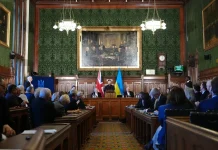
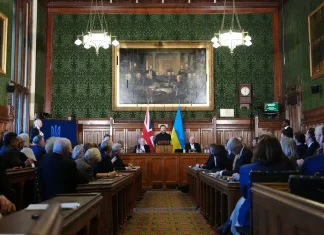
Inside the secure room where members of Congress watched the footage, several Democratic and Republican lawmakers described what they saw as deeply unsettling. “I saw men and women who had already been cut loose from their boat — wounded, unable to move — and then we watched forces engage them again,” one senior Democrat told reporters after the session. “In my view, this is one of those moments where policy and ethics collide.”
“The law is clear,” a retired naval officer who reviewed the video for lawmakers said. “Survivors at sea are to be treated as non-combatants unless they pose an imminent threat. These individuals had no means of locomotion. They were not a threat to a ship or to the United States in that moment.”
From counter-narcotics to counterinsurgency: a rhetoric that changes rules
From Washington, the operation has been presented as a tough but necessary line of defense. The administration has framed the campaign as part of a battle against “narco-terrorists” — a phrase that compresses complex drug networks into a single enemy the military can target. Aircraft carriers, surveillance planes and special operations units have been sent into the Caribbean, officials say, to choke off the flow of illegal narcotics toward the United States.
Yet this militarized approach has opened diplomatic wounds. Venezuela’s president seized the moment to denounce the buildup as cover for regime change, accusing Washington of using drug trafficking as a pretext to interfere in Caracas. “They are looking to overthrow us,” a Venezuelan government spokesman told reporters, echoing a sentiment that has hardened the region’s political contours.
Local voices, local pain
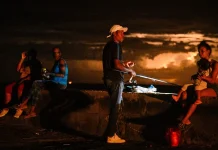
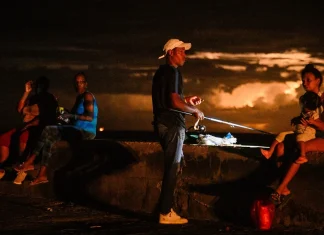
On a quiet fishing pier not far from where one of the strikes occurred, a middle-aged fisher with oil-stained hands and a voice that had known storms for decades shook his head. “We fish these waters every day,” he said. “Some nights you hear the planes, sometimes the shots. When a boat goes down, it’s not the first time we have seen people struggle in the water. But to attack them after — that’s not what we expect from those who say they protect lives.”
Across the region, families of those killed say they have not been informed, or worse, that their loved ones were labeled criminals rather than human beings. “My brother was a father,” one woman told a local radio host. “He left home to make money. He did wrong things, maybe — but when the sea takes you, you don’t shoot the person who’s trying to breathe.”
Lawmakers and legal lines: possible violations and accountability
At the Capitol, the footage prompted lawmakers to ask hard, legal questions. Several described the video in stark terms; some raised the prospect of war crimes. Others argued for a methodical probe, insisting that rules of engagement are complex and that commanders must sometimes make split-second decisions.
“If true, this is a breach of the fundamental protections afforded to shipwrecked people under international law,” a human rights attorney specializing in maritime law said. “The law of armed conflict expects states to take precautions to avoid harm to civilians and to treat survivors humanely.”
The White House and Pentagon officials have sought to shift some of the blame onto operational commanders, telling reporters that the Defense Secretary did not micromanage the engagement. Yet critics counter that political rhetoric that casts traffickers as terrorists narrows the moral and legal lenses through which decisions are made — and ultimately rests accountability at the top.
Who is responsible?
- Operational commanders who authorized or carried out the strike bear responsibility in the immediate chain of command.
- Senior civilian leaders are questioned for the policies that set the tone — declaring a quasi-war on narco-trafficking that invites military solutions.
- Lawmakers argue that, in a democracy, political accountability runs from the field back to those who design strategy.
Bigger themes: militarization, drug policy, and the cost of force
This episode is not merely about one tragic engagement. It sits at the intersection of several global debates: the militarization of law enforcement, the limits of transnational use of force, and the human consequences of drug prohibition policies that funnel vast sums toward violent, volatile markets.
How do we balance the imperative to stop illegal flows of narcotics that can devastate communities with the obligation to preserve life and obey international norms? And how should democracies scrutinize decisions made in secrecy — in classified rooms — that have such irreversible outcomes?
“We must ask whether deploying carriers and strikes is the right tool for a problem that is ultimately social and economic,” a policy researcher at a Caribbean university told me. “Seizures here are a band-aid. They make headlines. But the drivers of this trade—inequality, demand, limited legal opportunity—remain.”
What comes next — and what readers should watch for
Investigations have been promised. Congressional hearings will likely expand. Families will seek answers. For readers, the challenge is not simply to follow the procedural arc — who is blamed, who resigns, who is exonerated — but to hold in view the human ledger: how many lives were taken, how many questions left unanswered, and how policy choices map onto those outcomes.
Will this moment change strategy — less guns, more diplomacy and aid — or will it harden into precedent for more aggressive maritime targeting? Will the region push back with stronger sovereignty claims, or will countries reconcile to foreign forces in their waters because they feel pressured by the scale of the drug trade?
There are no easy answers. But when you imagine those faces in the water, you are asked to decide what kind of state and what kind of world you want: one that preserves the strict rule of law even against those accused of the worst crimes, or one where the perceived immediacy of a threat corrodes long-standing protections.
As these questions ripple outward from classified footage to public outrage, remember that policy isn’t only made in briefing rooms — it is made in small coastal towns, in family kitchens, and on the quiet docks where fishermen watch the horizon and mark the cost of distant choices. What would you have done? And who, at the end of the chain, should be made to answer?