Africa’s top public health official has issued a stark warning: unless urgent gaps in the Democratic Republic of Congo’s Ebola response are fixed quickly, the country could face what he described as the most severe Ebola crisis on record—one that could ultimately cost billions more to bring under control.
More than 800 infections have been recorded in Congo involving the rare Bundibugyo strain of Ebola, which has no proven treatment or vaccine. Of those cases, 192 have been fatal.
Government figures show the virus is moving rapidly through three provinces in the Democratic Republic of Congo, spreading through body fluids and remaining transmissible even after a victim has died.
“If we don’t stop the outbreak very soon it will be worse than what we had in West Africa and eastern DRC,” Africa CDC Director-General Jean Kaseya told a virtual gathering of African heads of state and donors, convened in Burundi.
Kaseya’s message closely mirrored earlier concern voiced by the US CDC. He pointed to the devastating 2014-2016 epidemic in Guinea, Liberia and Sierra Leone, which claimed more than 11,000 lives, and referenced a separate, less deadly outbreak in Congo in 2018.
Yet the funding effort designed to prevent the current emergency from escalating has fallen well short. An African initiative aimed at securing $518 million over the next six months has raised only a small portion of that amount, according to Burundi’s President Evariste Ndayishimiye, who serves as chair of the African Union.
“The resources received do not exceed $100 million,” he said in opening remarks.
Kaseya warned that failing to fully finance the initial plan could sharply increase the eventual price tag. “If we don’t have it in the next four weeks, we will not ask again for $500 million, we’ll be asking about $1.5 billion. If we delay that, it will be $7.5 billion,” he said.
Critical challenges
Separately, a Red Cross official said the Ebola crisis in eastern DRC has not yet reached its peak.
“We are afraid that this could last one year to end this disease,” Bruno Michon, operations manager for the International Federation of Red Cross and Red Crescent Societies, told reporters via video link from eastern Congo.
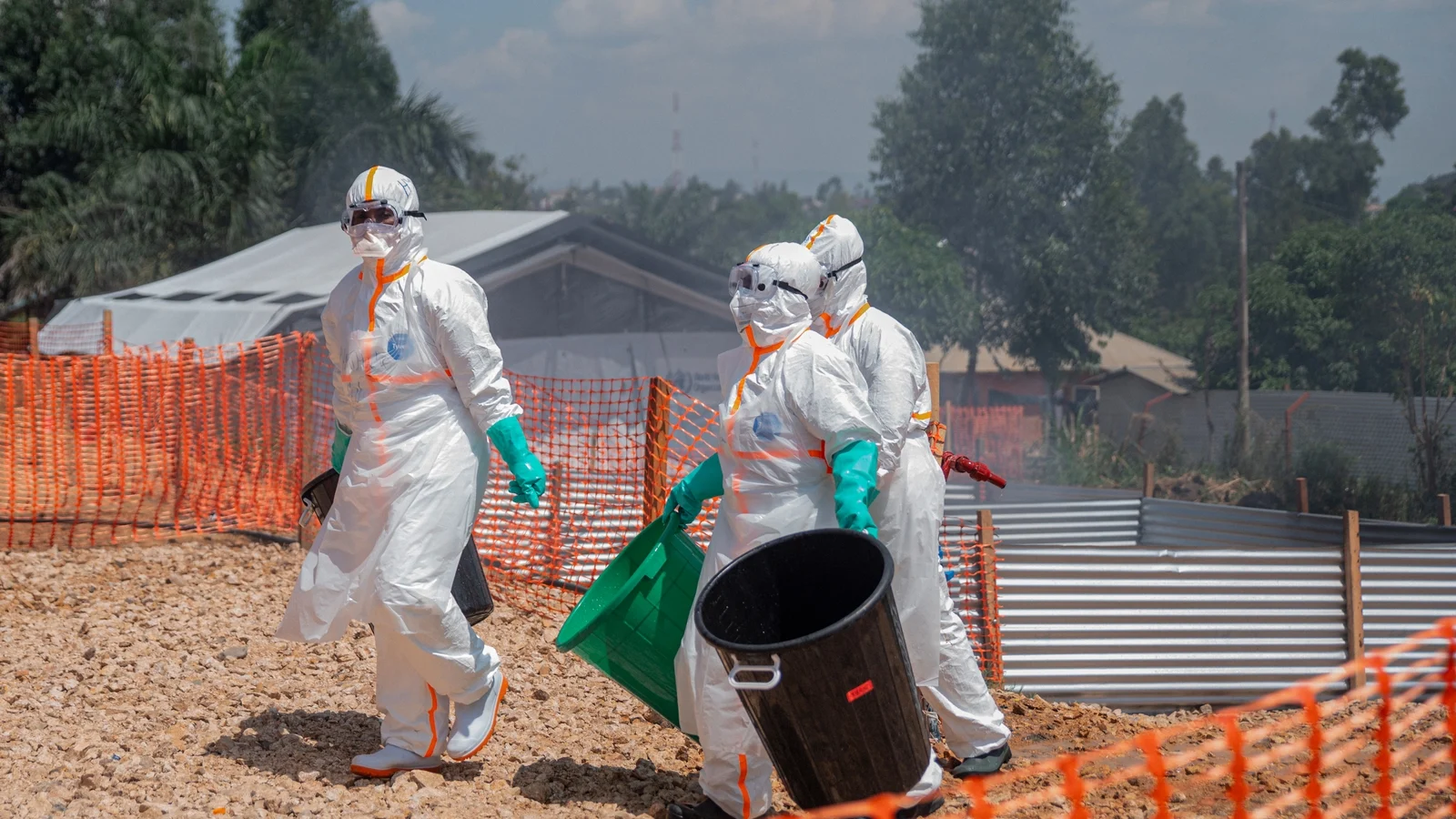
Frontline efforts have been constrained by too few treatment centres and by resistance from some communities to strict hygiene requirements. Health officials have said that more than a month after the outbreak was declared, they still do not know the full extent of the spread.
Michon said IFRC teams—tasked with community engagement and carrying out safe and dignified burials—have encountered verbal abuse, threats and attacks in recent days.
With Ebola, the risk does not end at death: victims’ bodies can remain highly infectious. Unsafe traditional funerals, where relatives handle the deceased without protective equipment, are widely recognised as a major engine of transmission.
Kaseya outlined what he called a list of urgent obstacles, including a lack of resources needed to trace those who may have been exposed to the more than 800 confirmed cases.
“We are just following 12% of our people. This is a major indicator for us. It means we don’t know the magnitude of this outbreak so far,” he said.
He also reported severe shortfalls in burial teams and cited a lack of personal protective equipment.
US calls for more contributions from others
Humanitarian workers say international backing for the current response appears weaker than in past Ebola emergencies—particularly the West African outbreak, when British and American troops joined the effort alongside foreign medical staff.
The US representative at the meeting said Washington was the fastest and most generous donor so far, while urging other countries to step up their contributions.
South Africa, China, Germany, France also said at the meeting they would provide more support to help with the emergency.