When the Lights Go Out: Cuba’s Grid, Daily Life, and a Nation Holding Its Breath
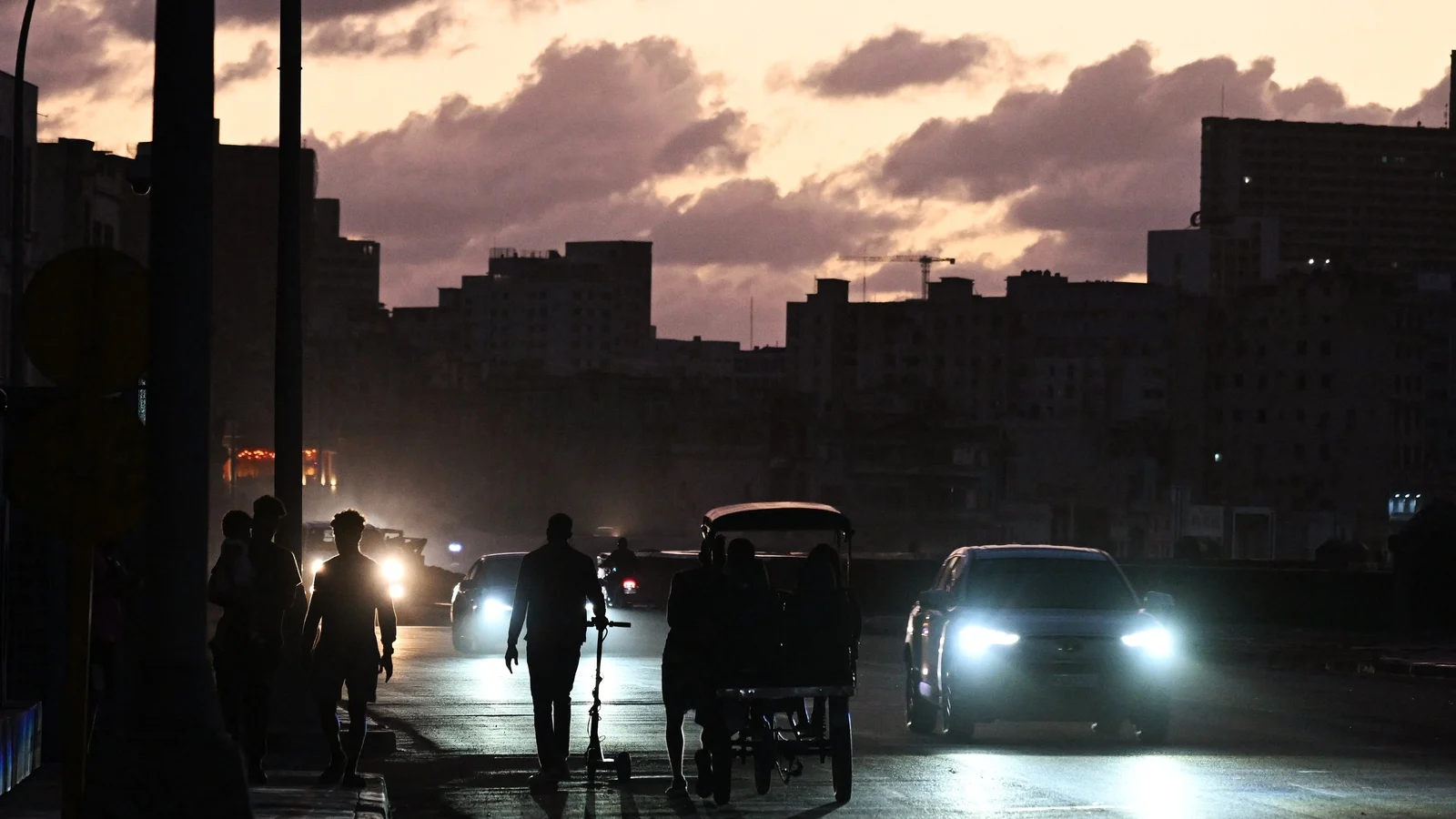
Night fell over Havana like a held breath, and the city exhaled in the dark.
Streetlamps that usually mark the sidewalks with a honeyed wash sputtered into silence. A restaurant on Galiano Street closed early, the fryers cooling, the rhythmic clack of dominoes stopping at an outdoor table as neighbors lit candles. A woman selling yucca near the Malecón wrapped her wares in a plastic bag and muttered, “We’re back to candlelight, like my abuela used to say.”
It sounds cinematic, but it is also painfully ordinary in Cuba right now: a power system stretched past its seams, households improvising, and a country watching its fragile supply chain and political alliances with mounting concern.
What happened — and what officials say
Earlier this week, Cuba’s energy ministry reported a nationwide disconnection of its electrical system. Technicians have slowly restored service in pockets — a gas-fired plant near Havana clicked back into life, a hydroelectric station in the center of the island began feeding the grid, and a unit at a thermoelectric facility returned to operation. But whole neighborhoods remain in darkness, and officials warn of continued instability.
“We are working around the clock to stabilize generation and to protect critical services,” Energy and Mining Minister Vicente de la O Levy told state media, explaining that an outage in one of the island’s thermoelectric units triggered a cascade across the grid.
For the average Cuban, that technical description is less urgent than the immediate problems: spoiled food, disrupted medical care, hot hours without fans in stifling heat, businesses that cannot function and a tourism sector — one of the country’s main foreign-exchange earners — that sees flights trimmed and visitors unsettled.
Why the grid is brittle
Cuba’s energy system is built on shaky foundations. Decades of deferred maintenance have left plants and transmission lines old and vulnerable. The country depends heavily on oil-fired thermoelectric stations — infrastructure that works when fuel is available but falters when shipments slow or stop.
“This is a system strained by age and by geopolitics,” said Dr. Ana Rodríguez, a Havana-born energy analyst now based in Madrid. “When you have a small island economy reliant on imported fuel, any interruption becomes a national emergency.”
Data from recent years paints the picture: a large majority of Cuba’s electricity historically came from fossil fuels, with hydropower, biomass, and emerging solar projects supplying the rest. The government has talked about a transition to renewables for years, and there are visible signs of progress — rooftop solar installations have proliferated in neighborhoods and state projects to build larger arrays are underway — but the scale of change required to replace oil-burning plants is enormous.
Fuel, friends, and the geopolitics of energy
Fuel availability is not only a technical problem but a geopolitical one. For decades, Venezuela provided discounted oil to Havana under bilateral agreements that helped power the island’s economy. In recent years, Venezuela’s own production shortfalls and political turbulence have reduced its capacity to export energy reliably.
“We’ve had interruptions in oil deliveries that have forced rationing,” said Joaquín, a taxi driver who hauled passengers along the Prado. “When the tanks don’t come in, the lights follow.”
Outside pressure compounds the strain. Cuba’s economy sits under a U.S. embargo that affects trade and finance, and occasional threats of secondary measures by Washington have had chilling effects on third-party suppliers. Cuban authorities and many residents point to these external pressures as part of the explanation — but there are also clear domestic management and maintenance challenges that have to be addressed.
The human cost: beyond the flash of a headline
Statistics can be dry. The human stories are not.
-
Food insecurity intensifies when refrigerators fail. “We lost two boxes of medicine and the milk for my baby,” said María, a mother of two in Matanzas. “Everything rots fast in this heat.”
-
Hospitals run on backup systems, but those are not designed for long-term continuous use. “Critical care units are protected, but routine clinics and diagnostic services suffer,” an emergency doctor in Cienfuegos told me.
-
Small businesses — hair salons, bodegas, cafés — operate on thin margins. Each hour without power is lost income and sometimes a permanent loss of clientele.
These interruptions also carry social consequences. After months of shortages of basics like cooking fuel, medicine, and as bread-and-butter goods disappear from store shelves, frustration has spilled into the streets. In a rare episode of anger, demonstrators vandalized a provincial office of the ruling Communist Party last weekend — a symbol, for many, of pent-up grievances about governance and daily hardship.
Aid, improvisation, and the promise of solar
International relief convoys have begun arriving with food, water, medical supplies — and solar panels. The image of an NGO volunteer lifting a photovoltaic module onto a rooftop in a Havana barrio has become an emblem of adaptation: where oil cannot be guaranteed, decentralised renewables can provide lifelines for clinics, water pumps and refrigeration.
“Microgrids and solar-battery systems are not a miracle, but they are practical,” said Elena Vargas, who manages a renewable-energy NGO working in the Caribbean. “They can power essentials and reduce the vulnerability of small communities to central failures.”
Already, local inventiveness is on display. In neighborhoods with intermittent supply, residents rig battery banks from refurbished vehicle batteries, rigging lights and fans to keep households functional during blackouts. These solutions are stopgaps, though, and they won’t substitute for a systemic overhaul.
What does this mean beyond Cuba?
Consider the wider implications. Islands and small economies are bellwethers for the energy transition: they are most exposed to import shocks, most vulnerable to the impacts of climate change, and often have the greatest incentive to leapfrog into renewables. But they also need capital, technology and political space to do it.
So ask yourself: how do geopolitical rifts ripple into kitchen tables in Havana, or split-second decisions in an ICU? How does the international community balance geopolitical pressure with humanitarian needs? And how does a country prioritize short-term fixes with long-term transformation?
What’s next
For now, technicians continue repairs, aid convoys unload shelter and medicine, and families re-learn habits long since thought of as relics: preparing food that doesn’t need refrigeration, staying close to neighbor networks, preserving battery power for nights when fans are the only reprieve from the heat.
“We are resilient, yes,” said Rosa, an elderly woman who runs a corner store in Old Havana. “But resilience is not the same as indifference. We want solutions that last.”
Cuba’s struggle is an intimate reminder that energy is more than kilowatts and blackouts — it’s the hum of daily life, the turning of a city’s wheels, the quiet dignity of people keeping their families fed and cool. The question now is whether the next months will bring only temporary fixes, or the kind of investment and cooperation that can rebuild an aging grid and spare ordinary people the recurring terror of the lights going out.