Offshore Anxiety: A Cruise Ship, a Mysterious Virus and the Quiet Drama of Containment
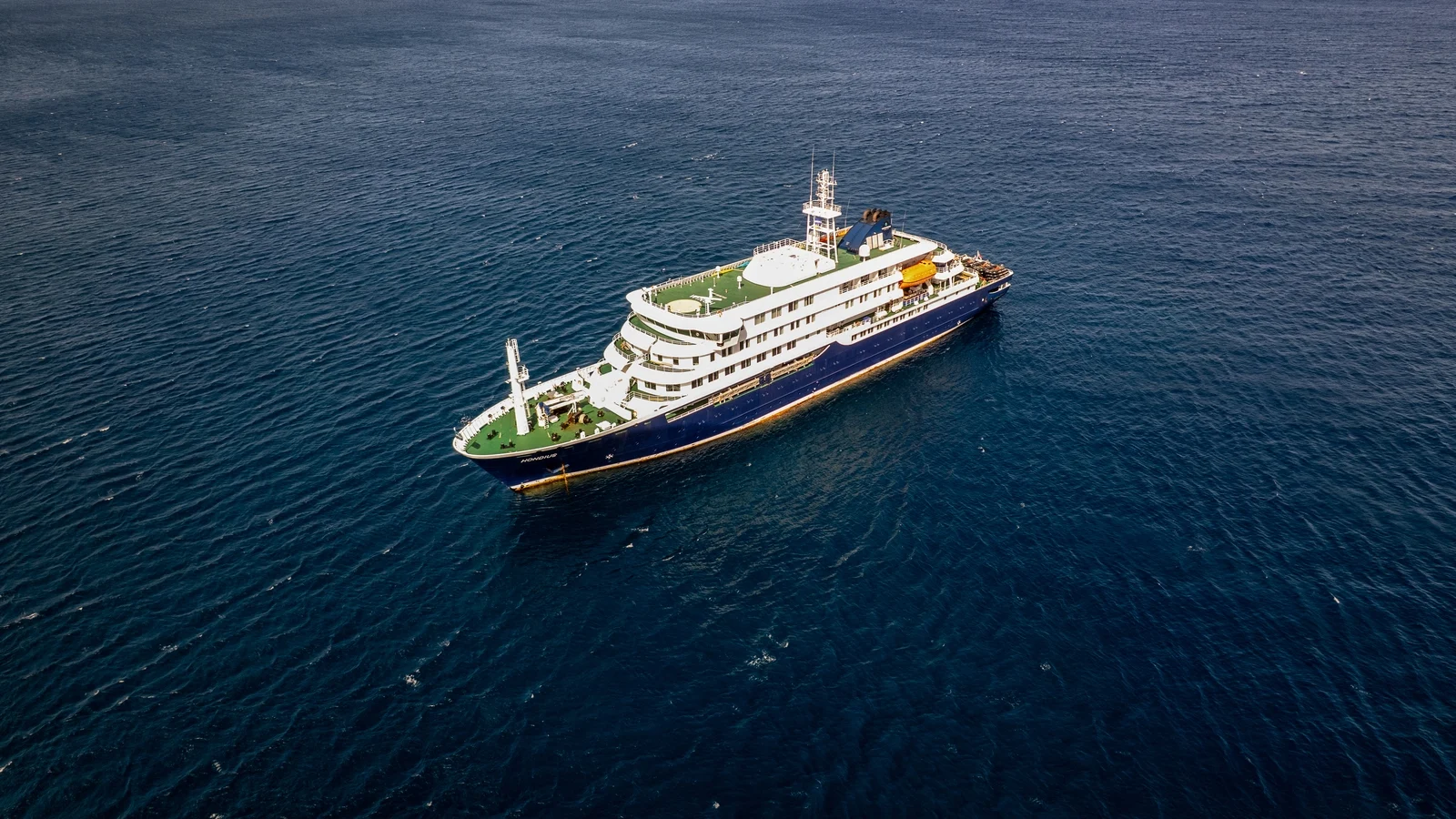
The MV Hondius sits like a dark blot on the blue Atlantic, anchored off the volcanic rim of Cape Verde, a place where the wind carries the smell of salt, grilled fish and something more clinical — the faint hum of a public-health operation at sea.
On board: 149 people. Among them two Irish nationals, a handful of crew from countries strewn across Europe, and a mix of scientists, travellers and expedition enthusiasts used to close quarters and cold mornings ashore. For days the ship has been the focal point of a slow-brewing crisis: a suspected outbreak linked to a hantavirus variant identified in one critically ill passenger.
Timeline: When ordinary travel turned urgent
We can track the unease in dates. On 11 April a passenger died aboard Hondius; cause undetermined. On 24 April his body — accompanied by his wife — was removed from the vessel. On 27 April the woman became unwell during the return voyage and later died; both were Dutch nationals.
That same 27 April, a British passenger fell gravely ill and was medevaced to South Africa. Tests on that patient later identified a variant of hantavirus. On 2 May a German passenger died on the vessel; the precise causes behind the trio of deaths have not been fully established. Two crew members are also showing acute respiratory symptoms — one mild, one severe — though neither has been confirmed as carrying hantavirus.
Local Cape Verde health authorities visited the ship, assessed the situation and the MV Hondius remains offshore as teams on land and onboard coordinate care and containment.
What is hantavirus — and why does it make people nervous?
Hantaviruses are a family of viruses carried by rodents across the world. Humans typically become infected by inhaling tiny particles of dust contaminated with urine, droppings, or saliva from infected rodents. In the Americas, certain strains cause hantavirus pulmonary syndrome (HPS), a rapidly progressive respiratory illness. In Europe and Asia, other strains cause hemorrhagic fever with renal syndrome (HFRS), which affects kidneys.
“We must be precise but not alarmist,” said Dr. Elvira Mendes, a fictional infectious-disease specialist who’s been consulting with European health agencies. “Hantavirus infections are rare compared with influenza or COVID-19. But when they occur, some forms can be severe — HPS has historically carried a mortality rate measured in tens of percent. That’s why an isolated case on a cruise ship draws immediate attention.”
The U.S. Centers for Disease Control and Prevention and other bodies cite HPS fatality rates in the range of roughly 30–40% in some outbreaks; older data show variability depending on strain and access to intensive care. Importantly, person-to-person transmission of hantaviruses is the exception, not the rule — documented primarily with the Andes virus in South America.
Life aboard the Hondius: small communities, high stakes
Cruise vessels are floating neighborhoods: shared dining halls, narrow corridors, communal stairwells. That intimacy is what makes expedition cruising so appealing to travellers seeking conversation and close observation of wild places — and what makes infectious-disease control challenging.
“We signed up for penguins and midnight suns, not for quarantine lights and medical teams,” said “Eamon,” a fictional Irish passenger in his 50s who asked to be identified only by his first name. His voice trembles when he talks about a friend who was among the sick. “There’s a hush now. People keep to their cabins. When you go out, everything is masked. It feels like everyone’s holding their breath.”
Oceanwide Expeditions, the ship’s operator, has said strict isolation and hygiene measures are in place. Crew and medical officers have separated symptomatic individuals, intensified surface disinfection and instituted personal protective equipment for staff. Local officials have visited and advised, yet the vessel remains offshore while authorities piece together a complex puzzle.
Questions racing beneath the surface
How did a hantavirus variant appear on a ship that crisscrosses oceans? Rodents are the usual culprits, and stowaway mice and rats aboard cargo and passenger ships are not unheard of. But transmission pathways can also be complicated: contaminated supplies, luggage, or even shore-side exposure during port calls are possible. Investigators are combing through manifests, cleaning logs and interviews.
“Ships operate as microcosms of society,” said a fictional maritime epidemiologist, Professor Johan Lemaire. “When you confine dozens or hundreds of people in a moving vessel and a pathogen appears, emergency response requires both medical acumen and logistical precision — isolating cases, protecting staff, and deciding where and when to disembark patients.”
There is also the human cost: passengers who expected a celebratory voyage now face grief and uncertainty. Families of the deceased are mourning, and the atmosphere is heavy with questions that have no immediate answers.
Local color: Cape Verde as a backdrop
Cape Verde’s sunburnt islands — volcanic rock, bougainvillea, creole Portuguese rhythms — provide a dissonant backdrop to the clinical activity offshore. Local health officials, accustomed to the ebb and flow of tourism, have mobilized carefully. “We have protocols for ships,” said a fictional local port health official, Maria Fernandes. “But every incident is different. Our first priority is safety — for residents and for those on the ship.”
Onshore, fishermen mend nets and children chase lizards across cracked concrete. Dockworkers watch the Hondius from a distance. The sight of ambulances and health teams at the berth ripples through small communities unused to high-profile medical operations.
The bigger picture: travel, surveillance and a connected world
This incident is a reminder that global travel takes local ecologies with it. As tourism rebounds and international cruises resume at scale after pandemic pauses, the movement of people, goods and even rodents invites renewed attention to prevention strategies.
Public-health surveillance has advanced — genomic sequencing can now identify viral variants weeks or days after samples are taken, and international reporting systems channel data quickly. Still, the practical challenges of caring for critically ill people in remote spots or getting them to appropriate care remain daunting.
“Infections at sea test the edges of our systems,” Professor Lemaire said. “We have tools. We need to keep investing in training, ship inspections and rapid communication. Otherwise, the uncertainty costs lives and trust.”
What happens next — and what you can learn?
Investigations will continue: laboratory analysis to clarify whether the three deaths are connected to the identified hantavirus variant; contact tracing among passengers and crew; environmental surveys for signs of rodent infestation; and discussions about where and when to disembark remaining passengers safely.
For travellers, the episode underscores basic but often undersold precautions: watch for rodent signs where you stay; avoid disturbing droppings; report unusual symptoms early; and take seriously any public-health instructions from carriers or local authorities.
For the wider public, it’s a moment to reflect. How do we balance the freedom to explore with the responsibilities of global health? What systems keep us safe when we leave familiar shores? And when an outbreak happens in an unusual place — a ship, a remote lodge, a mountain refuge — are our response plans nimble enough?
“We can be cautious without panic,” Dr. Mendes said. “We can grieve and also learn. The goal isn’t to stop travel — it’s to make it safer.”
As the MV Hondius drifts under Cape Verdean skies, the people aboard — and those waiting ashore — are living that tension. The immediate horizon is medical clarity and care; the longer view is an ongoing conversation about movement, risk and the fragile ways human communities intersect with the microbial world. What would you do if you were in their place? Would you want to press on, or to turn back and wait? The questions are intimate and, in our connected age, unmistakably global.