A Familiar Voice, Suddenly Silent: Eamonn Holmes’ Health Scare and What It Reveals
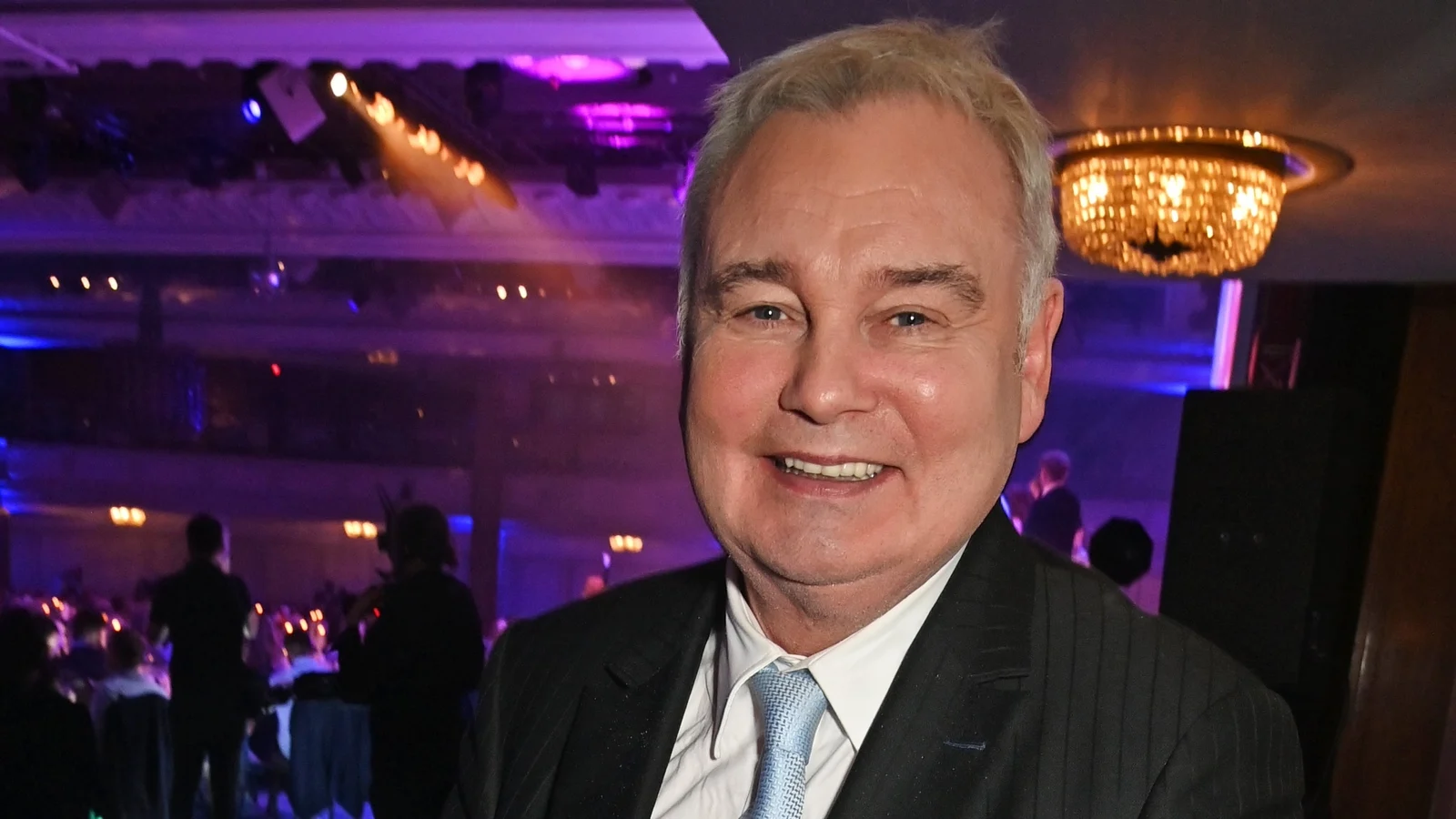
There is something unsettling about hearing a familiar voice fall quiet. For decades, Eamonn Holmes’s tones have been part of many people’s mornings—wry, brash, comforting—an on-air companion for coffee and commutes. So when GB News announced last week that the Belfast-born presenter had been taken to hospital with a stroke, the broadcast world and his viewers paused.
“He was taken ill last week and doctors confirmed he had suffered a stroke,” a GB News representative said in a short statement. “He’s responding well to treatment and has asked for privacy while he recovers. We all wish him a speedy return.” The channel also confirmed that Alex Armstrong will fill in on GB News Breakfast while Holmes rests.
At 66, Holmes is not just a broadcaster; he is a public figure whose personal health has long been part of his narrative. He has spoken candidly in the past about serious back problems, spinal surgery and a double hip replacement that left him reliant on mobility aids on tougher days. Those admissions—sometimes wry, sometimes raw—have made his recent hospitalisation feel less like a private matter and more like a communal concern.
From Studio Mishaps to Hospital Beds
Anyone who watched GB News last year remembers the moment the program’s rhythm changed mid-broadcast: a sudden noise, a gasp off-screen, the host absent for a breathless few minutes. The episode ended with Holmes laughing gingerly at his misadventure, describing a chair that had “given way” and the pounding ache of recent falls.
It is easy to laugh off on-screen slips as mere comedy of live television. But behind the chuckles have been months—years, really—of medical challenges that can wear away at bones, nerves and relationships. Holmes and his former partner Ruth Langsford have previously described how ongoing pain affected daily life, with Holmes saying the limitations were a recurring source of tension in their home. The couple announced their split in 2024 after more than a decade together.
What a Stroke Means—and What Recovery Might Look Like
Hearing that someone has had a stroke can set off a cascade of fearful images: paralysis, loss of speech, hospital wards. But strokes exist on a spectrum, and the path to recovery depends on speed of treatment, the area of the brain affected, and the person’s overall health.
“Early intervention is crucial,” says Dr. Susan Patel, a neurologist who has worked in acute stroke units in both Belfast and London. “We aim to restore blood flow where possible and begin rehabilitation as soon as it’s safe. Some people make remarkable recoveries in weeks; others need months or even longer. Even small improvements—regaining a few degrees of movement in a wrist, re-learning a phrase—can be life-changing.”
To place this in context: in the UK, roughly 100,000 people have a stroke each year. According to the Stroke Association, someone in the country has a stroke about every five minutes. Globally, the World Health Organization ranks stroke among the leading causes of death and disability, a reminder that this is not an isolated issue but part of a much larger public-health picture.
Rehab, Rest and the Quiet Work of Recovery
Rehabilitation after a stroke often involves a multidisciplinary team—physiotherapists, occupational therapists, speech and language therapists, psychologists. For a broadcaster whose tools are voice, timing and presence, the stakes feel especially high.
“The first thing a broadcaster misses isn’t glamour—it’s the routine,” says Catherine Moore, a speech therapist who has worked with media professionals recovering from neurological incidents. “You lose micro-timing, breath control, the unconscious rhythm of conversation. Recovery includes retraining these micro-skills so they feel automatic again.”
What can help is a network: colleagues who cover shifts, a home team that respects privacy, fans who send well-wishes rather than invasive questions. GB News’ announcement emphasized both Holmes’s request for space and the company’s support. “He’s part of our family,” a senior producer told staff in an internal note obtained by colleagues. “We’ll be with him every step of the way.”
Voices from Home: Belfast, Fans and the Street-Level View
Back in Belfast—where Holmes grew up and where his voice first learned its cadence—people reacted with a mixture of concern and gentle affection. Outside a café in the city centre, an elderly man named Patrick paused over his tea and said, “Eamonn’s a local son. We all hope he pulls through. You never want to hear that anyone’s been taken ill, especially someone who’s been in your living room for years.”
“He’s always been very down-to-earth,” added Aoife, a shop assistant in her thirties. “Even when he’s been a bit cheeky, you could tell he’s sentimental about where he came from. Folks in Belfast will be sending good wishes.”
Public reaction on social media has been similar: an outpouring of concern mixed with memories—listeners recalling mornings when Holmes’s banter kept them company during a long commute or a sleepless night. It is a reminder that broadcasters, however robust their personas, are woven into people’s daily rituals.
Beyond One Man: Workplaces, Ageing and the Pressure to Perform
Holmes’s illness also raises broader questions about the media industry and the pressures placed on senior presenters. Live television is unforgiving; it prizes immediacy and stamina. At the same time, audiences are ageing globally, and so are many of the faces they trust on-screen. How do organisations balance the demands of round-the-clock broadcasting with compassion and safety?
“We need to normalise conversations about health among on-air talent,” argues media consultant Laura Nicholls. “That includes reasonable scheduling, easy access to medical leave and a culture that doesn’t treat vulnerability as weakness. A small shift here could ripple across the industry.”
Holmes’s case also touches on caregiving and personal relationships. Chronic pain and mobility limitations strain families, friendships and marriages in ways that can be hard to measure but impossible to ignore.
Questions for Readers
How do we treat public figures when their private health becomes public knowledge? Do we respect the request for privacy, or does fame make that impossible? And perhaps more personally: when was the last time you checked in on a neighbour, an elderly friend, or a coworker who might be quietly struggling?
These are not rhetorical fluff—these are the connective tissues of a society that, increasingly, must grapple with ageing populations and the slow attrition that chronic conditions bring.
Looking Ahead
GB News says it looks forward to welcoming Holmes “back to the People’s Channel” when he is ready. For now, Alex Armstrong carries the morning baton, viewers tune in for continuity, and a broadcaster rests in care. Whatever Eamonn Holmes’s path to recovery looks like, it will likely be watched closely—not because he is a celebrity, but because he has, for many, become part of the soundscape of their lives.
As you close this story, consider this: our lives are stitched together by countless small rituals—morning shows, neighborhood chats, familiar voices on the radio. When one of those strands frays, the loss is both intimate and communal. What do we owe one another in those moments? Perhaps, at the very least, a little patience and a lot of kindness.