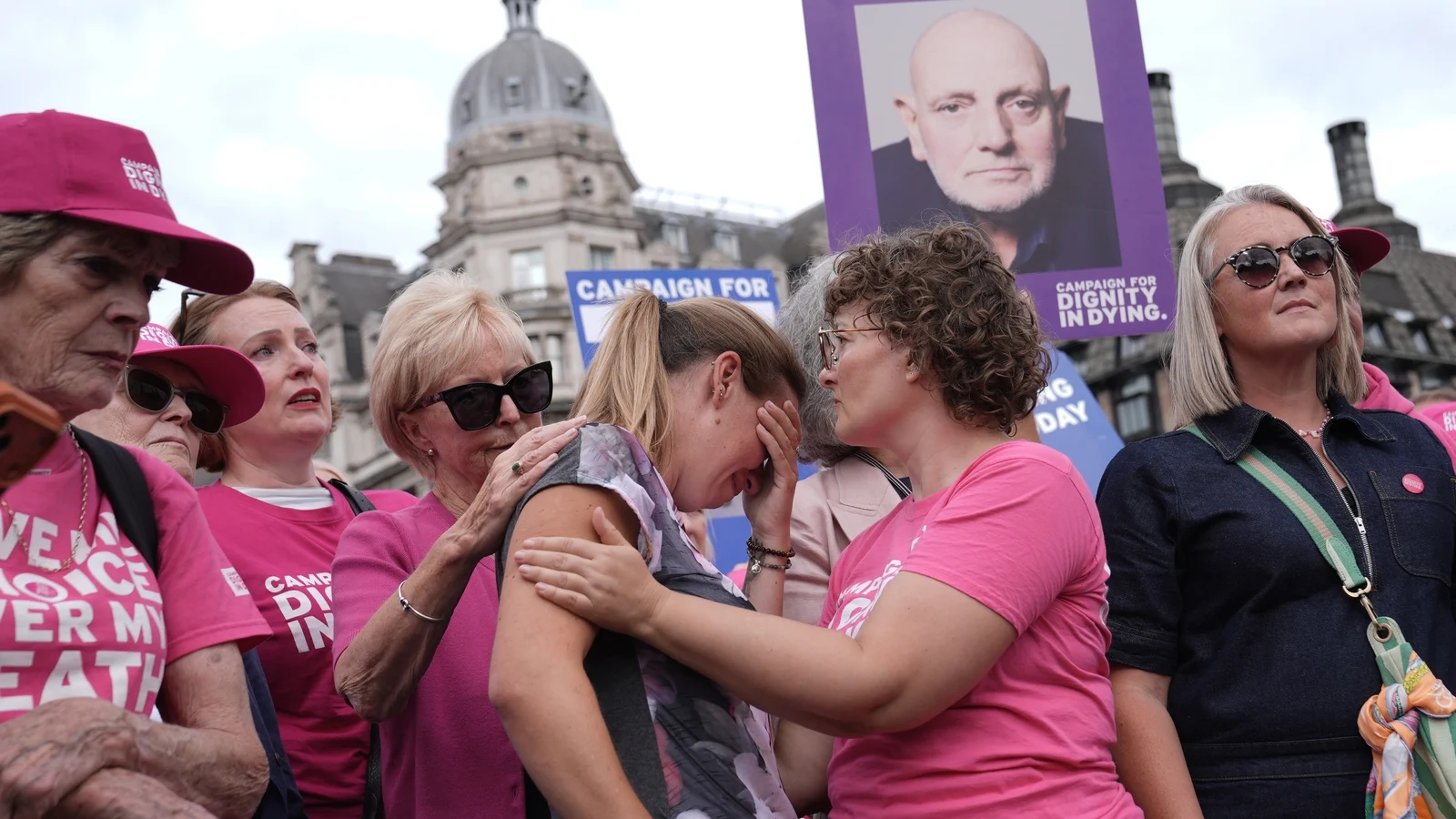
In a dramatic Commons showdown that laid bare deep moral and medical divides, MPs have voted down a bid to legalise assisted dying in England and Wales.
MPs delivered impassioned arguments on both sides of the Terminally Ill Adults (End of Life) Bill during a debate lasting more than four hours in the House of Commons in London.
When the votes were counted, the legislation fell by a margin of 16, with 286 MPs voting against and 270 in favour.
As the result was announced, a small group of MPs cheered and pumped their fists, while others were seen embracing.
The bill would have allowed adults in England and Wales who have less than six months to live to apply for an assisted death, with the process requiring the approval of two doctors and an expert panel.
Labour MP Lauren Edwards brought the proposal back before Parliament after it ran out of time earlier this year.
She said the defeat was “hugely disappointing” and “heartbreaking” for terminally ill people and their families.
“Assisted Dying will come in this country, as it is already doing all across the world, but not soon enough.
“Parliament has dropped the ball today. It will be picked up again as it must be, because the law as it stands is simply too cruel and too unjust to be allowed to stand,” Ms Edwards said.
She had also warned that, without a successful vote, it could take another decade before the issue returned to the political agenda.
British Prime Minister Andy Burnham said he would not cast a vote on the legislation, arguing he did not want to “unduly influence the debate”.
The government took a neutral stance, leaving MPs to vote by conscience rather than along party lines.
Opponents of the bill protested outside the Houses of Parliament in London
Those campaigning against the bill said its protections did not go far enough, warning that vulnerable people could face pressure and might opt for an assisted death because they felt they were a burden.
The leader of the Catholic Church in England and Wales, Archbishop Richard Moth, also spoke out against the proposal, calling it “wrong in principle” and “deeply flawed”.
The bill was opposed as well by Archbishop of Canterbury Sarah Mullally, the Church of England’s principal leader.
Medical organisations, including the Royal College of Psychiatrists, had voiced “serious concerns” about the legislation, saying there were “too many unanswered questions about the safeguarding of people with mental illness”.
Labour MP Ashley Dalton, who is terminally ill and voted against the bill, said this was “not a moment for celebration” and urged ministers to “sort out social and palliative care”.
Mr Burnham has previously said he believed palliative care funding must be addressed before Parliament considered legalising assisted dying.
Ms Edwards, however, argued that improvements to palliative care and a change in the law could advance at the same time.
Labour MP Lauren Edwards reintroduced the bill after it ran out of time earlier this year
Marie Curie, Hospice UK and St Christopher’s Hospice charity all maintained a neutral position on the principle of assisted dying.
Even so, they have repeatedly highlighted what they describe as an uneven and underfunded end-of-life care system across England and Wales.
“The need for more urgent and ambitious action to fix end-of-life care could not be clearer,” the organisations said.
After the vote, Hospice UK chief executive Toby Porter said supporters and opponents alike should now “channel their energy and passion into fixing” what he called a “hospice funding crisis”.
He added: “The prime minister has recently stated the need to fix palliative care funding. His support is welcome, but his words must now be accompanied by meaningful action.”