Outside the Courthouse: A Quiet Uproar Over a Scientific Pillar
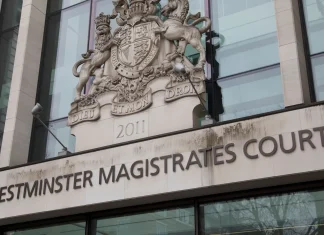
It was a brisk morning in Washington, and the steps of the appeals court filled with a small, determined crowd—scientists draped in scarves, parents with toddlers tucked under winter coats, and a few gray-haired veterans of environmental fights who’ve seen a dozen such battles. Handmade signs bobbed above heads: “Science Not Spin,” “Protect Kids, Not Profits,” “Cars, Not Catastrophe.” Coffee steamed in paper cups. Laughter and nervous chatter braided with the low hum of protesters rehearsing their chants. This was not a scene from a single headline; it felt like the moment a country argues with itself about the evidence of the world.
The dispute at the heart of the gathering was technical on the surface but simple in consequence: a coalition of health and environmental organizations has taken legal aim at a federal rollback that erased one of the most consequential scientific determinations in modern U.S. environmental policy—the so-called “endangerment finding” that had declared greenhouse gases to be a danger to public health and welfare.
What Was Repealed, and Why It Matters
In 2009, after years of legal and scientific debate culminating in the 2007 Supreme Court decision Massachusetts v. EPA, the Environmental Protection Agency issued an endangerment finding. That finding concluded, based on the weight of peer-reviewed evidence, that six greenhouse gases—including carbon dioxide and methane—pose a risk to public health and welfare because they drive climate change.
What many people outside policy circles don’t realize is how foundational that determination became. It didn’t just mark a scientific consensus; it unlocked the federal government’s authority to regulate tailpipe and other emissions under the Clean Air Act. For more than a decade, that legal hinge underpinned vehicle standards, air-quality safeguards, and an array of regulations aimed at slowing the warming that scientists say already averages about 1.1–1.2°C above preindustrial levels globally.
The Lawsuit and the Coalition
The plaintiffs—an alliance that reads like a who’s who of climate and health advocacy: the American Lung Association, the Clean Air Council, the Union of Concerned Scientists, the Sierra Club, the Center for Biological Diversity and others—argue the administration’s repeal was unlawful. They filed papers in a Washington appeals court challenging not just the substance of the move but its legal footing.
“This decision tears at the very thread that has allowed the U.S. to protect its people from the ravages of air pollution and climate-related harms,” said a lead attorney for the coalition, speaking on the courthouse steps. “If the science says our children and communities are at risk, the law compels action. Rewriting that conclusion for political convenience is not something the courts should allow.”
Two Narratives, Two Consequences
The administration defended the rollback as a commonsense step toward easing regulatory costs. Officials pointed to estimates—cited repeatedly by policymakers—that claimed the package of deregulatory moves would produce more than $1 trillion in savings in regulatory compliance and reduce new-car prices by several thousand dollars, easing costs for consumers at the dealership.
An agency spokesperson, reading from prepared remarks, framed the move as “streamlining and balancing regulation to protect consumers and American industry.” Yet even as the argument promises short-term savings, opponents argue the calculus ignores long-term costs: worsened storms, heatwaves, wildfires, sea-level rise, and public-health burdens that researchers say will fall hardest on the most vulnerable communities.
What the Numbers Say
Consider the data. Transportation is now the largest single source of U.S. greenhouse gas emissions—about 29% of the total according to the EPA’s most recent inventories. Atmospheric carbon dioxide concentrations have surged past 420 parts per million, levels not seen in millions of years, and global temperatures continue to climb.
Public-health research links higher temperatures and increased air pollution to spikes in cardiovascular and respiratory illnesses, heat-related deaths, and compounding impacts during extreme-weather events. The World Health Organization and multiple peer-reviewed studies connect degrading air quality and rising temperatures to real human costs—hospital overloads, lost workdays, and, tragically, lives lost.
Voices from the Front Lines
“My son has asthma,” said Maria Gutierrez, a schoolteacher from suburban Maryland who had brought his inhaler-wielding six-year-old to the courthouse. “When the summer days are too hot, he coughs more. To me, this isn’t abstract. It’s whether my child can breathe tomorrow.”
In Detroit, an assembly-line mechanic named Terrance O’Neal watched the legal chess match with weary skepticism. “We want jobs and decent cars,” he said. “But a lot of folks are switching to electric anyway. Pulling the rug out on rules makes planning harder for workers and makes companies less sure where to invest.”
From the scientific side, Dr. Elena Morozov, identified as a senior researcher with a national science advocacy group, argued that the endangerment finding was never about ideology. “This is empirical—temperature records, ice loss, coral bleaching, shifts in disease vectors. The law looked to the science. Upending the finding doesn’t change the measurements.”
Local Color and Broader Ripples
On the courthouse steps, chants gave way to conversation. An elderly woman handed out history pages: clippings from earlier environmental fights—the Clean Air Act, the ozone struggle—and reminded younger activists that regulatory wins can persist for decades when they’re rooted in evidence. Nearby, a graduate student from Brazil traced the stakes to his home state’s coastlines, now feeling the erosive pinch of sea-level rise.
The scene underscored a truth that’s easy to miss in legal filings: climate policy is both intensely local and unmistakably global. Decisions in Washington ripple into manufacturing lines in Michigan, farm fields in Iowa, coastal communities in Bangladesh, and island nations already planning mass relocations.
- Key fact: The 2009 endangerment finding covered six greenhouse gases and created authority for the EPA to regulate emissions.
- Key fact: Transportation accounts for roughly 29% of U.S. greenhouse gas emissions.
- Key fact: Global average temperature has risen about 1.1–1.2°C since preindustrial times, with tangible impacts on health and infrastructure.
Why the Courts Matter
The plaintiffs are asking judges to consider whether an agency can, with a stroke of a pen, walk back a bedrock scientific determination without properly addressing the evidence and the law. At stake is not only the specific vehicle rules but a precedent that could either preserve or hollow out the ability of governments to act on long-term risks.
“This is about whether policy should be tethered to reality,” the coalition attorney said. “Regulatory systems are supposed to respond to evidence. If agencies can ignore established science for political winds, the system fails.”
Where Do We Go From Here?
This fight is a snapshot of a larger global tension: how do societies balance short-term economic narratives against long-term planetary stewardship? How do democracies ensure that technocratic conclusions—often painstakingly drawn from decades of research—aren’t discarded for transient political gain?
Ask yourself: when you fill your car at the pump, do you see the policy threads that determine the fuel’s future cost and the air your neighbors will breathe? When a government erases a scientific finding, who pays the bill—today’s drivers, tomorrow’s children, or economies disrupted by climate extremes?
No single court decision will settle the moral, fiscal, and scientific questions that swirl around climate policy. But the appeals case now before the judges will be a compass point: it will signal whether the federal rulebook will continue to be linked to scientific assessment or whether that link can be unmade whenever it suits political aims.
Outside the courthouse, as the crowd dispersed and the city resumed its ordinary cadence, the question hung in the cold air: what kind of future do we want to leave the next generation—cars that guzzle and skies that darken, or a course charted by evidence, resilience, and care?