When Diplomacy Meets the Moderators: A Transatlantic Row Over Speech, Safety and Sovereignty
It was a chilly morning in Brussels when the first alerts began pinging across journalists’ phones: the United States had quietly added five European citizens to a visa-ban list, accusing them of curbing free expression and unfairly pressuring American tech platforms. The move landed like a stone tossed into an already choppy ocean of US–Europe relations, sending ripples through capitals from Berlin to Paris and into the buzzing co‑working spaces of London.
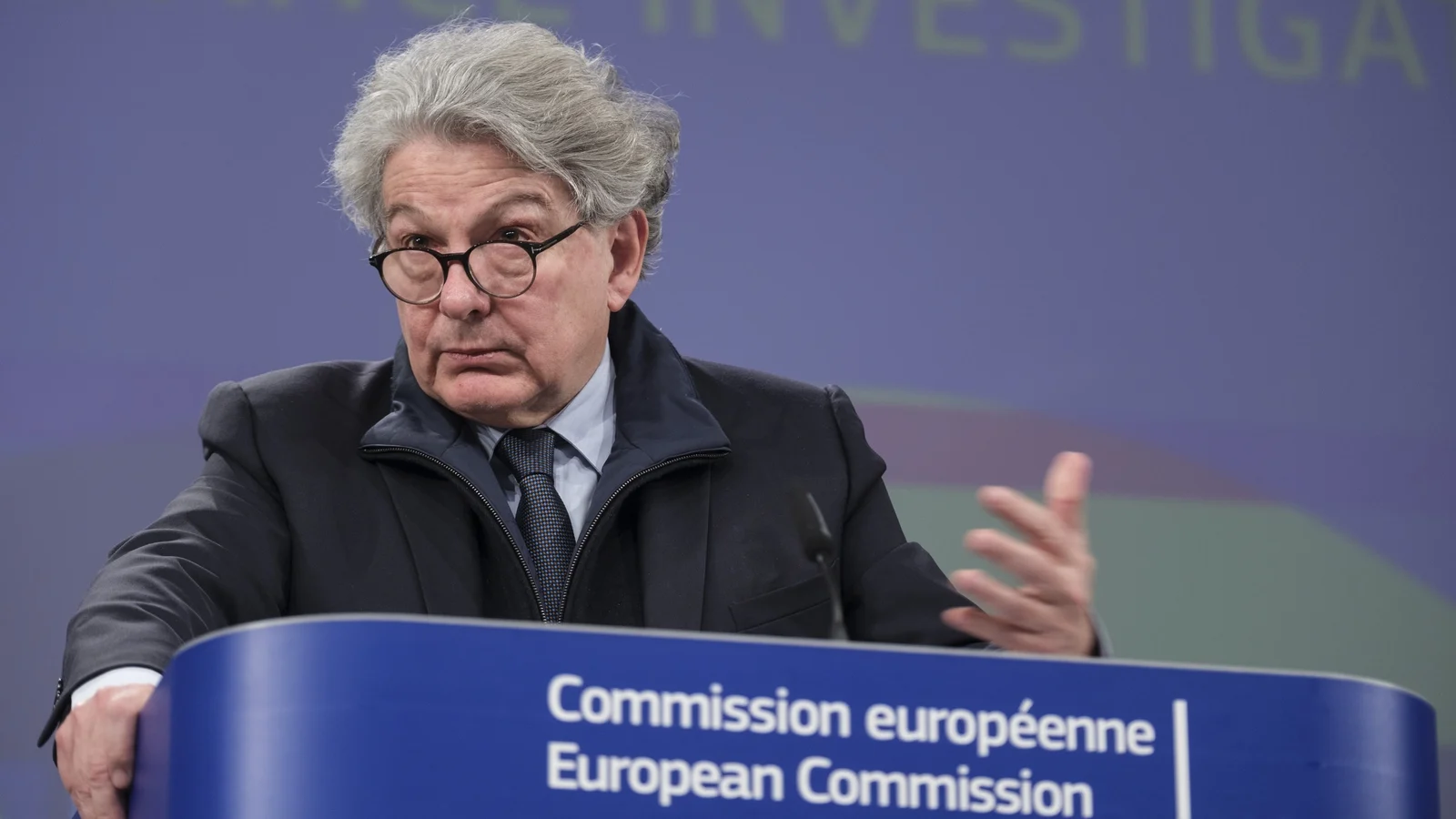
The targeted individuals are an eclectic group of regulators, activists and analysts: Thierry Breton, the former French finance minister and ex‑European commissioner who helped shepherd the EU’s Digital Services Act; Imran Ahmed, who runs the Center for Countering Digital Hate and is based in Britain; two German activists, Anna‑Lena von Hodenberg and Josephine Ballon of the NGO HateAid; and Clare Melford, co‑founder of the Global Disinformation Index. All five, according to the US, have crossed a line—either constraining speech or imposing undue burdens on American tech firms.
Why This Feels Bigger Than Five Visas
At first glance, a visa ban is a technical, bureaucratic gesture. In practice, it is a diplomatic rebuke hard to miss. “This is a symbol — a sharp, deliberate signal that Washington is willing to weaponize access,” said Lucie Moreau, a Paris‑based digital rights lawyer. “It’s not just about travel. It’s about pressure.”
For European officials, the insult stings because it targets people who were central to crafting the Digital Services Act (DSA), a sweeping EU law intended to make the online world safer. The DSA, among other things, compels very large online platforms—those with roughly 45 million or more EU users—to take concrete steps against illegal content, from hate speech to child sexual abuse material. To supporters, it is a rules‑based attempt to align online spaces with offline norms. To critics in some corners of Washington, it is regulatory overreach that may muzzle American tech firms.
“Freedom of expression is a fundamental right in Europe and a shared core value with the United States across the democratic world,” a European Commission spokesperson said, adding that Brussels would seek answers and, if necessary, respond “swiftly and decisively” to defend its regulatory autonomy.
Voices From the Street
At a café a stone’s throw from the Commission’s glass tower on Rue de la Loi, telephone conversations and heated debates mix with the smell of espresso. “We don’t think the DSA is censorship,” said Jörg Keller, who volunteers at a Berlin civic tech hub. “We think it’s risk management. If platforms ignore clear harms, why should regulators look the other way?”
Across the Seine, in a narrow Paris lane where Breton once cut his teeth, retired schoolteacher Anne‑Sophie Dupont shook her head. “People worry about speech being restricted,” she said. “But they worry more about the children they see on the news, about the threats to minorities. There has to be some balance.”
Politics, Personalities and the Musk Factor
The dispute is not only institutional; it is personal. Elon Musk’s X (formerly Twitter) was fined €120 million by Brussels recently for breaching EU content rules—an action that drew ire in Washington and added petrol to a transatlantic fire. Musk and Thierry Breton have traded barbs online for months. Musk has called Breton the “tyrant of Europe”; Breton responded by defending the democratic process that produced the DSA.
“Is McCarthy’s witch hunt back?” Breton asked on his social feed, pointing out that the DSA received broad political support across the European Parliament and from all 27 member states. Whether you call it regulation or protection, the debate now sits at the intersection of tech policy and geopolitics.
Reaction From Governments: A Rarely Harmonious Chorus
Paris reacted swiftly and angrily. President Emmanuel Macron denounced the US measures as “intimidation and coercion aimed at undermining European digital sovereignty,” reminding followers that the DSA emerged from democratic processes. Berlin, too, voiced alarm; Germany’s justice ministry called the visa restrictions “unacceptable” and pledged support to the activists affected.
“The rules by which we want to live in the digital space in Germany and in Europe are not decided in Washington,” the ministry said in a statement that read like a declaration of independence for online governance.
For Washington, the calculus is different. US officials have argued that some elements of the DSA amount to undue restrictions on free expression and place an unfair burden on American companies and citizens. The visa bans, they say, are a response to what they perceive as targeted campaigns to silence dissent or to manipulate platform policies.
What This Means for the Global Conversation on Speech
At stake are deeper questions: who gets to set the rules for a global internet, and how do you reconcile commitments to free expression with the need to prevent harm? These questions are not academic. They matter to journalists threatened by mobs online, to parents worried about radicalization, to platforms deciding what content to moderate, and to citizens wondering whether a handful of companies or a patchwork of national laws will govern the spaces where public life now unfolds.
“This isn’t just a tussle between governments,” observed Dr. Maya Singh, a professor of internet governance. “It’s a contest over models: libertarian, platform‑led moderation versus rules‑based, state‑driven oversight. Both models have trade‑offs.”
- Five Europeans were added to a US visa‑ban list in the latest move.
- The EU’s Digital Services Act applies to platforms with tens of millions of users and aims to limit illegal content online.
- X was fined €120 million by Brussels for failing to comply with content rules.
Where Do We Go From Here?
Expect more fireworks. The visa bans are likely to widen rifts between Washington and like‑minded European capitals already diverging on defence, trade and the approach to authoritarian powers. A recent US National Security Strategy warned Europe of “civilisational erasure” if it did not change course—a phrase that landed like an accusation and has only deepened diplomatic unease.
But there is also an opening: a global conversation about shared norms. Could the US and EU create a common framework for platform accountability that preserves free speech while protecting vulnerable communities? Could multinational forums produce interoperability principles so that users worldwide do not face a fragmented internet? The answers aren’t obvious, and they won’t be quick.
Back at the café, Moreau lowered her voice and posed a question that lingers: “Do you believe an unrestricted internet serves democracy, or do you think democracies should shape the internet in the public interest?”
It is a question that will define politics, tech policy, and everyday life for years to come. For now, five people stand at the eye of a transatlantic storm. Around them, institutions posture. Citizens watch. And the internet—messy, vital and global—waits for rules that match its scale and its risks. What kind of internet do you want? And who should decide?