Under the Paraguayan Sun: When Two Blocs Rewrote the Rules of Trade
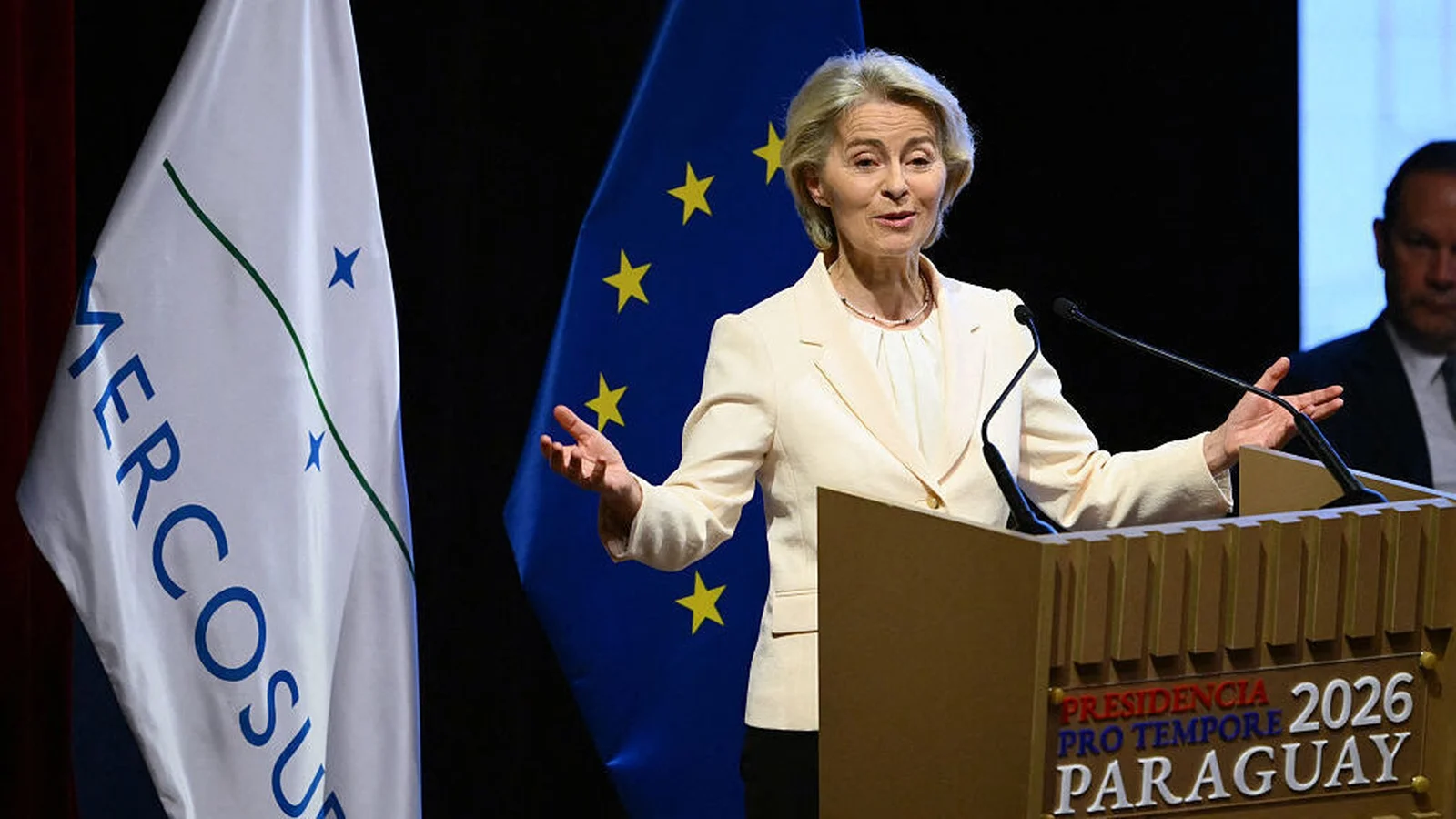
As the late afternoon light draped over Asunción’s Palacio de los López, the atmosphere felt almost ceremonial—warm, humid air carrying the smell of grilled beef from nearby stalls, flags snapping gently in the breeze, and an audience made up of diplomats, ministers, and a smattering of farmers who had travelled from both continents.
After a quarter-century of negotiations, European Commission President Ursula von der Leyen stepped forward with a pen and a message: a choice had been made. “We are choosing partnership over isolation,” she said, voice steady against the whisper of cameras. Around her, officials from Argentina, Brazil, Paraguay and Uruguay signed a pact that, if fully ratified, would stitch together the European Union and the Mercosur bloc into the world’s largest preferential trading area—connecting roughly 700 million consumers and anchoring over €111 billion of annual trade, according to 2024 figures.
The deal is more than ink on paper; it is a geopolitical signal. António Costa, who represents the European Council, framed it bluntly: this is a defense of trade rooted in rules and multilateral law. “It is a counterweight to the weaponisation of commerce,” he told assembled journalists, as photographers clicked away.
What the Agreement Actually Does
At its core, the accord promises to eliminate tariffs on more than 90% of bilateral trade between the two blocs. That sounds like a win-win on paper, and in many respects it is: European automakers, wine producers and cheesemakers expect expanded market access across South America, while Mercosur’s beef, poultry, soybeans, rice, sugar and honey will find a freer path into European markets.
- Population reach: ~700 million consumers.
- Trade: ~€111 billion in 2024.
- GDP weight: together the EU and Mercosur represent about 30% of global GDP.
- Tariff reductions: more than 90% of bilateral trade to be tariff-free.
“For Paraguay, this is a horizon-opening moment,” said Santiago Peña, Paraguay’s president, who hosted the signing. “At a time when global currents pull many countries inward, we are sending an unmistakable signal in favor of openness.”
Scenes From the Plaza—and the Protest Lines
Yet the signing ceremony was a study in contrasts. Outside the polished interior, thousands of kilometers away in European farm towns and capital squares, tractors, placards and protest chants told another story.
“We did not give our farms to be undercut,” said Margaux Leclerc, a dairy farmer from the Vendée region in France, who had joined a caravan of tractors that wound its way to Paris earlier this week. “If South American beef and soy enter Europe at lower cost because of different environmental and animal welfare standards, small producers like me will be squeezed out.”
Protests erupted in Ireland, France, Poland and Belgium—places where rural communities fear lost livelihoods and where consumers worry about dilution of standards. Environmental groups raised a second alarm: will cheaper access for beef and soy accelerate deforestation in the Amazon and the cerrado? “Trade cannot be blind to ecosystems,” said Dr. Helena Moretti, an ecologist with a São Paulo-based NGO. “Without rigorous supply-chain monitoring, demand can turn into a driver of forest loss.”
Voices From Both Shores
The mood in Asunción included pragmatic optimism and guarded reassurance. “This agreement is not a blank cheque,” said a trade adviser to the EU delegation, asking to speak on background. “There are clauses on sanitary standards, mechanisms for dispute resolution, and commitments to sustainable supply chains.”
On the other hand, local voices in Paraguay celebrated the prospect of smoother market access. José Ávalos, a third-generation rancher whose family has grazed cattle on the banks of the Paraguay River for decades, wiped sweat from his brow and said, “For us, this could mean steady contracts, investment in refrigeration and trucks, and jobs for young people who otherwise would leave the countryside.”
But not every South American farmer is sanguine. “Brazil’s big meatpackers may profit,” said Mariana Costa, a smallholder from the state of Rio Grande do Sul. “But unless the benefits trickle down, inequality in rural areas can widen.”
Why Now? The Wider Context
The timing of this accord is significant. The past several years have seen a surge in trade tensions, tariff swings and questions about the reliability of trade partners—especially during the Trump administration in the United States, where tariffs and trade threats recalibrated many governments’ calculations about who to trust and how to secure supply chains. The EU–Mercosur deal can be read partly as a strategic hedging: a bid to lock in market access and diversify ties in an uncertain world.
It’s also an effort to reassure global multilateralism. The negotiators have framed the pact as a nod to rules-based trade—an argument that resonates in capitals where policymakers fear a slide back into transactional geopolitics.
Who Wins—and Who Loses?
The arithmetic is complex. Consumers in both regions may enjoy lower prices on certain goods. Exporters with scale—car manufacturers in Europe, large beef and soy producers in South America—stand to benefit. Smaller producers, niche protected-labelled farmers, and environmental advocates worry that market forces could sweep away local protections unless enforcement is strong.
Trade economist Dr. Armand Khatri, who studies agricultural policy at the London School of Economics, cautioned: “Economics predicts gains in aggregate GDP and trade flows, but distribution matters. Without redistributive measures and targeted supports, rural communities can be the ones left behind.”
Next Steps: Ratification and Reality
The pact signed in Asunción is not yet law. It must clear the European Parliament and then be ratified by the national legislatures of Argentina, Brazil, Paraguay and Uruguay. That process could be prolonged, and domestic politics will play a decisive role.
Brazilian President Luiz Inácio Lula da Silva, notably absent from the Asunción ceremony, met von der Leyen in Rio de Janeiro the day before the signing to signal his government’s support. “This deal is essential for prosperity and for reinforcing multilateralism,” Lula told reporters there—an echo of the broader diplomatic choreography surrounding the signing.
How will Brussels respond to the farmers’ protests? Will South American governments step up traceability for commodities to allay deforestation concerns? Will measures be implemented to ensure smallholders receive a fair share of gains?
These are not rhetorical questions. They matter to families in rural France and agribusiness CEOs in São Paulo alike. They matter to consumers who want affordable food without sacrificing environmental stewardship. They matter to citizens watching whether multilateral agreements can be modernized to reflect 21st-century priorities—climate accountability, fair labor and equitable growth.
Looking Ahead: More Than Trade
Five countries and a continent sit now with a choice. Will this pact become a template for responsible, rules-based liberalization that includes enforceable environmental standards and social safeguards? Or will it become simply another free-trade deal whose benefits are unevenly distributed?
As you read this, consider this: are you willing to pay a little more at the checkout or support stricter labeling if it meant protecting a slice of rainforest, or a small dairy farm in Europe? Can politics muster the courage to pair liberalized markets with robust social policies?
The ink is fresh for now. But history will judge whether this agreement marked a turning point in how nations balance open markets with the social, cultural and ecological costs they impose. Between jubilant handshakes in Asunción and the protest chants across European squares, the real work is only beginning.