A castle, a crisis and a rare political jolt: Europe at a moment of reinvention
There is something theatrically medieval about a modern union trying to remake itself inside a 16th-century Belgian castle. Alden Biesen’s stone walls held a different kind of audience last week: presidents, prime ministers, and the sort of aides who travel with briefcases full of contingency plans and talking points. Outside, the Belgian winter pressed in. Inside, the conversation was electric — less pageantry than an emergency operating room examining how Europe might survive an increasingly rough geopolitical climate.
For years, Brussels has been chewing over the same problems: higher energy costs, fading industrial competitiveness, and the stubborn inability of home-grown tech firms to grow quickly across 27 markets. Then shocks came from every direction. Cheap Russian gas disappeared. Global supply chains bent under new pressures. And, in the past 18 months, the globe has watched the interplay of American trade postures and Middle Eastern violence rattle markets and political alliances alike.
The irony of crisis: stalled reforms suddenly moving
Amid this uncertainty, initiatives that once stagnated in the slow grind of national politics have found fresh momentum. In Dublin, Ireland’s EU commissioner unveiled “EU Inc” — an ambitious attempt to create the legal and financial scaffolding for start-ups to scale across the bloc as if it were a single market for entrepreneurs. Beside it sits the Savings and Investments Union, intended to free up household savings for long-term investments in innovation and industry.
“We have a small window to change how Europe finances and grows its champions,” one Irish official told me. “If we hesitate now, the chance could slip away.” This sense — that geopolitical turbulence can concentrate political will — is shared in Brussels. It’s the odd alchemy of crisis: urgency breaks the logjam.
Georg Riekeles of the European Policy Centre put it plainly: “Europe rarely benefits from stability when it comes to big reforms. It’s when the pressure mounts that leaders find the courage to compromise. We are in one of those moments.”
The list of proposals gathering pace is striking: an Industrial Accelerator Act to protect strategic industries, tougher cybersecurity rules, updated frameworks for cloud computing and AI, and an “e-declaration” portal to simplify the posting of workers across borders. Irish diplomats note that up to ten pieces of legislation could mature during Ireland’s EU presidency under a roadmap branded “One Europe — One Market,” with an aim to deliver by 2028.
Why now? Blame, praise — or plain necessity
Part of the reason is external pressure. The reorientation of the U.S. under its current administration, coupled with a renewed Sino-Western competition for strategic technologies, has forced European capitals to ask hard questions. How do you keep energy bills from being two to three times higher than in the U.S.? How do you stop critical raw materials from becoming bargaining chips? How do you ensure that public procurement can favour European firms without sliding into protectionism?
“Trade and security are now in the same conversation,” said a senior EU official. “That realization — that economic dependency is a vulnerability — has reframed everything.”
The war that reshaped the meeting: energy, law and the Strait of Hormuz
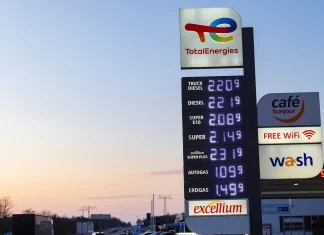
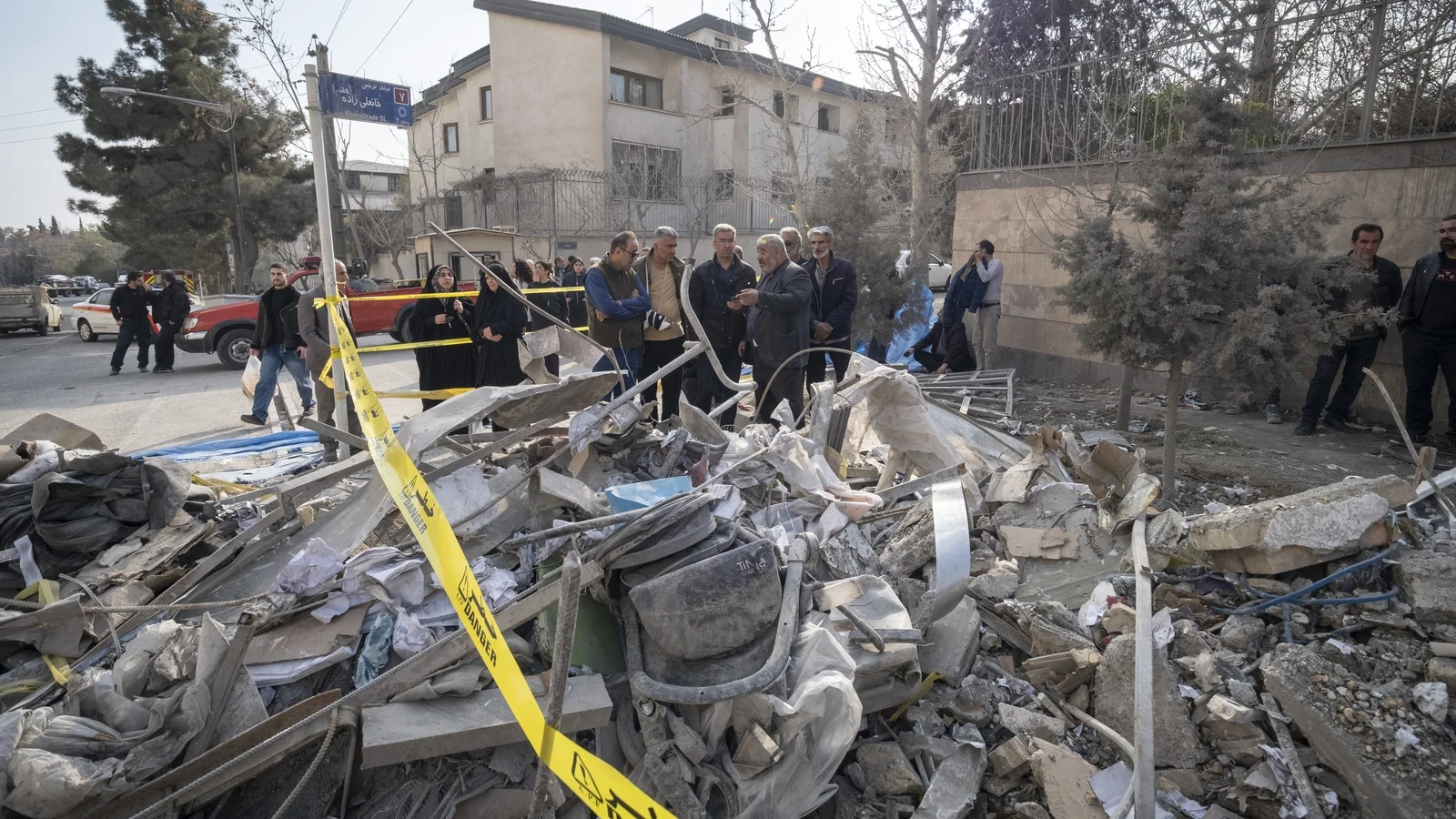
Then, before leaders could sign a neat communiqué, an even more immediate crisis arrived: a U.S.-Israel strike on Iranian facilities and a subsequent series of attacks on Gulf energy infrastructure. The result was chaos in oil and gas markets and a new urgency in the summit room.
Spanish prime minister Pedro Sánchez did not mince words. “We must defend international law. Multilateralism is the foundation of our security and our values,” he told colleagues. Others, watching prices spike and supply routes wobble, sounded more pragmatic. “This is not our war,” a senior EU diplomat sighed. “But it is our problem.” The distinction mattered: moral clarity on the legal status of the strikes coexisted with blunt concern about spiralling energy costs and the prospect of wider conflict.
French president Emmanuel Macron pushed for a moratorium on attacks against civilian energy and water infrastructure. UN Secretary-General António Guterres, who joined the leaders for a working lunch, argued that in a fragmented world, functional coalitions would form around shared interests — such as keeping oil and gas moving — not merely around old alliances.
“Energy flows are a global public good,” a UN aide said after the lunch. “Countries that disagree politically still have to prevent famine, power cuts and the collapse of trade.”
Migration, fertilizers and the long tail of crisis
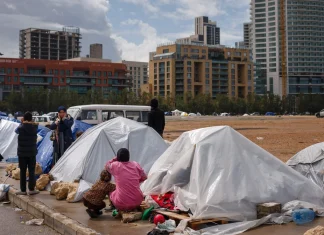
The room also returned, uncomfortably, to memories of 2015 — the wave of migration that swept into Europe amid the Syrian civil war. Leaders from Italy and Denmark pressed for a plan to avoid a repeat should the Gulf or Levant spiral into protracted instability. The other looming concern was food security: the collapse of Russian fertilizer exports in 2022 had already shown how geopolitics in one region can ripple into harvests and hunger in another. Brussels warned that a disruption in fertilizer shipments from the Gulf could spur shortages in parts of Asia and Africa next year.
Those are not abstract concerns. They are about crops, markets and human lives: the price of bread in Accra, the availability of nitrogen for a rice harvest in Bangladesh, or the political pressures on governments in small Gulf states sheltering under uncertain security guarantees.
The Orban standoff: a test of trust
And then there is Viktor Orbán. The Hungarian prime minister’s veto on releasing €90 billion in emergency loans to Ukraine dominated more time than many leaders wanted. Orbán links his resistance to the damaged Druzhba pipeline, arguing Hungary has a right to energy security; Kyiv says its infrastructure has been smashed by Russian attacks and fixes must be prioritized elsewhere.
“You cannot make a summit decision and then have one member treat it as optional,” European Council president António Costa told reporters. “If trust evaporates, the union’s decision-making is at risk.”
The political arithmetic is ugly. Ukraine needs funds to keep paying soldiers and maintaining air defences; Hungary is approaching an election; and the perception that any member can extort the bloc threatens the solidarity that underpins EU foreign policy.
What does this all ask of Europe — and of you?
So what’s the picture that emerges from Alden Biesen? It is complicated and fragile. On one hand, the EU is seizing a rare chance to accelerate internal reforms — to finance scaling tech companies, to harmonize rules, to guard strategic sectors. On the other hand, external shocks — a conflict in the Middle East, erratic U.S. policies, Russian hybrid warfare — keep forcing reactive choices.
Ask yourself: do you want Europe to become a nimble, strategic bloc capable of competing in the 21st century, or a patchwork of 27 slow-moving national governments easily pushed off course by external actors? There is no simple answer, but the summit revealed a willingness — however uneasy — to try for the former.
That willingness will be tested. The roadmap to 2028 is ambitious, but delivering it requires political compromise: lowering levies on electricity in some countries, recalibrating the Emissions Trading System (whose impact varies wildly across member states), and finding a common front when a neighbor’s instability threatens the whole continent.
The conversations in the castle were a reminder that Europe’s destiny is not set. Crises sharpen choices; they can harden divisions or forge new coalitions. Which path will prevail depends on whether leaders can translate urgency into institutions and whether citizens across 450 million people are willing — and ready — to accept the compromises such a transformation demands.
For now, Europe is writing a new chapter under pressure. The ink is still wet. Will it be a story of reinvention or of missed chances? The answer will shape not just Brussels but markets, shores and kitchens across the world.