When a Courtroom Cheers: Poland’s Ruling That Bends Borders for Love
They started to clap before the words had fully settled into the air. A ripple of applause, then a roaring wave. In the austere chamber of Poland’s Supreme Administrative Court, people hugged, wiped away tears, and photographed each other as if to prove the moment had actually happened.
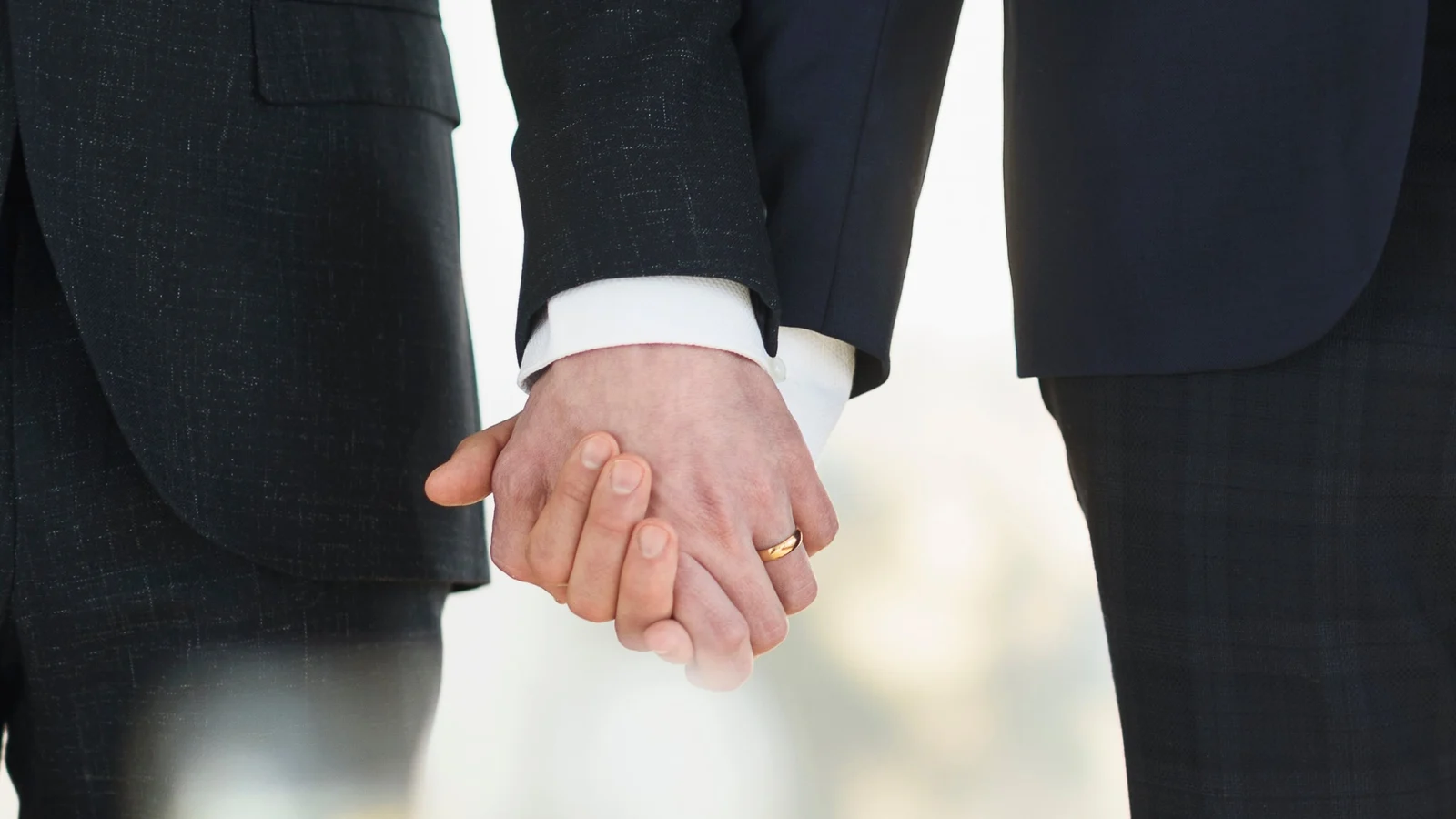
For Jakub Cupriak-Trojan and Mateusz Trojan, who stood at the centre of the case, the sound was years in the making — a small, human victory against a larger, stubborn architecture of law and tradition. The couple were married in Berlin in 2018. When they returned home to Poland, the civil registry flatly refused to enter their marriage into the local records. Poland’s constitution defines marriage as a union between a man and a woman; civil recognition for same-sex couples has been denied, time and again.
On the bench that day, Judge Leszek Kirnaszek offered a hinge, not a hammer. “EU regulations grant every citizen the right to freedom of movement and prohibit discrimination on the grounds of sex and sexual orientation,” he said, interpreting a ruling from the EU’s top court made the previous November. The court’s decision: same-sex marriages conducted in other EU member states must, under certain conditions, be recognised in Poland.
It was a moment that felt both intimate and epochal — a family legalisation disguised as a European summerhouse. “Today we are celebrating a human rights holiday, an incredible decision, very much needed,” said Pawel Knut, one of the couple’s lawyers, as he held up his phone to record messages from supporters outside the courthouse. Around him, longtime activists passed out small paper flags printed with rainbow-coloured EU stars.
What the Ruling Actually Means — and What It Leaves Unanswered
At first blush, the decision reads like a clear map: if you married in another EU country, your marriage can be recognised in Poland. But the court added a caveat that lawyers and activists are still parsing: marriages to be recognised must have been contracted “abroad making use of the freedom of movement and residence.” In plain terms, the judgement appears to apply most directly to couples who lived together in the country where they married — but whether it extends to every same-sex marriage contracted abroad remains unsettled.
That legal wrinkle is crucial. Rights organisations estimate that between 30,000 and 40,000 Polish citizens have tied the knot with same-sex partners overseas — from Berlin to Barcelona, Amsterdam to Lisbon. For many of those couples, recognition affects daily life: inheritance, spousal pensions, parental rights, hospital visitation, tax filings and even the right to family reunification within the EU.
- 30,000–40,000: Estimated number of same-sex marriages by Polish citizens concluded abroad (rights organisations)
- 31%: Share of Poles who said they support same-sex marriage in an Ipsos poll
- 62%: Share of Poles who backed some form of legal recognition for same-sex unions, according to the same poll
“This is not the end of the road, but it is a door finally opening,” said a constitutional law scholar at the University of Warsaw, who asked not to be named for this piece. “The court is signalling compliance with EU law, but it is doing so while trying to thread the needle of Poland’s domestic constitutional language. Expect more litigation, and expect appeals.”
On the Street: Celebration, Skepticism, and the Texture of Everyday Life
The scene outside the courthouse was a collage: elderly couples with small flags, young activists in paint-splattered hoodies, a priest distributing leaflets. “I came to celebrate for my son,” said Anna, 58, a primary-school teacher from Kraków, her voice soft but steady. “He’s living with his partner in Berlin. He called this morning and said, ‘Mum, maybe the state will see us now.’ That’s what brought me here.”
Across the square, Mateusz — one half of the couple at the centre of the case — smiled a slow, stunned smile. “We never sought a headline,” he told me. “We wanted our lives to be simple. To have our children addressed as ‘our kids’ in paperwork, not as awkward exceptions. Today is about paperwork becoming real life.”
Not everyone celebrated. In a corner, an older man in a dark coat shook his head and read from a small pamphlet denouncing the decision as an overreach of EU power into national identity. “This is about tradition,” he said. “About families, schools, what we teach our children.” His voice carried the familiar cadence of Poland’s cultural conversation: Catholicism, sovereignty, and a wariness of Brussels.
Poland at the Crossroads of European Identity
Poland is one of the last European countries where neither same-sex marriage nor civil unions are available nationwide; it shares that status with a handful of nations. The country’s recent history has often placed it at odds with EU institutions over issues ranging from judicial reform to media freedom. LGBT rights have been a particularly sensitive front: “LGBT-free zones” proclaimed by some municipalities a few years ago drew international condemnation and a groundswell of activism.
Yet public opinion has been shifting in nuanced ways. While only about a third of Poles say they would support full marriage equality, a clear majority prefer some form of legal recognition for same-sex couples. That split captures a broader trend across Europe: cultural values evolving at different speeds, institutions adapting unevenly, and courts increasingly acting as the fulcrum where change meets resistance.
“Courts will continue to be the battleground where EU principles of non-discrimination are brought into contact with national constitutions,” said a human-rights lawyer from Warsaw’s LGBT Coalition. “This verdict is one small revolution in administrative form. But revolutions are often administrative at first — they change the names on forms, and then slowly change the names people call each other.”
Beyond Poland: What This Means for Europe
The practical ripple effects are immediate: recognition of marriages for purposes of residence rights, social security entitlements and family law. But the symbolic import is far larger. In a bloc built on the principles of free movement and mutual recognition, the idea that a union celebrated in one country must be treated with respect in another is a test of shared values.
Will conservative governments push back, carving out narrower interpretations of the ruling? Or will the decision nudge other reluctant states toward clearer recognition? Those are questions for future courts and future legislatures. For now, the couples who left the courthouse arm in arm were simply two people taking a small step toward ordinary life.
“We didn’t expect fireworks,” joked Jakub as he held his husband’s hand. “We expected red tape. People often imagine justice as a cold ledger. Today it felt warm.”
So what do you think? When a legal decision changes a bureaucratic box, does it also change belonging? Can the slow architecture of law ever keep pace with the quickening of personal lives?
As Poland — and Europe — wrestle with these questions, the moment in that courthouse will likely be remembered not just for its legal technicalities, but for the ordinary human things it made possible: a partner listed on a hospital form, a pension claimed without argument, a child’s two parents named in official records. These are small, practical victories. They are also, in many ways, everything.