A piazza at the crossroads: Milan, migration, and a Europe arguing with itself
When I arrived at the sprawl of white marble that is Milan’s Duomo, the city felt split down the middle — not just by the broad avenues and a phalanx of police vans, but by two very different visions of Europe. On one side, flags snapped in the late-spring wind: the tricolour, nationalist emblems, faces known from televised debates. On the other, a river of banners and placards, loudspeakers warming up for chants against fascism and exclusion.
Thousands had come to the square for a rally that the organisers billed with blunt confidence: “Without Fear — in Europe Masters in our Own Home!” The man behind it, Matteo Salvini, chose the cathedral steps as backdrop — “a symbol of Christianity,” he called it — and invited an array of right-wing figures from across the continent. Jordan Bardella from France and the Netherlands’ Geert Wilders were among them, lending the occasion a continental stamp.
“Today, the tragedy we predicted has become a reality,” Wilders told those gathered, his voice cutting across the plaza. “Our people, the original inhabitants of Europe, have been hit by a tsunami of mass immigration, illegal immigration, mostly from Islamic countries.” It was a crude, uncompromising line — and one that drew as much anger as it did applause.
Voices in the crowd
Between chants and counter-chants, you could hear an entire continent’s anxieties. “We’re worried,” said Lucia, 52, a shopkeeper near the Duomo, as she paused to watch the procession of tractors and motorbikers that punctuated the rally. “We see boats on the news, we see controls relaxed. People think their neighbourhoods are changing overnight.”
Opposite her, Marco, a 28-year-old social worker and anti-fascist march organiser, folded his arms and said: “You can’t build politics on fear. The people fleeing war or trafficking aren’t some abstract threat — they’re people. Policies should be humane.”
And then there were the farmers, rumbling by in tractors as a living protest. “Free trade deals squeezed us,” said one, a man from Lombardy who gave his name as Giorgio. “We’re here because we’re angry about rules from Brussels that we didn’t vote for. But we’re not racists.”
A stage, a message, and missing faces
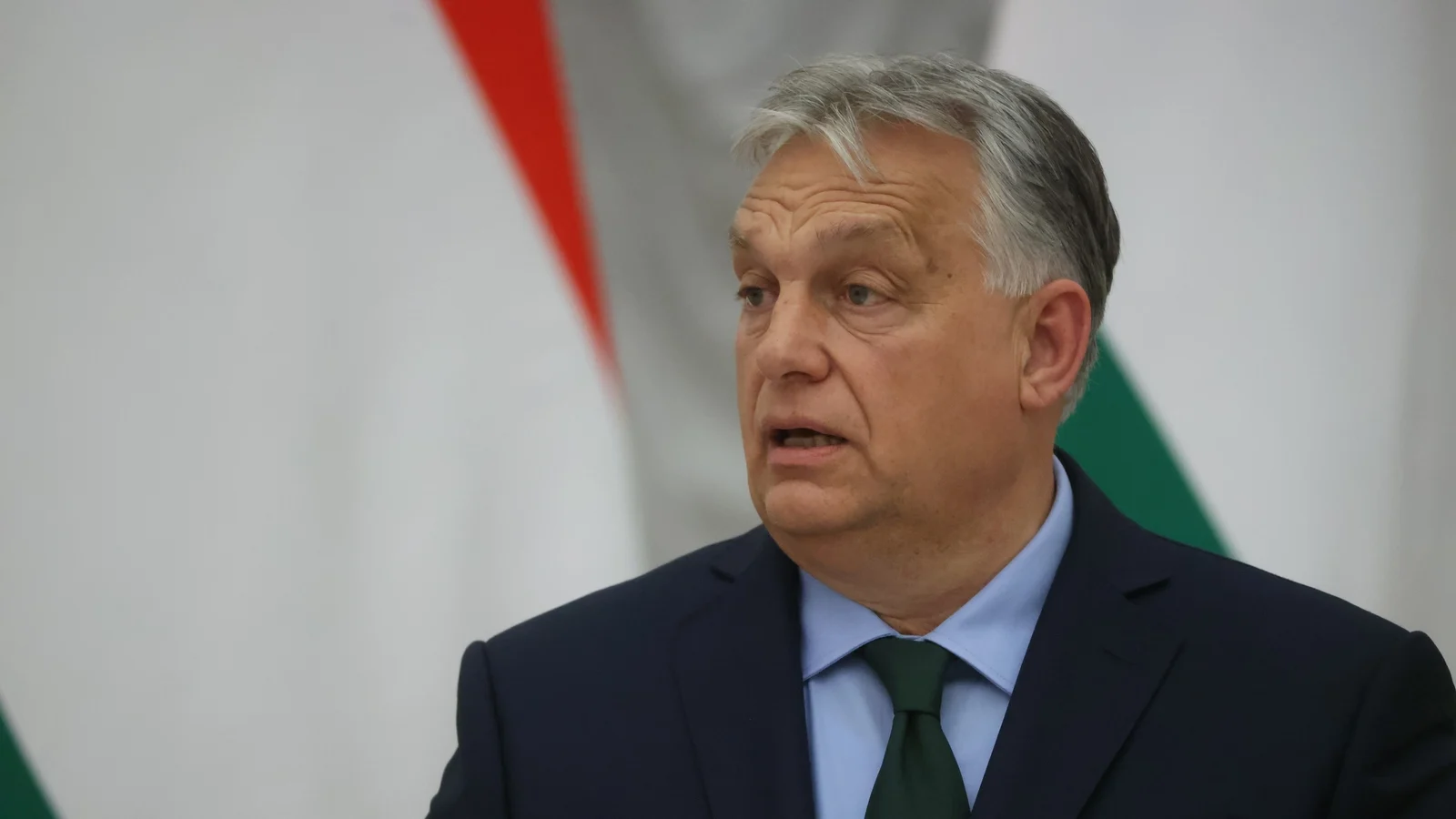
From the podium, Salvini struck a familiar chord: borders, bureaucracy, and the “return” of power to national capitals. “Dear Viktor,” Salvini shouted at one point, referring to Hungary’s Viktor Orbán, “you have defended the borders and fought human traffickers and arms traffickers. Let us all continue this fight together, for freedom and the rule of law.”
Yet the Fortress Europe narrative had a hole. Orbán — one of the co-founders of the grouping that calls itself Patriots for Europe — was conspicuously absent. In a political turn that has surprised many across the continent, Orbán was recently voted out after 16 years in power, and the Hungarian result has given centrists and pro-EU voices fresh ammunition.
The absence was more than symbolic. It underscored a larger reality: the right in Europe is far from monolithic. There are alliances and fissures, strategic marriages of convenience, and rivalries over who gets to speak for Europe’s future.
Friends, rivals, and an uneasy line-up
Marine Le Pen, who visited Budapest only days before the elections there, has been busy trying to stitch the various nationalist threads together. “2027 will be absolutely fundamental,” she warned supporters beforehand, urging hopefuls to prepare for a shift inside European institutions rather than from the outside.
Bardella, looking toward France’s presidential contest, spoke with the kind of certainty that fuels campaign boundaries. “We’re getting ready to say goodbye to Macron,” he told the Milan crowd; “our victory in the upcoming presidential election is within reach.”
On the ground: tactics, turnout, and mood
Police kept the two camps apart with a visible — and sometimes tense — presence. Batons tucked in the boots of officers, drones hovering over the square, and metal barriers formed a hard seam between right-wing demonstrators and the anti-fascist demonstrators who had converged with their own music and slogans.
Numbers, though, tell a less sensational story than the symbolism. The League — Salvini’s party — has seen its popularity dip dramatically in recent years. From a high of about 17.4% in 2018, it scored roughly 8.8% in the last national elections. Current polls place it somewhere around 6–8% of voting intention, a shadow of its former self. Meanwhile, splinter groups like the new “National Future” party, founded by retired general Roberto Vannacci, have begun nibbling at its base, polling at about 3%.
These shifts matter. They explain why a show of force in a symbolic location like Milan matters more now: the League needs momentum, optics, and the sense of being part of a continental movement if it is to reverse its decline.
What people in Milan told me
- “I came for the tractors,” one elderly woman joked. “Who knew politics could have a parade?”
- A 19-year-old student, clutching a placard reading ‘No to Fascism,’ said: “History repeats if you don’t pay attention. This feels like one of those moments.”
- A campaign volunteer for a centrist list sighed: “They’re loud, but are they many? That’s the question.”
Why Milan matters to Europe — and why you should care
Milan’s square is more than a backdrop for political theatre. It’s a mirror. The debates on migration, sovereignty, EU rules, and cultural identity roiling this city are being replayed across capitals from Madrid to Warsaw. They are about economics and emotion, about who gets to define “home” in an accelerating world of displacement.
Consider the numbers: globally, over 100 million people were estimated to be forcibly displaced by mid-2023, according to UNHCR figures. Migration pressures — from war, climate stress, and economic collapse — are unlikely to ease in the near term. Those are structural realities: people move, systems strain, and politics responds.
The question for Europe is whether response will be pragmatic and humane or populist and exclusionary. Will the future be forged through cooperation within the EU — rethinking budgets, energy policy, and labour mobility — or through a patchwork of harder borders and polarised electorates?
Closing thoughts
As I left the plaza, a street vendor handed me a cold espresso and said, half-quiet, half-joking: “Politics is like our coffee — too bitter without sugar, too sweet if you lie to yourself.” It’s a useful image. Europe’s politics taste different for different people. For some, the rally at the Duomo was a clarion call to reclaim identity and control. For others, it was an alarming signal of hardening attitudes toward others — migrants, minorities, the unfamiliar.
Which path do you think Europe will take? Where do you see your country in these arguments about borders, identity, and power? If Milan taught me anything, it’s that the answers will be written not only in parliaments and polls but in the rhythms of city squares, in conversations at cafés, and in the quiet decisions families make every day.