When the sky opened: Storm Leonardo and the soaked heart of Andalusia
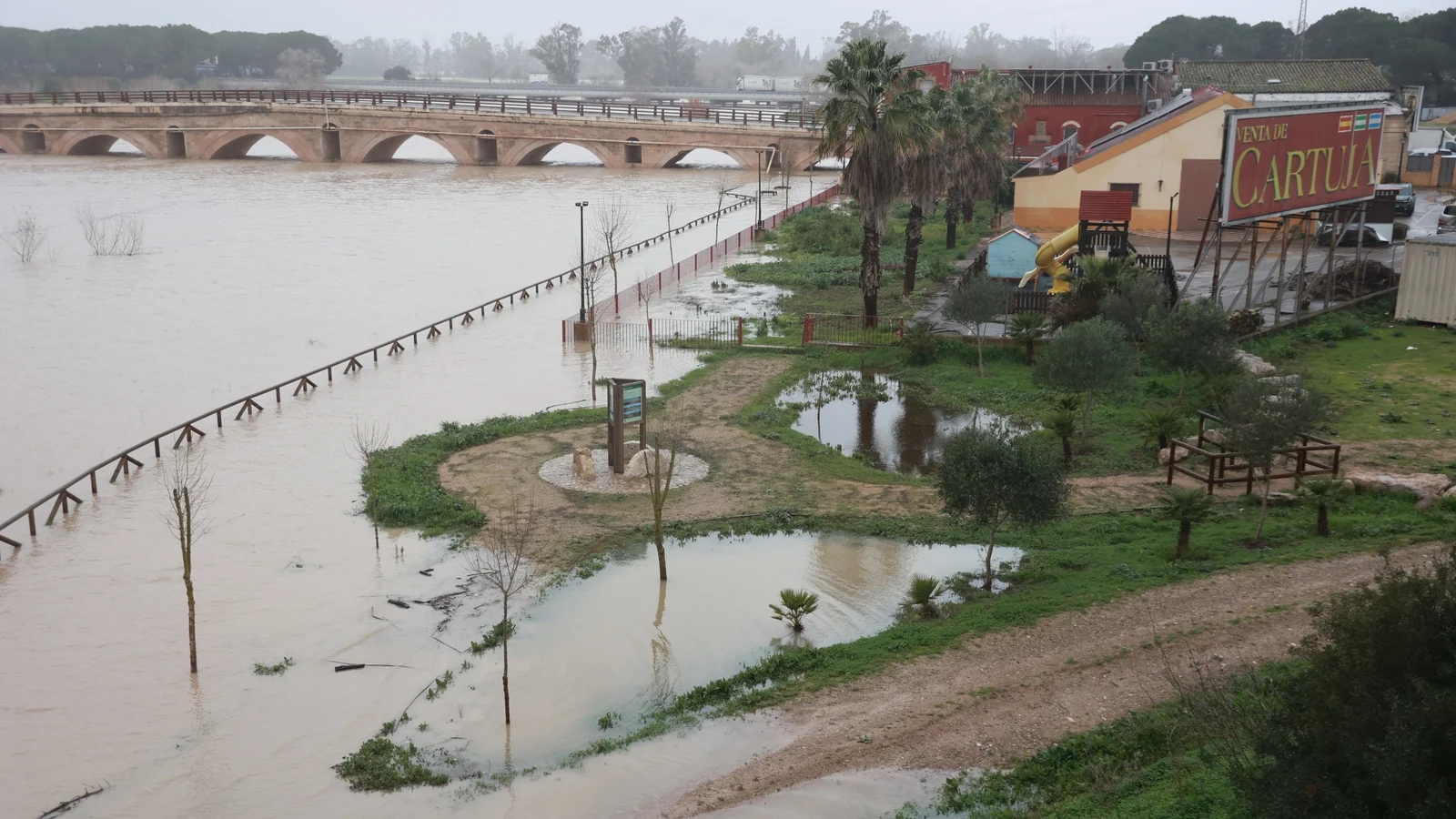
There are moments when weather ceases to be background and becomes a character with a temper. On a wind-slashed morning in southern Spain, that character arrived as Storm Leonardo — an unrelenting, gray-green wall of rain that turned the whitewashed villages of Andalusia into islands of tile and stone surrounded by streaming water.
People here are used to dramatic skies. They measure their lives by harvests, fiestas and the slow shift of light across olive groves. But this was different. “I have lived in Ronda for 62 years,” said Carmen Márquez, a retired teacher whose home overlooks the gorge. “I have never seen it rain like this. It sounded like the sea was falling from the sky.”
A red alert and a landscape already near breaking point
Spain’s meteorological agency, AEMET, issued its most serious warning — a red alert — over wide parts of Andalusia, citing torrents that forecasters called “extraordinary.” Emergency services warned of floods and landslides as swollen rivers and already-saturated soils could not absorb another downpour.
In places such as the Sierra de Grazalema, a landscape famed for its limestone crags and verdant valleys, scientists and forecasters warned that Leonardo might deposit a volume of water equivalent to an entire year’s precipitation in a matter of hours. The Environment Ministry reported that January rainfall across Spain hit 119.3 mm — 85% above the 1992–2020 average, making it the second-wettest January of the 21st century. The ground, hydrologists say, had no appetite for more rain.
“The soil is already holding water like a sponge that can’t take another drop,” AEMET spokesman Rubén del Campo told reporters. “Riverbeds are fuller than normal, and any concentrated downpour could send systems over the edge.”
Life under Leonardo: evacuations, soldiers and silent stations
The storm’s effects felt immediate and practical. Thousands were ordered from their homes as a precaution. Children missed school across Andalusia — every province closed classrooms except Almería — while nearly all suburban, regional and long-distance trains were cancelled. Renfe, the state rail operator, warned there would be no bus replacements because key roads were unsafe or impassable.
Rescue teams turned to manpower and the sky: hundreds of soldiers were mobilised to back up civil protection crews; two aircraft and two helicopters kept tight circles over flood-prone river valleys, relaying live conditions back to control centers. Mobile phone alerts buzzed across the region: messages asking residents to move to higher ground, to avoid travel, to heed the advice of emergency services.
“We had families waiting outside the municipal hall at dawn,” recalled Javier Ortega, a volunteer with a local rescue group in Campo de Gibraltar. “People arrive with a bag and the look of someone who suddenly realises what matters most. No one wanted to stay in a ground-floor apartment when the water climbs.”
Road closures and cancelled services left commuters stranded, shopkeepers locking shutters early and farmers watching their terraces and orchards worryingly: olive trees can survive heavy rain, but young fruit and soil erosion are another story. In small bars, where the community usually debates football and politics, talk shifted to river forecasts and whether the drainage culverts would hold.
Portugal braces, too — a reminder that weather ignores borders
Leonardo did not stop at the Iberian frontier. To the west, Portugal faced its own emergency: the country, still recovering from lethal floods last week that claimed five lives, placed swathes of its coast on orange alert and readied defenses along major rivers. Authorities deployed up to 3,000 troops and 42 inflatable boats with marine teams stationed near the rivers most likely to burst their banks.
“This is about response and also about prepositioning,” said Lieutenant Commander Ana Ferreira of the Portuguese armed forces. “We are not waiting for calls for help. We are where the water will be.”
In northern and central Portugal, forecasts also flagged heavy snowfall and strong winds. That unusual mix — blizzards in the interior, floods on the coast — underlined a fundamental truth of climate-driven weather systems: they can hit multiple sectors at once, complicating rescue and recovery.
Why the floods feel both local and global
Anyone who has watched the storms rolling in from the Atlantic over the past decade knows they are not just meteorological events — they are climate signals. Scientists say human-driven warming increases the atmosphere’s capacity to hold moisture (a relationship often summarised as roughly 7% more water vapor per degree Celsius of warming). That physics translates into heavier, sometimes more concentrated rainfall when conditions are right.
“We are not saying every storm is caused solely by climate change, but we are seeing a clear trend: extreme precipitation events are becoming more frequent and more intense,” explained Dr. Elena Ruiz, a climate scientist at the University of Seville. “When you combine saturated soils with a very moist air mass, you get precisely what we are witnessing: systems that have less place to put the water.”
Spain’s recent history has been sobering. In October 2024, the country endured some of its deadliest floods in decades, with more than 230 lives lost, mostly in the east. Those losses are not just statistics; they have reshaped communities, municipal budgets and the way planners think about river corridors, urban drainage and emergency shelters.
More than a storm: questions for a wetter future
As the rain eased and rescue teams tally damage, two questions hang in the Andalusian air: how to rebuild, and how to prepare. Will towns invest in floodplain restoration and upgraded drainage? Will transportation networks be reimagined so trains and buses are less vulnerable when the roads are underwater?
Local officials say there is a growing appetite for change. “We need to rethink infrastructure as something alive,” said María López, an official at the regional government, standing beneath a newspaper awning while rain slit the sky. “Concrete is not enough; we need wetlands, permeable pavements, smarter land use. It is expensive, yes, but the cost of doing nothing is higher.”
In the markets and plazas of Andalusia, recovery will be practical and intimate: drying out rooms, salvaging tiles, bringing in pumps, replanting terraces. But there is also a deeper cultural resilience — a willingness to gather, to talk over coffee and share resources. That communal muscle will be tested in the months ahead.
So what does a storm like Leonardo ask of us, beyond umbrellas and sandbags? It asks us to imagine a landscape designed for water, to invest in warning systems and to treat climate risk as part of everyday life. It asks, perhaps, whether our modern towns and transport networks can survive a pattern of weather that is becoming less predictable and more extreme.
As you read this, think of the plazas where children play, the orange trees by the roadside, the terraces cut into hillsides — and imagine how they fare when the sky decides to pour. What would you change in your town if the next downpour could be as fierce as Leonardo?
- 119.3 mm — Spain’s January rainfall, 85% above the 1992–2020 average.
- Over 230 — people killed in Spain’s October 2024 floods, according to official reports.
- 3,000 troops and 42 inflatable boats — Portuguese emergency forces deployed ahead of worsening conditions.
Leonardo will pass. The rain will slow, the rivers will recede, and life will resume its orbit. But storms like this leave a memory and a ledger: a list of repairs, a count of losses, and a growing conviction that in a warmer world, weather is not simply something that happens to us — it is a force that demands our attention, our planning, and our care.