Smoke and silence: a city’s heartbeat interrupted
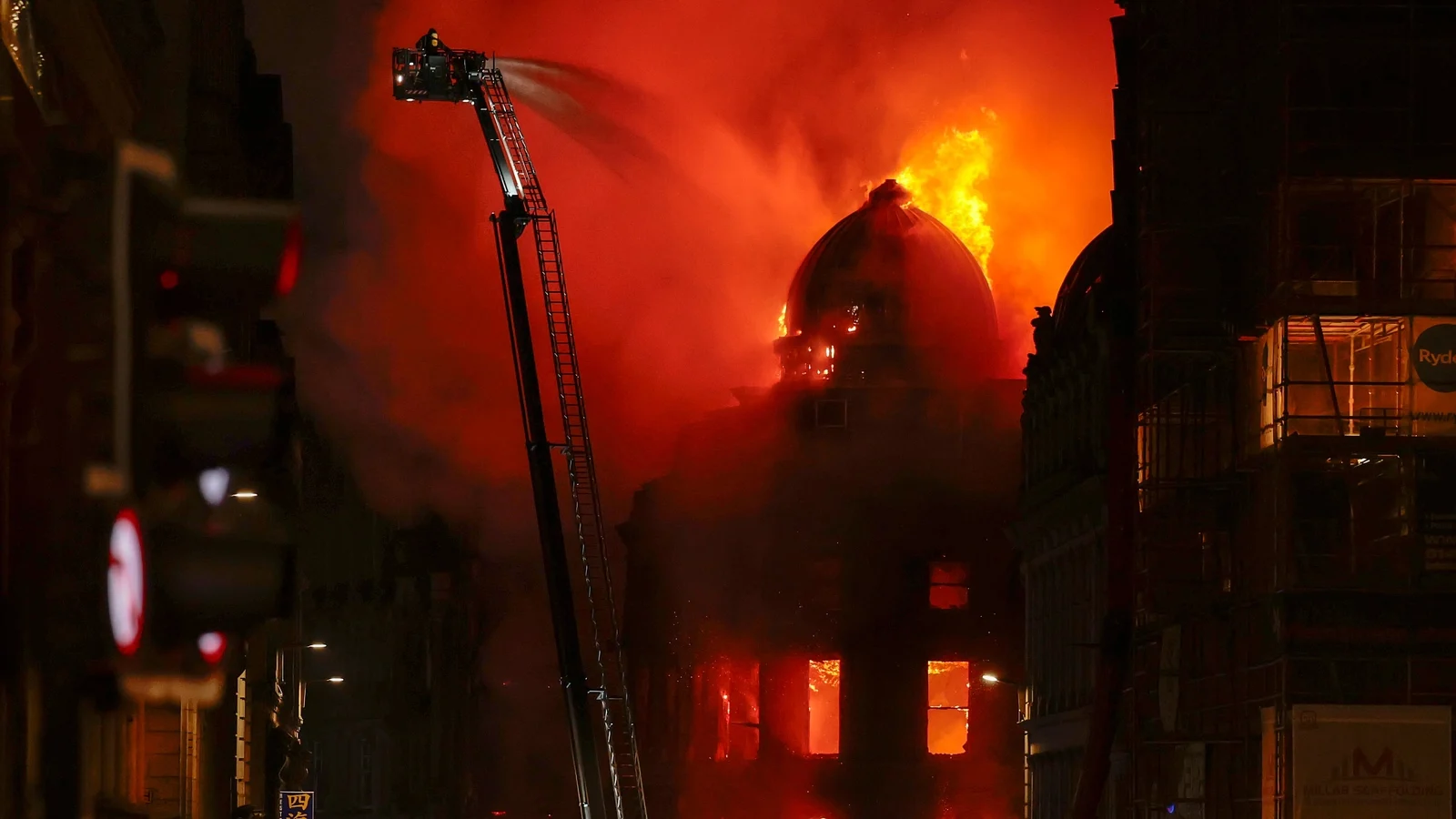
On a grey afternoon the kind of Glasgow knows well, smoke coiled up from a corner of Union Street and turned the city’s familiar skyline into a watercolor of ash and light. Trams, buses and the usual hum of commuters were replaced, for a time, by sirens and the focused choreography of firefighters. By evening, Scotland’s busiest railway station — the grand iron-and-glass of Glasgow Central — stood closed, its platforms dark where thousands usually move every hour.
The fire began in a small shop tucked into an aging block near the central concourse. Within hours crews from the Scottish Fire and Rescue Service were engaged in a difficult, ongoing operation; the blaze had partially collapsed part of the building and smoke lingered like a stubborn weather front. Authorities asked people to avoid the area, while the city’s rail arteries, normally pulsing with tens of thousands of passengers a day, were thrown into upheaval.
When the trains stop
For many commuters, Glasgow Central is more than a station — it is the city’s vertebrae. Handling around 30 million entries and exits annually pre-pandemic, the station knits Glasgow into the rest of Scotland and the wider UK. When those links falter, ripple effects are immediate and widespread.
High-level platforms were taken out of service, and the low-level subways were unable to call at the station, effectively severing central access for many regional and long-distance services. Avanti West Coast advised altered routes to Preston, Carlisle and Motherwell to enable onward connections, while TransPennine Express suspended links between Glasgow Central and Liverpool Lime Street and Manchester Airport. ScotRail warned of “substantial disruption” and urged passengers to check before travelling — a phrase that became a new refrain on social media, local cafes, and office WhatsApp chains.
“It feels like the city’s chest has been squeezed,” said a commuter, Fiona McLaren, who found her usual 5:30pm train cancelled. “You plan around the trains — exams, shifts, visiting friends. Suddenly everything is up in the air.”
Firefighting in the shadow of Victorian stone
The block where the fire started is part of a patchwork of Victorian architecture: stone façades, carved cornices and the occasional plaque that names a business owner from a century ago. Some of these buildings date back to the mid-1800s, their stones bearing the soot and stories of Glasgow’s industrial rise. Local MSP Paul Sweeney noted the age of the structure and the partial collapse of the corner of the Forsyth Building, and voiced hope that neighbouring landmarks like the Caledonian Chambers and the Central Hotel would be spared.
“This is more than brick and mortar,” said Dr. Aileen Murray, a heritage conservation specialist at the University of Glasgow. “These buildings are repositories of civic memory. When fire touches them, you lose layers of social history that aren’t easily replaced.”
That sentiment stretches beyond nostalgia. The Egyptian Halls, a nearby project that has long drawn interest from conservationists and developers, has been the subject of restoration plans. For residents and experts alike, the fire raises difficult questions about how cities protect their architectural past while accommodating modern commerce and safety standards.
Lives and livelihoods, up in smoke
Behind every headline are people counting losses. Sexy Coffee, a small café beloved for its late-night playlists and strong espresso, posted on Instagram that the business had been destroyed. The owner, who gave her name as Clara, described standing across the street and watching decades of effort smoulder.
“We’d just converted the loft into a little studio for local artists,” she said, voice shaking. “It wasn’t just coffee in there. It was birthday parties, first jobs, students cramming for finals. We are absolutely devastated.”
Willow Hair Salon’s owner, Hannah McBride, confirmed on social media that her shop too had been lost. “I’ve done hair for people who’ve come back from abroad, for weddings, for funerals — for every stage in someone’s life. It’s like losing a part of the community.”
There were, thankfully, no reported casualties. Fire crews were mobilised at 15:46 GMT on Sunday and continued operations into the early hours, according to the Scottish Fire and Rescue Service. “Our teams are working to bring the incident under control,” a spokesperson said, asking the public to steer clear and allow emergency services to do their work.
How common are fires like this?
Across the UK and beyond, urban fires that begin in small retail outlets or from battery-powered devices have become a persistent issue. Devices containing lithium-ion batteries, such as e-cigarettes, have been implicated in accidental blazes on several occasions worldwide. Safety experts say that while incidents are still relatively rare compared to the number of devices in use, they can be dramatic and destructive when they occur in densely built urban blocks.
“A single small ignition source in an old, tightly packed building can escalate quickly,” explained fire-safety consultant Mark O’Connor. “Older buildings often lack modern fire-stopping measures, and combustibles stacked for retail display can act like tinder.”
City life on hold — and the wider picture
When a hub like Glasgow Central closes, the immediate inconvenience is obvious: delayed journeys, cancelled meetings, stranded tourists. But the effects run deeper. Businesses dependent on commuter footfall lose hours and income. Freight plans are reshuffled. Emergency services must balance the blaze with other ongoing demands, stretching resources.
There is also a wider conversation about how cities manage the coexistence of heritage, retail economics and public safety. How do you retrofit fire safety into buildings that were never designed for modern electrical loads and battery-powered devices? How do you protect small businesses that lack the capital to make costly upgrades?
“This is a wake-up call about resilience,” said Dr. Murray. “It’s about infrastructure, yes, but it’s also about policy. We need targeted funding and clearer guidance for heritage buildings that house modern commerce.”
What comes next
As smoke cleared and the immediate danger receded, the practical work began: assessing structural damage, restoring services, helping displaced businesses. Transport operators published amended timetables and offered refunds and alternatives. Local authorities prepared to work with affected shop owners and residents to provide emergency relief and information.
For Glaswegians, there was also an emotional reckoning. The city has a long memory — a catalogue of reinventions, from shipyards on the Clyde to music halls and modern galleries. People were already recalling, in quiet clusters on the pavement, the ways Glasgow has pulled itself together after shocks in the past.
“We’ll clean this up, we’ll rebuild,” said an older man, who’d paused outside a cordon with two shopping bags. “Glasgow’s been on fire before — sometimes literally — and it keeps getting up.”
Questions to hold as the smoke lifts
As you read this from wherever you are, consider how cities protect what they value most — the places that stitch daily life together. What should be the balance between preserving history and imposing new safety standards? How can small businesses be supported when disaster strikes? And what can transport planners learn from an afternoon when a city’s heartbeat faltered?
The answers will take policy, money, and community will. But they will also take stories — the voices of those who open shops at dawn and those who wait for trains at midnight. In the coming days, as Glasgow Central works to reopen and as neighbours check in on one another, those stories will be the first measure of recovery.