When Ordinary Courage Blooms on Bondi Beach
It was the kind of autumn afternoon that makes Sydney feel like the whole world has gone to the shore: sun low, salt in the air, surf stretching into an indecipherable blue. Families draped in towels, a man with a metal detector scanning the sand, teenagers doing tricks on the promenade rail. Then the sound—impossible at first—of gunfire fracturing the soundtrack of waves and chatter.
In the panic that followed, one figure stands out in smartphone footage that rippled across the globe: a man who sprinted toward a gunman, reached for the weapon, wrestled it away, and turned the tide of a scene that might otherwise have become a massacre. His name, reported by local outlets, is Ahmed al Ahmed. He is 43, a fruit seller who works near the beach, the kind of person whose mornings begin before sunrise sorting crates of oranges and whose face you recognize if you’ve queued for figs from a market stall.
What Happened
Authorities later described the incident as a terrorist attack that targeted members of the Jewish community. Eleven people were killed and many more injured in one of Australia’s deadliest shootings in recent memory.
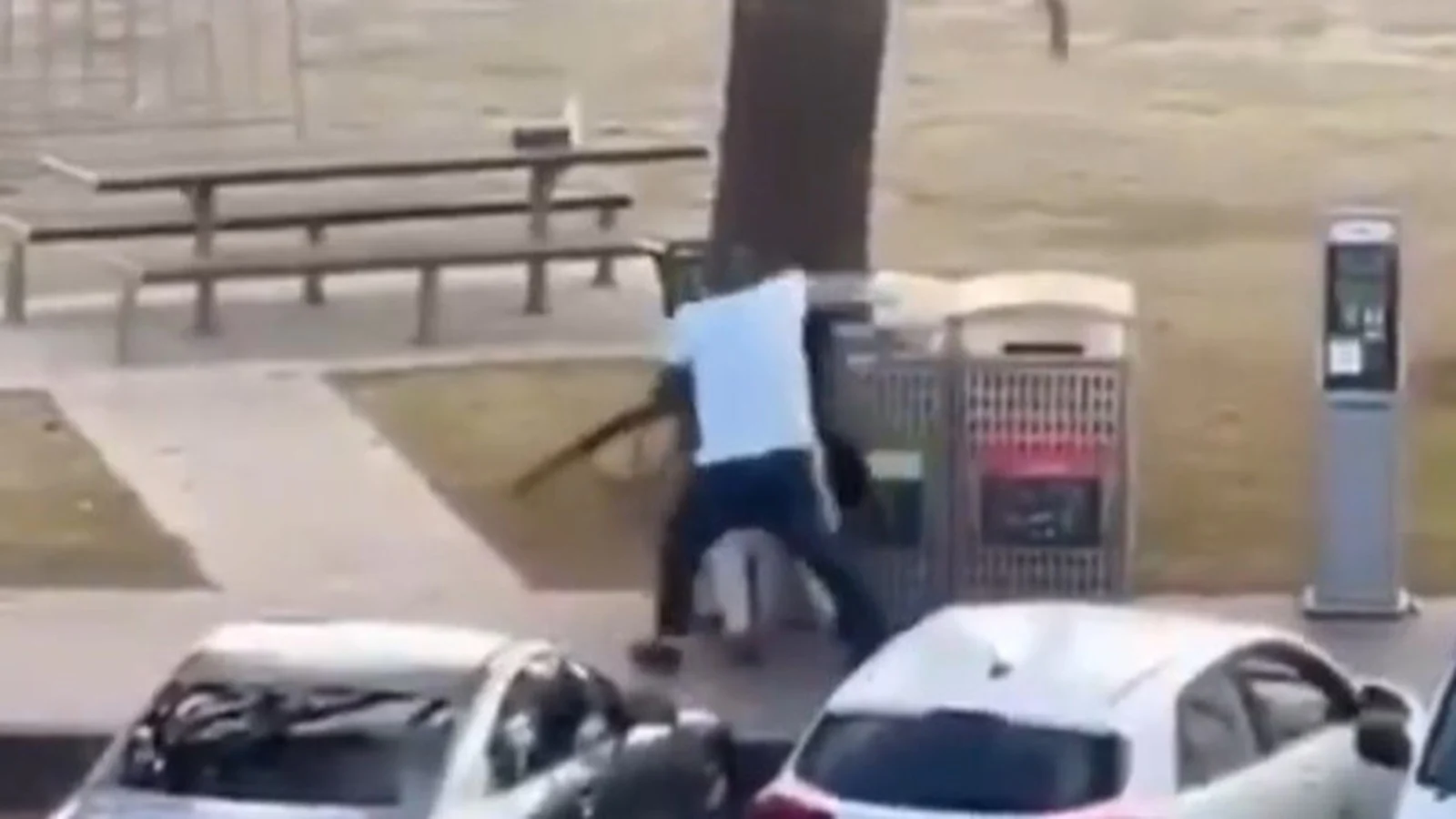
Footage circulating online shows Ahmed lunging at one of the shooters as gunshots ring out. He manages, amid the chaos, to prise the firearm from its owner. For a moment, the weapon is pointed back at the assailant. The attacker retreats. Witnesses scrambled to help the wounded. Ahmed himself suffered two gunshot wounds and was taken to hospital.
Voices from the Sand
“He ran straight at the shooter without thinking,” said Layla, a local café owner whose outlet overlooks the beach. “I saw him grab the gun like he was grabbing a hot pan. He didn’t calculate, he didn’t panic—he acted.”
Ahmed’s cousin, who gave his name as Mustapha to a local reporter, waited at the hospital and spoke with a trembling mixture of fear and pride. “We don’t fully know what the doctors will say yet,” he told journalists. “But he is my cousin, and he is a hero. He always looked after his family, and now he has looked after strangers.”
A lifeguard who helped ferry people away from the scene described the mood afterwards. “There was this silence—like the sea had swallowed its breath. Then people started helping. Strangers carried others, shopkeepers opened up, someone turned a surfboard into a stretcher.” The local council worker who coordinated volunteers later said those windowless acts of compassion were the most important things in those first hours.
Why This Moment Matters
Australia is, by many measures, not a country accustomed to mass shootings. The nation’s painful pivot after the 1996 Port Arthur massacre brought sweeping gun reforms and a national reset. Since then, large-scale shootings became far rarer here than in many other Western countries. That rarity makes this attack not just a criminal act or a terrible statistic—it is a rupture in a social contract that promised safer public spaces.
And yet, even in the darkest hour, there is a stubborn bloom of bravery. Ahmed’s intervention was not the result of training or nationalist script. It was an act of improvisation: a fruit seller using his hands, his body, his will. He became what neighbors and leaders called, in the immediate aftermath, a symbol that ordinary people can still make extraordinary choices.
First-responders, neighbors, strangers
Paramedics worked alongside volunteers, police secured the precinct, and citizens set up impromptu aid stations. “People brought water, towels, blankets. Old men offered their jumpers. A yoga teacher started giving breathing support to hysterical kids,” said one volunteer on the promenade. “You saw the city’s better instincts awake.”
It’s worth asking: what creates that willingness to help? Neighbors told me it’s the nature of Bondi itself—a kaleidoscope of cultures, a place where a Portuguese fishmonger knows the names of surfers and an Iranian café owner buys bread for a night shift nurse. In times of crisis, those relationships become lifelines.
Public Response and Political Ripples
Across the country, political leaders expressed shock and grief, praising the acts of those who interceded. But the event also reopened old debates about public safety, the proliferation of extremist ideologies, and how a globalized world raises the stakes for how we protect minority communities.
Analysts say that attacks singled out for religious or ethnic reasons have been a growing concern globally. Community organizations here and abroad monitor a rise in anti-Jewish incidents and worry about spillover from conflicts overseas. In Australia, where social cohesion is both celebrated and contested, this attack forces renewed conversations about integration, radicalization, and communal security.
Human Stories, Not Just Headlines
Beyond the figures and the briefings are the people who tide through trauma to tell their stories. A nurse who treated victims told me she keeps replaying one detail: “A little girl kept saying she wanted to go home. It wasn’t about politics; it was a child wanting the banal comfort of bedtime.” A pensioner who helped bandage wounds later said, “I don’t feel brave. I just couldn’t look away.”
Such testimonies matter. They remind us that attack narratives often flatten individuals into data points. The dead and injured were mothers, sons, students, retirees—people whose phone contacts now hold names that will never again ring.
Questions for a Global Audience
When a tranquil beach becomes a crime scene, what do we owe one another? How do urban communities knit safety into everyday life without curbing the openness that makes them vibrant? And how should democracies respond when an attack has clear targeting of a minority group?
These are not questions with easy answers. Policies can change; policing can be re-evaluated. But the first line of any response is something more human: conversation, solidarity, and a commitment to remembering the people behind the headlines.
What Comes Next
Ahmed remains in hospital. The community has rallied—food donations, fundraisers, vigils at the promenade—and yet the sense of shallow grief hums beneath the noise. Investigations continue. Authorities are piecing together motives, affiliations, and the sequence of events.
For now, the immediate lesson is simple and stubborn: in moments of terror, people can reach for one another. They can turn toward danger to pull others back. History may debate the causes and the remedies; in the sand, in the emergency rooms, and around kitchen tables, people are already doing the hard work of care.
Closing Reflection
What would you do if you were there? It’s not a challenge to glorify risk but an invitation to consider the small preparations that make big differences: first aid, awareness, knowing how to check on a neighbor. The violence that punctured Bondi’s calm will be measured in reports and time lines. But its deepest counterweight may be the everyday courage—like Ahmed’s—that refuses to let terror win the final image.
When the tide pulls back, Bondi will keep drawing visitors who come for surf and sun. They will also come to a place changed in ways both visible and invisible—where a stallholder’s quick hands and a community’s open hearts were as decisive as any policy in saving lives. That, perhaps, is the lesson the world needs right now: how ordinary generosity and decisive action can push back against extraordinary harm.