Robert Mueller, 81: The Quiet Sentinel at the Center of an American Storm
When the news first flickered across my feed — terse lines, a family statement attributed, a flurry of confirmations from cable anchors — it felt almost impossible to reconcile the man on the screen with the one I had spent a decade watching in the margins of American political life.
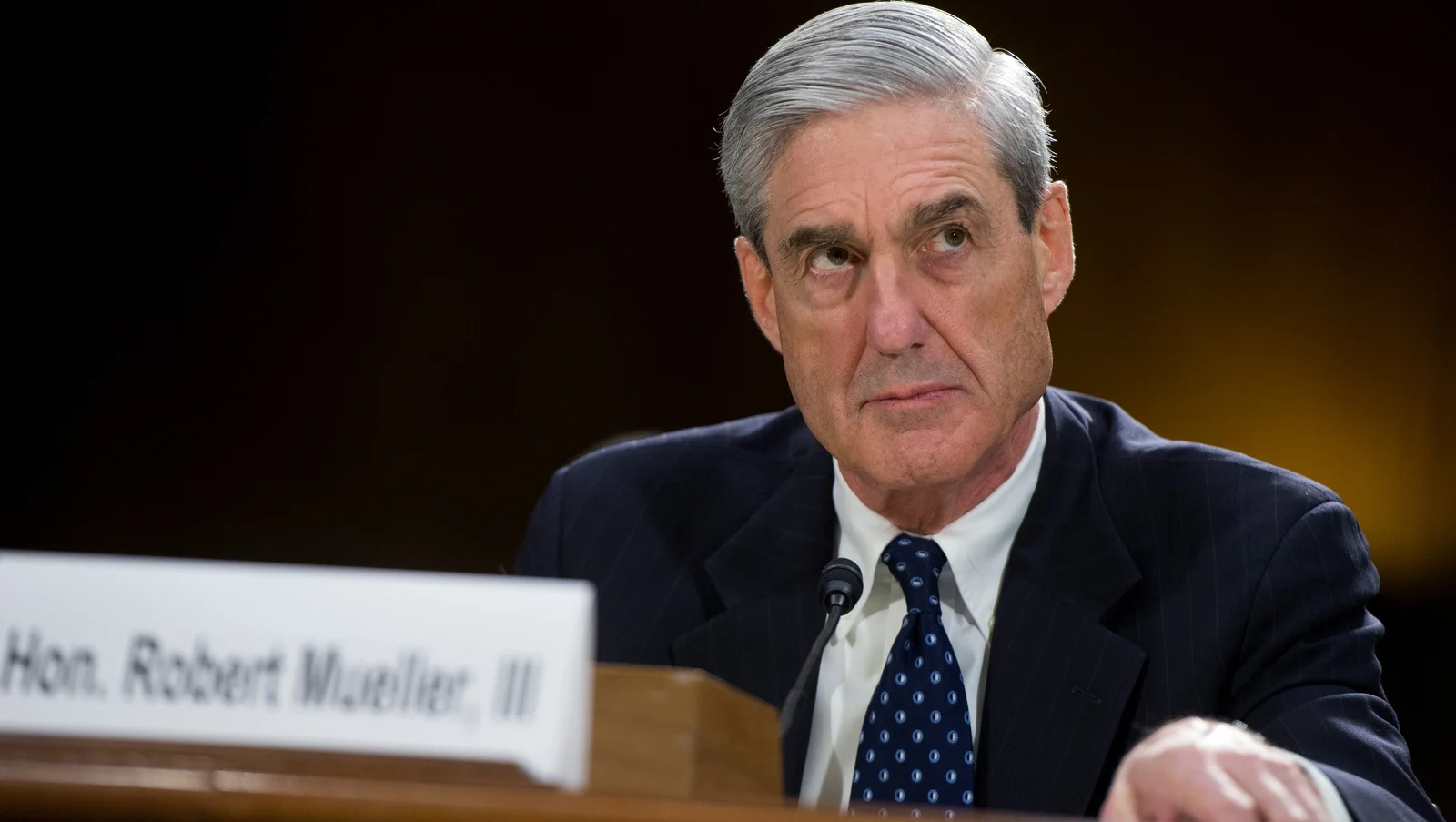
Reports from MS NOW and a New York Times journalist say Robert Mueller, the former director of the Federal Bureau of Investigation whose stewardship shaped the bureau after 9/11 and whose name was forever linked to the investigation into Russia’s 2016 election interference, has died at the age of 81. No official cause of death was disclosed; the New York Times had reported last year that he was living with Parkinson’s disease.
If these early reports hold, this is the closing of a chapter that takes us from Saigon’s humid jungles to the echoing marble halls of Washington, from Bronze Star ribbon to the sealed evidence rooms where the fate of modern political narratives was argued in legal briefs and redacted passages. Mueller was a man of service in its old-fashioned sense: disciplined, reserved, implacable. He inspired loyalty and exasperation in equal measure.
A life cut across by duty
Born into a post-war America and hardened by a conflict that left few who served unchanged, Mueller’s career was threaded through institutions that shape national life. A decorated Vietnam veteran who returned to a country that was changing faster than any homecoming could soothe, he rose through the ranks of the Justice Department before becoming the nation’s third-longest serving FBI director, a role he held from 2001 to 2013.
Those years were the crucible: the bureau reimagined after 11 September 2001, intelligence and law enforcement retooled to counter new threats. “He was the man we turned to when the world went nonlinear,” said a former Justice Department official, speaking on background. “He understood institutions. He believed in them, and he believed that rules mattered.”
Mueller left the FBI in 2013 after a dozen years at the helm, a tenure that outlasted presidents and fashions in policy. But he would return to public life, called back into a political and legal maelstrom when the Department of Justice appointed him special counsel in 2017 to investigate Russian meddling in the 2016 election and contacts between the Kremlin and associates of then-president Donald Trump.
The investigation that would define him
The inquiry lasted 22 months and produced a 448‑page report that remains one of the most scrutinized documents in recent American history. Prosecutors under Mueller’s supervision brought indictments against 34 people — a mix of campaign aides, political operatives, and several Russian intelligence officers and companies — and the probe generated a series of guilty pleas and convictions.
“Mueller’s investigation was meticulous to a fault,” said Eleanor Grant, a professor of criminal law who has studied special counsels. “It was comprehensive and cautious in ways that made it both legally robust and politically volatile. The report set out a mosaic of actions and intentions but stopped short of charging the president criminally, leaving a vacuum that politics rushed to fill.”
U.S. intelligence agencies had already concluded that Russia ran a campaign of hacking, propaganda, and influence aimed at denigrating Hillary Clinton and boosting the candidacy of Donald Trump. The Mueller report corroborated much of that assessment, cataloging contacts, communications, and conspiratorial threads that painted a picture of interference on an industrial scale — even as Moscow consistently denied the accusations.
Reactions: A nation — and a president — divided
According to the initial reports, the White House response was immediate and raw. On social media, the U.S. president reportedly celebrated Mueller’s passing. “Good, I’m glad he’s dead,” a message on Truth Social was widely circulated as his reaction, followed by, “He can no longer hurt innocent people!” Those words, if accurate, underline the sharp edge of political division that has only deepened over the past decade.
In D.C., where statues and law offices keep a running history of public life, opinions about Mueller’s legacy were as various as the city’s morning coffee choices. On K Street, a lobbyist observed, “He didn’t seek headlines. He sought proof. That’s what made him so frustrating to people who needed a simpler story.” At a diner near Capitol Hill, a barista in a senate-logo apron paused before saying, “I grew up thinking the FBI was a force for order. That report changed how a lot of people think about the balance between law and politics.”
Others were more blunt. “He was the kind of quiet force that makes a democracy work,” said a retired federal prosecutor. “When you remove the mythology and the fog, you’re left with painstaking work: witness interviews, chain of custody, grand juries. That’s the backbone of rule of law.”
What his story tells us about the moment
Mueller’s arc — soldier, prosecutor, FBI director, special counsel — is more than a biography. It’s a mirror held up to a country wrestling with institutional trust, media spectacle, and the fragility of democratic norms. Consider these realities:
- The Mueller Report spanned 448 pages and took 22 months to compile.
- The special counsel’s office secured indictments against 34 individuals and several Russian entities, producing guilty pleas and convictions among those charged.
- U.S. intelligence agencies concluded that foreign interference in the 2016 election was real, concerted, and aimed at American democratic processes.
Such numbers and findings are not mere historical footnotes. They are the scaffolding of contemporary debates about election security, foreign influence, and the role of independent investigators. They ask us to consider: what do we expect of our institutions in moments of strain? Whom do we trust when trust itself becomes a political weapon?
How we remember those who enforce the rules
To some, Mueller will be a figure of stoic rectitude: a man who let facts dictate his argument and law his cadence. To others, he will be a cautionary tale about the limits of process when the public demands clarity and the political theater refuses to wait. Either way, his life reminds us of the human labor behind public order — the long days in archives, the syntax of affidavits, the lonely ethics of tough choices.
“We do not memorialize people only for their victories,” said a historian of American institutions. “We remember them for the steadiness or the failures that teach us how to be better.”
If the early reports are borne out, the country will spend the coming days parsing the record, revisiting the redactions, replaying the hearings, and arguing once again about what justice looks like when it intersects with power. For those who lived through that era, each paragraph of Mueller’s life seems threaded with consequence. For younger readers who arrive late to the decades-long conversation about Russian interference, it might be an open invitation to study the machinery of democracy, its vulnerabilities, and the men and women who are tasked with guarding it.
So I leave you with a question: when institutions face their sternest tests, do we ask for heroes to step in, or for systems to stand strong enough that heroes aren’t needed? The answer will shape how we remember Robert Mueller — and how we steward what he left behind.