Chicago Stands Still: A City, a Movement, a Man
The morning the House of Hope opened its gates, the South Side felt like it had folded back a page of history and laid it out in the sun.
Ten thousand seats waited under vaulted ceilings and banners, but outside the rows of chairs the crowd pressed in, knitting itself together in coats and scarves, in choir robes and suits, in faces that had known Jesse Jackson’s rallies, his phone calls, his bargains at the bargaining table. People carried flowers, placards, and photographs; they carried stories. They had come from across the United States and from neighborhoods a few blocks away, all to mark a life that had pulled millions into politics and pushed a nation toward the hard work of inclusion.
Three former presidents—Joe Biden, Barack Obama and Bill Clinton—were expected to join thousands in a public memorial that felt less like a political pageant and more like a family reunion for a movement. Former first ladies Jill Biden and Hillary Clinton were also slated to attend. President Donald Trump, according to the White House, would not be there, citing scheduling conflicts and ongoing obligations.
Voices in the Room
“We come to reckon with loss, yes,” Chicago Mayor Brandon Johnson told reporters outside the church in a measured voice, “but we also come to plan. Rev. Jackson taught us how to make power meaningful for people who were never meant to have it.”
A longtime PUSH organizer, Thomas Reed, his hands callused from decades of canvassing, wiped a tear and said, “He wasn’t a man who delivered speeches and left. He made sure someone was watching the polls, that a young person had a voter registration card, that a factory worker got a fair contract. That’s how you change a life—one person at a time.”
Across the aisle a high school teacher, Maria Alvarez, who had driven in from Indiana, summed up why so many were here: “He didn’t just shout about rights—he taught us how to use them. He taught my students how to show up.”
A Life That Bent Toward Justice
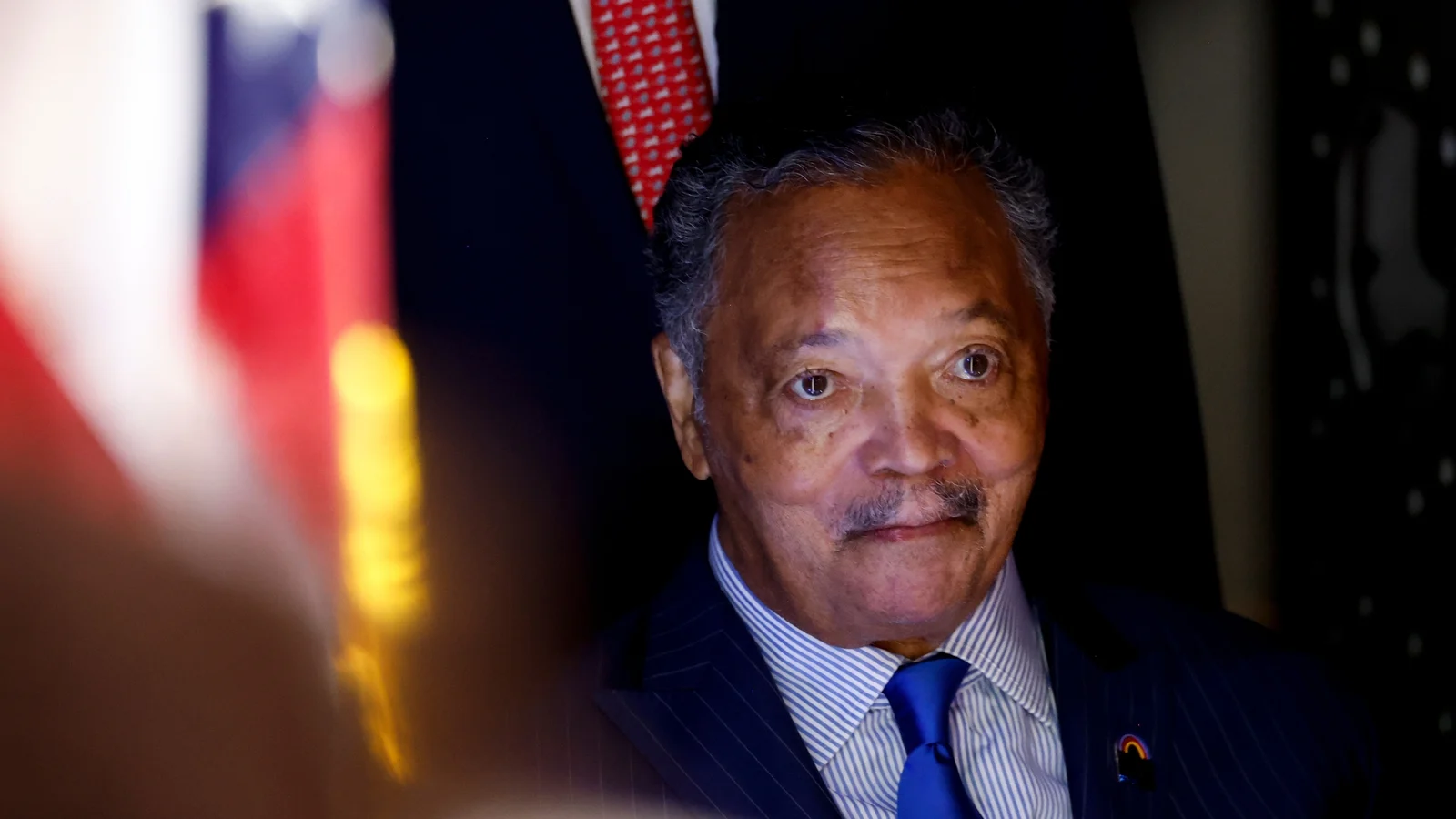
Rev. Jesse Jackson, who died last month at the age of 84, was born in South Carolina and came of age in a segregated America. He rose from the churches of the South into the national spotlight in the wake of Martin Luther King Jr.’s assassination, becoming one of the most forceful voices for civil rights, voter registration, and economic justice.
He founded Organization for a Better America and later Operation PUSH—an effort launched to push corporations, labor unions and government to be more accountable to communities of color. In the 1980s and 1990s he built the Rainbow Coalition, joining a ragtag assembly of groups—farmers, laborers, people of faith, Black organizers—into a political network that aimed to broaden democratic participation.
Jackson ran for the Democratic presidential nomination twice, in 1984 and 1988. Those campaigns were more than symbolic bids: they registered new voters, shifted the party’s conversation toward poverty and inequality, and made “the Rainbow” a template for coalition politics across the country.
- Led major voter registration drives that mobilized hundreds of thousands across the 1970s–1990s
- Founded Operation PUSH in 1971 and later merged efforts into Rainbow/PUSH
- Twice sought the Democratic presidential nomination (1984, 1988), helping to expand the party’s reach
Songs, Sermons, Strategy
The memorial will include performances by Jennifer Hudson, BeBe Winans and Pastor Marvin Winans—voices that trace a line from gospel to the national stage, from church basements to arena floors. Music has always been part of Jackson’s palette: it was the cadence of his sermons, the hymn behind his organizing, the rhythm that moved crowds to register and to vote.
“Music was one of his organizing tools,” said Dr. Elaine Marshall, a scholar of American social movements. “He knew how a choir could hold a crowd while a new idea found its footing. He knew how to use story and song to make politics feel like belonging.”
Inside the House of Hope, the program promised eulogies, recollections from civil rights veterans, and a few sharp moments of political reckoning. The service functioned as ritual, remembrance, and road map all at once—a public rehearsal of values that Jackson had spent a lifetime trying to institutionalize.
Memory as Political Reply
It would be naïve to separate the memorial from the politics of the moment. Scholars and activists alike see the attendance of prominent Democrats as more than mere homage: it reads as a public assertion of values—multiracial inclusion, affirmative policy, and the importance of voting rights—at a time when those ideas are under pressure.
“This gathering is not only about honoring a person,” said Jane Dailey, a historian at the University of Chicago. “It’s about reminding the nation that the right to remember is itself contested. Efforts at the federal level in recent years have rolled back diversity programs and pushed back against how we teach and commemorate slavery and civil rights. That makes this day’s symbolism urgent.”
Indeed, the last half-decade has seen contentious battles over voting access and the framing of American history. Dozens of states enacted voting restrictions after 2020, according to civil rights groups, and cultural skirmishes over school curricula and public monuments have intensified. For many, Rev. Jackson’s life is a counterargument to those trends: a demonstration of the power of broad-based political participation.
What People Brought With Them
The crowd did not look like a single political column. There were elderly couples who remembered St. Sabina and Operation PUSH from the 1970s; young organizers in hoodies clutching flyers for local races; ministers in collars trading stories of how Jackson had once mediated a dispute or brokered a corporate pledge. Outside, food trucks offered fried chicken and collard greens; inside, church ushers handed out programs with slogans—”Keep the Rainbow Alive”—and the dates of upcoming voter registration drives.
“He made politics feel like a neighborhood potluck,” said Tanya Brooks, a community organizer who came with a group of volunteers. “Everyone brought something—time, skills, care. And everyone was welcome at the table.”
Beyond Chicago: The Questions He Left Behind
As people filed out into an afternoon that smelled of brisk air and spent incense, a few questions hung in the open space he left behind. How will the movement he helped shape adapt to a more fractured political landscape? Who will train the next generation to do the grunt work of democracy—knocking on doors, staffing precincts, teaching civics in living rooms?
“We have to think less about nostalgia and more about institution-building,” Dr. Marshall urged. “Rev. Jackson’s genius was that he didn’t stop at speeches. He put people into positions of influence. That’s what organizers need to do now.”
So what does the scene at the House of Hope teach us? That rituals still matter; that grief and strategy can sit side by side; that a single life can be a hotspot for a country’s broader debates about memory, race, and who counts as an American. It also asks the reader—where will you stand when the next movement asks you to show up?
The memorial will close but the questions remain, like a chorus unfinished. Outside, banners fluttered in a cold wind as people took one last look at the marquee and walked back into the city, already planning the next meeting, the next registration drive, the next act of civic care. In that perpetual organizing, perhaps the clearest tribute to Jesse Jackson is not the speeches or the names in the program, but the work that keeps unfolding day after day—slow, steady, and stubbornly hopeful.