Evian’s Lakefront, Global Fault Lines: Why One Missing Seat Matters
Evian-les-Bains is the kind of town that makes you slow down: cobblestone streets, chestnut trees, and a promenade where the Alps blur into the lake like a painting left to soften in the rain. In June, this quiet French resort will host leaders of the world’s richest democracies — the G7 — yet the real drama isn’t on those lakeside terraces. It’s in the empty chair that some say should have been reserved for South Africa.
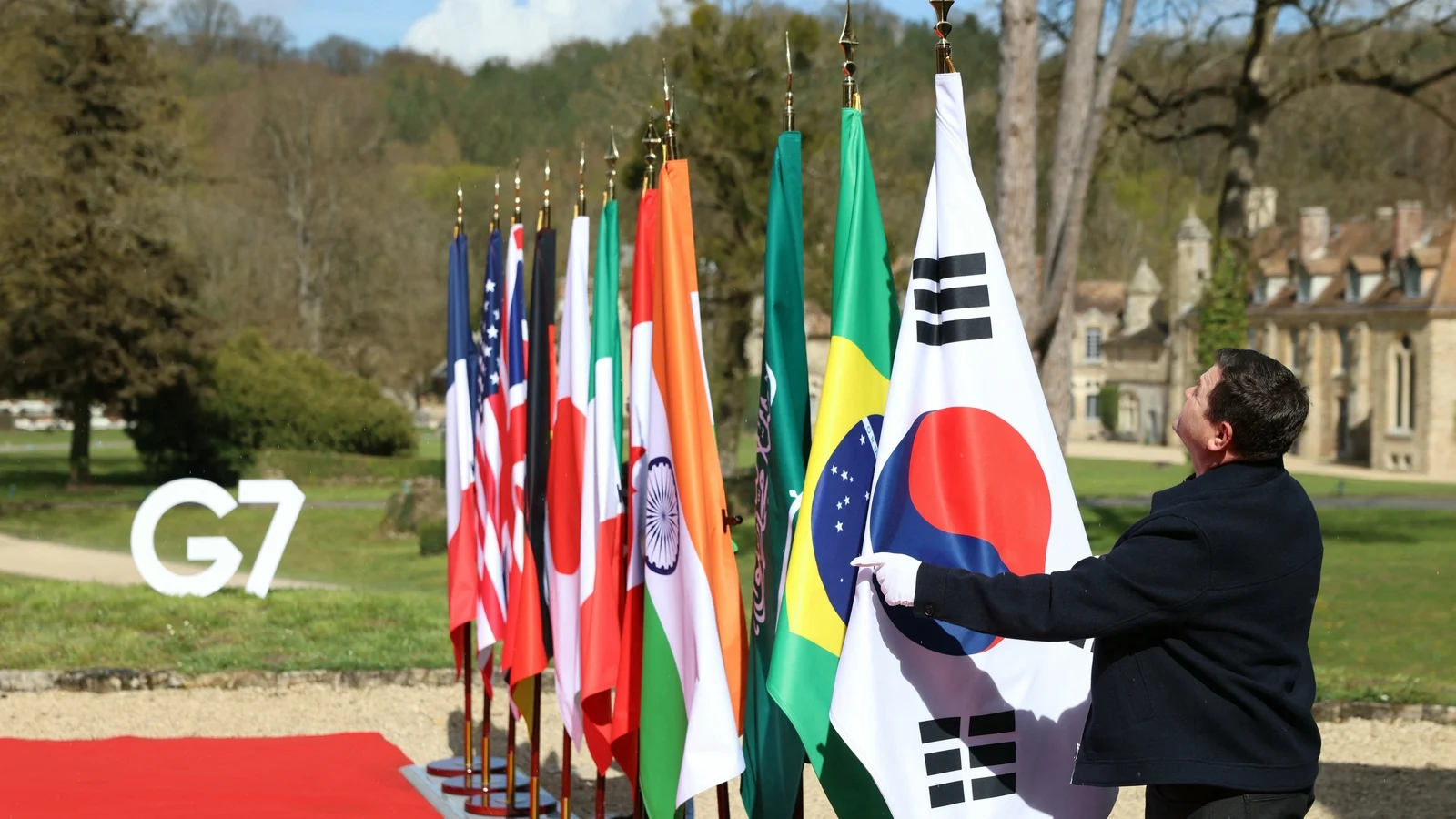
When Paris announced its guest list — India, South Korea, Brazil and Kenya — the omission was noticed not as a mere diplomatic footnote but as a message. South Africa, a familiar face at previous summits and a G20 member, learned through its embassy in Pretoria that it would not be formally invited. The explanation Paris gives is simple: this time, Kenya has the nod ahead of President Emmanuel Macron’s planned Africa-France summit in May. For others, the silence speaks louder.
Voices from Pretoria and the Market
“We accepted the French decision and appreciate the pressure they’ve been subjected to,” said a spokesperson for President Cyril Ramaphosa, a remark that mixes resignation with political polish. Elsewhere in Pretoria, at a bustling fruit market, vendors spoke in more direct terms.
“People here watch who sits with whom,” said Thandi Mbele, a 47-year-old apple seller who voted in the last election. “It feels like we are being judged for our friendships. That matters when you sell oranges to the world.”
For many South Africans, the omission recalled a larger storyline: last year’s G20 meeting in Johannesburg and, as critics remind us, a pattern of friction with the United States under its current administration. Washington’s public posture toward Pretoria — from sharp critiques of domestic policies to a conspicuous absence from some international past events — has been impossible to ignore.
Diplomacy or Pressure? Two Stories, One Summit
Paris insists the choice was strategic, not coercive. “France wanted to create space for Kenya given our calendar and forthcoming bilateral talks,” a French official said on the record. “This is about regional balance and timing, not backroom pressure.”
But South African officials tell a different tale: they were informed, they say, that Washington would boycott the summit if Pretoria received an invitation. The White House and the US State Department did not immediately comment. In diplomacy, what is left unsaid often becomes the loudest sound.
Consider the optics. The G7 still accounts for roughly 40% of global GDP, a bloc meant to steer economic and security policy among democratic market economies. Yet the G7’s legitimacy is increasingly questioned, especially by countries who feel their voices are heard only when they align. China — excluded from the guest list — has labeled the group a “club of rich countries,” a swipe that has resonance in capitals across Africa, Latin America and Asia.
Who’s Invited, and Why It Matters
France’s list of invitees reads like a map of priorities:
- India and South Korea — Asian economic powerhouses and strategic partners.
- Brazil — the most influential voice in Latin America.
- Kenya — a rising East African hub and the site of Macron’s planned Africa summit.
Each name signals a diplomatic calculation: trade, security, influence. But the choice also raises a question: who gets to define the global conversation?
Energy, War, and a Summit Under Strain
If the guest list is a puzzle, the summit’s agenda is a storm. Top of the docket in Paris’s view: head off a “massive financial crisis” by urging major economies to rebalance — asking China to boost domestic demand and reduce destabilizing exports, the United States to rein in ballooning deficits, and Europe to invest more and save smarter. Ambitious aims, all.
Reality, however, has a way of intruding. An energy shock from the conflict involving Iran and strikes across the Middle East has already jostled markets. Around 20% of seaborne oil flows through the Strait of Hormuz; any disruption there ripples through prices, supply chains and household bills.
“We don’t know where the Iran crisis will be by June,” an adviser to President Macron admitted. “However it evolves, we will have to address its energy and economic consequences.”
That uncertainty is not abstract. In petrol stations across Europe, prices climbed during recent flare-ups. Shipping firms rerouted tankers. For everyday citizens — from a teacher in Lyon to a fisherman in Mombasa — the consequences are immediate: inflation bites, budgets tighten, and fragile political coalitions fray.
Allies Out of Step
The crisis has exposed fissures among close partners. While the United States has publicly indicated a hard line — even hinting at strikes on Iranian energy infrastructure — European leaders have urged restraint and de-escalation. There is no consensus to endorse military engagement; some European ministers have pushed for a negotiated closure to the fighting.
“Of course it is now important, together with our closest allies within NATO, particularly with the United States, to develop a common position,” said a senior German official. “But we must also ensure the Strait of Hormuz is kept open and that Iran’s leadership poses no threat to others.”
And in an unusual diplomatic twist, organizers have announced there will be no final communique — the traditional polished statement that signals unity. That absence is itself a message: even among friends, unanimity is elusive.
Beyond the Headlines: What This Means for the Global South
At stake is more than a seat at a lakeside table. It’s about inclusion and the rules of engagement in a multipolar world. South Africa’s exclusion — if indeed driven by pressure — would underscore a growing divide between the priorities of Western powers and the sensibilities of many Global South nations, which want respect, not patronizing lectures.
“We are tired of being told what’s best for our people from across oceans,” said Lungi Dlamini, a university professor in Cape Town researching global governance. “Representation matters. It’s not just diplomatic vanity; it changes whose priorities — development, land reform, debt relief — get airtime.”
And for countries like Kenya, the invitation is a soft power win. Nairobi has been positioning itself as an East African hub, leveraging digital growth, ports, and a young, ambitious population. For Paris, drawing in a diverse set of democracies signals an attempt to keep the G7 relevant — to show it can speak to a broader, more diverse world.
Questions to Carry Home
As the world tilts toward new alignments, ask yourself: Who decides what matters on the global stage? Do exclusive clubs still carry the moral authority to set global rules? And if they don’t, what new architectures might fill the gap?
The Evian summit will be a test. Not just of whether leaders can calm markets or manage a crisis in the Middle East, but whether they can also hear a world growing louder in calls for fairness, representation and stability. The empty chair in Evian won’t answer those questions. But it will make you notice them.