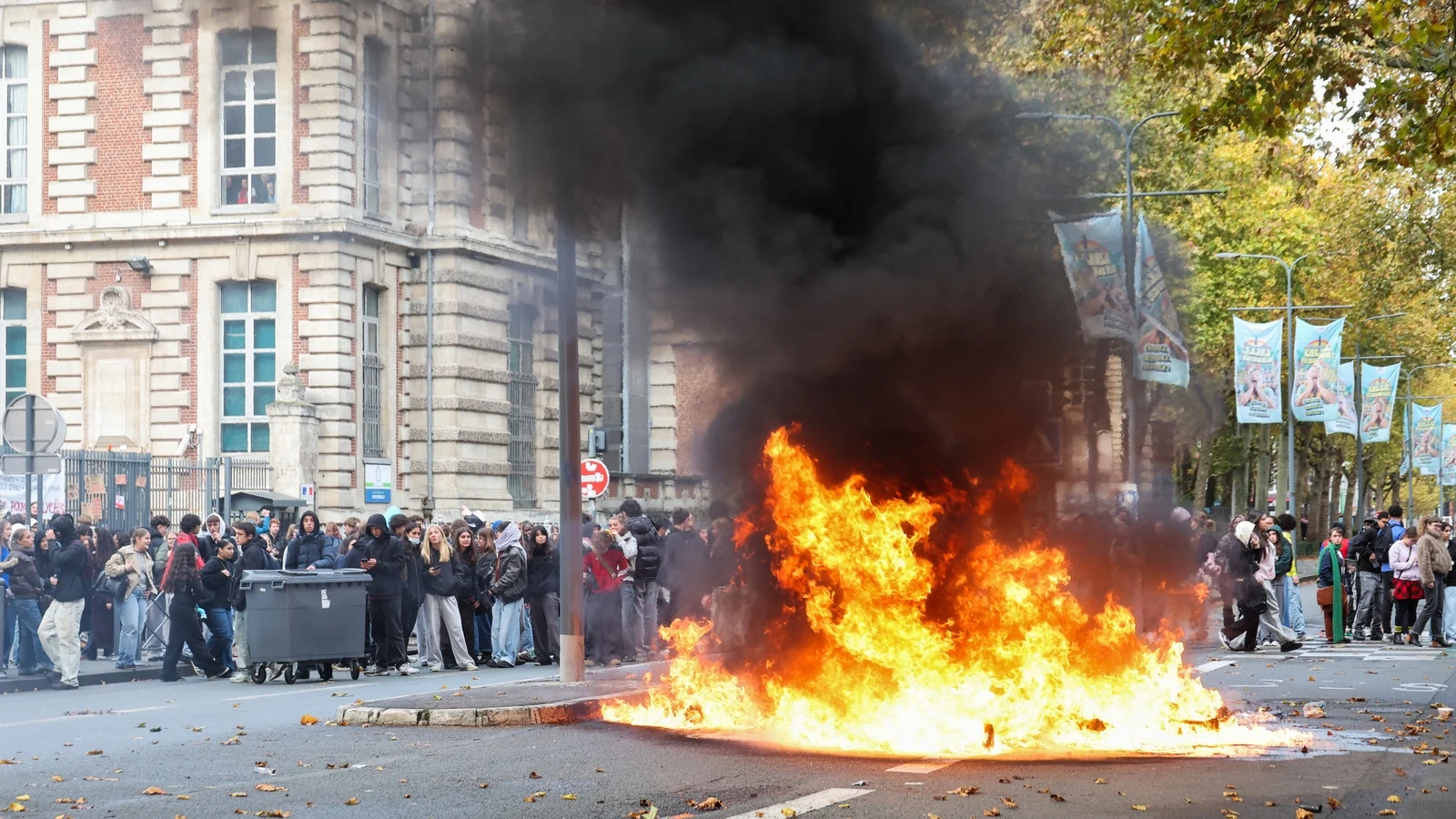
After weeks of sweeping disruption, France’s student protest movement returned from a two-week break with a far quieter show of force, as young people attempted to blockade a limited number of secondary schools in Paris, Marseille and Rennes, French media reported.
By 8.30am, 41 schools — around 1% of those nationwide — had been blockaded, according to the Education Ministry.
That marked a sharp drop from the period before the holiday, when hundreds of France’s more than 3,000 secondary schools were blockaded.
The demonstrations began in the Paris suburbs in September and have since expanded across the country, evolving from a dispute focused on education into a broader protest over the cost of living. Along the way, they have drawn in trade unionists and activists, and at times have turned violent.
Students are demanding renovation of aging schools, more teachers, additional university places, and an end to a university admissions system they argue is socially unfair.
The French unrest has also unfolded amid a wider wave of so-called “Gen Z” protests across Europe, including Germany, Italy, Belgium and Albania, fuelled by complaints ranging from living costs and deteriorating school facilities to perceived corruption.
In France last month, the protests escalated into violent confrontations with police and outright riots in several cities, with shops looted — a serious test for President Emmanuel Macron’s minority government.
“In terms of blockades — or rather, attempted blockades — the phenomenon is very marginal. We’re talking about just a handful of units, a few individual schools,” Education Minister Edouard Geffray told radio station France Inter.
Read more: France launches ‘attempted murder’ probe after petrol bomb attacks
He said protests are allowed, but blocking access to schools is illegal.
Television footage showed police officers present at some locations, though not in full anti-riot gear.
Mr Geffray last week put forward a package of measures, including a plan to cap class sizes at 28, earmark €4 billion for school renovations, create 15,000 new places in higher education, and introduce a new admissions system by 2028.
Secondary school student representatives said the proposals did not go far enough and pledged to continue demonstrating.