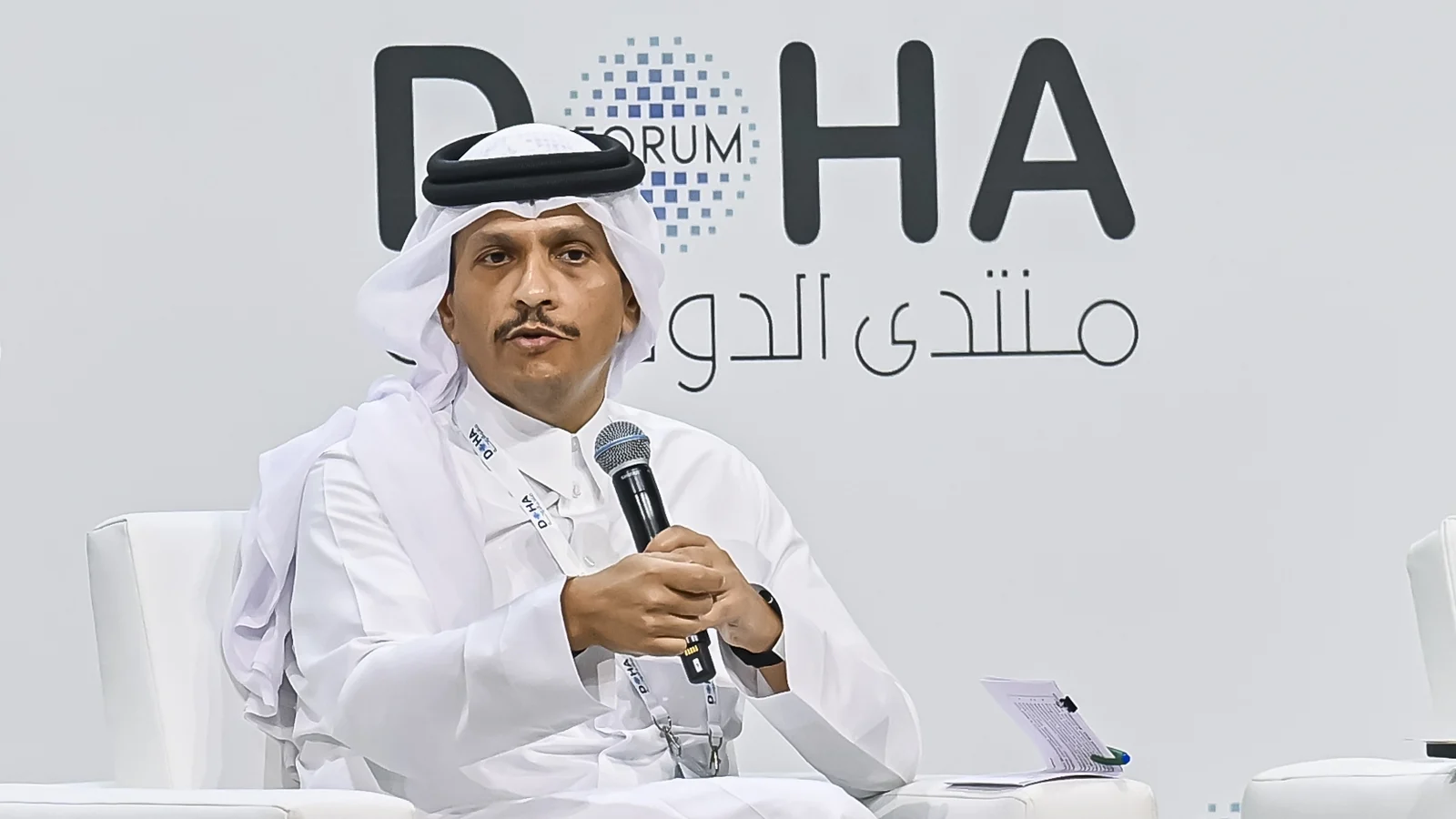
At a Crossroads in Doha: The Pause That Isn’t Peace
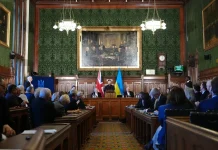
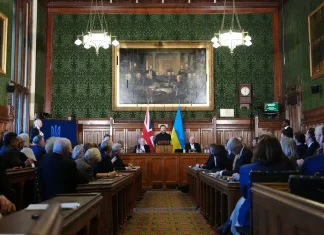
Doha hummed with the kind of anxious optimism usually reserved for diplomatic summits and ceasefire announcements. In a sunlit conference hall at the Doha Forum, Qatari Prime Minister Sheikh Mohammed bin Abdulrahman Al Thani leaned forward and said four words that echoed through the corridors and into Gaza: “We are at a critical moment.”
It sounded, in many ways, like a warning. It sounded, to those who have watched this part of the world for decades, like the pause between heartbeats — necessary, but fragile. The truce that began on 10 October, brokered with Qatari and Egyptian mediation and backed politically by Washington, has thinned the roar of daily bombardment. Yet the silence is punctuated: skirmishes, accusations, and the unhealed wounds of a conflict that has claimed tens of thousands of lives in recent years.
What the Pause Has Done — and What It Hasn’t
Since the ceasefire took effect, the numbers tell a sobering, uneven story.
- Hamas returned all 20 living hostages and 27 bodies in the early phase of the agreement — a painful, traumatic exchange that saw roughly 2,000 Palestinian detainees and convicted prisoners freed in turn.
- Violence, however, has not disappeared. Local health authorities in Gaza reported at least seven people killed today in Beit Lahiya, Jabalia and Zeitoun, including a 70-year-old woman who, according to officials, died after a drone strike.
- Israel’s military confirmed operations by forces deployed behind the so-called “yellow line” — the withdrawal boundary that was part of the truce — saying they engaged militants who crossed the line.
“This is not a ceasefire,” Sheikh Mohammed told the forum. “What we have just done is a pause.” His words framed the problem plainly: the truce buys breathing room, not a return to normalcy. A full ceasefire, in his view, requires Israeli withdrawal, unimpeded movement of people and goods, and a restoration of governance structures in Gaza — none of which have been fully realised.
The Second Phase: A Plan and a Promise — Tested by Politics
At the core of current negotiations is a bold, if controversial, proposal pushed by Washington: an interim technocratic Palestinian government in Gaza, overseen by an international “board of peace” and backed by an international stabilisation force. The idea is practical on paper — remove militants from governance, provide neutral administrators, and introduce a multinational force to preserve order while reconstruction and longer-term political arrangements take shape.
But the road to implementing this second phase is littered with geopolitical thorns. Who would command such a force? Which countries would participate? How do you deploy outside powers in a territory whose people have been starved of sovereignty for decades?
“We need to deploy this force as soon as possible on the ground because one party, which is Israel, is every day violating the ceasefire,” Egypt’s Foreign Minister Badr Abdelatty said in Doha. Abdelatty, a key broker in the truce, insists the force should be positioned along the yellow line to verify and monitor the truce’s boundaries.
Turkey’s Foreign Minister, Hakan Fidan, urged pragmatism. “The first goal must be to separate Palestinians from Israelis,” he said. “Once separation is achieved, we can address the architecture of governance and security.” Yet Ankara’s desire to be a guarantor is complicated by strained ties with Israel — a reality that many in Jerusalem view with suspicion.
Why Arab and Muslim Participation Is Hesitant
Arab and Muslim nations have been wary of contributing troops. The reason is simple and layered: the force could be asked to confront Palestinian militants, potentially putting Arab soldiers in direct conflict with fellow Muslims, and risk inflaming domestic political backlashes.
“No Arab government wants to be seen as an occupying force in Gaza,” said Lina Haddad, a veteran political analyst based in Beirut. “Even if motivations are humanitarian or stabilising, the optics are terrible. That’s why what seems like a technical question — troop composition — is in fact profoundly political.”
On the Ground: Lives Between Headlines
Walk through Khan Yunis now and you’ll see a municipal stadium repurposed into a shelter, its turf layered with blankets and its portals full of the hush that follows trauma. Children who once chased balls along the pitch now sleep under donated tarps. Men and women queue for water and bread as humanitarian organisations try to plug the gaps left by years of blockade and bombardment.
“We came here with nothing,” said Mahmoud, a father of three whose eyes have the weary steadiness of someone who has spent months moving from one temporary shelter to another. “We need work, we need schools, we need to bury our dead in peace. A pause is not enough.”
A nurse at a field clinic in Jabalia described nights of triage, where doctors choose which wounds to treat urgently and which must wait. “We are mending people and burying them in the same breath,” she said. “The ceasefire makes fewer people die in the street, but it does not stop the slow death of a city without electricity, without clean water, without jobs.”
Practical and Moral Questions
There are practical dilemmas: who vets the interim technocrats? How do you verify that militants truly disarm? What legal frameworks govern an international force operating in Gaza’s densely populated urban fabric?
There are moral ones too. Is it right for external powers to take the helm in rebuilding a society? Can stability be achieved without addressing the structural drivers of the conflict — occupation, blockade, and a politics that has repeatedly failed ordinary Palestinians and Israelis?
“We face a paradox,” said Dr. Miriam Katz, a scholar of conflict resolution. “The international community can impose stabilization, but without political justice and local ownership, any stability will be brittle.”
What Comes Next?
For now, negotiators are racing against time. Israel says it plans to open the Rafah crossing for exits through Egypt soon and to allow entries into Gaza once the last deceased hostage is returned — a bureaucratic, logistical step that nonetheless carries enormous humanitarian significance.
Meanwhile, both sides accuse each other of violations. Accusation becomes part of daily life: an expected background noise like traffic. But the mutual recrimination deepens mistrust, making the deployment of any international force — the very anchor of the second phase — all the more fraught.
So what would real success look like? Perhaps it is not a single moment but a sequence: a verified withdrawal; an interim authority staffed by credible technocrats who are acceptable to Palestinians and the region; an international force with a transparent command structure and a narrowly defined mandate; and, crucially, a credible roadmap toward political resolution that includes Palestinian rights and Israeli security concerns.
That is a long list. It is also, many would say, the bare minimum.
Questions for the Reader
As you read this from whatever city or country you call home, ask yourself: what does stability mean in a place where hope has been rationed for years? How should the international community balance the desire to prevent immediate bloodshed with the obligation to address the deeper injustices that fuel cycles of violence?
The pause in Gaza has bought space for negotiation. It has also created a dangerous lull where assumptions harden into policy. The coming weeks will reveal whether global powers can translate diplomatic rhythm into real, bottom-up change — or whether this, too, will be another intermission in a tragedy that has defined so many lives.
“We are trying to stitch a torn fabric,” said Sheikh Mohammed in Doha. “But the stitches must be strong, or the fabric will tear again.”