Smoke Over Rafah: A Fragile Truce Frays and Families Pay the Price
The morning air in Gaza tasted of dust and diesel, pierced by the metallic tang of blood and the acrid smoke of fresh explosions. Streets that had, for a brief and anxious moment, hoped for calm became scenes of a new catastrophe: apartment blocks reduced to concrete skeletons, a police station gutted, and tents — thousands of tents in the south — spewing black columns of fire into a low, bleak sky.
By midday, Gaza’s civil defence, an emergency service operating under the territory’s governing authorities, reported 32 people killed in a series of overnight and morning strikes — a number that the rescuers said included many children and women. “There were children in pajamas,” one volunteer told a local radio station. “We found their small shoes on the pavement and the rest… it’s something no one should have to see.”
The shattered homes and the human cost
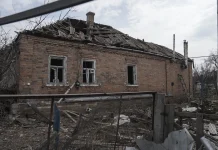
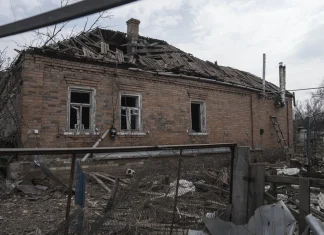
In Rimal, a relatively central neighbourhood of Gaza City known for its narrow alleys and cafes that once smelled of cardamom coffee, an entire apartment unit was leveled. A witness described seeing bits of fabric and household items scattered into the street, the ordinary debris of family life turned into evidence of sudden ruin.
“Three girls were asleep,” said Samer al-Atbash, a relative who searched the rubble with shaking hands. “I heard a neighbor crying that they were gone. I walked past their shoes. I can’t leave those images.”
Another strike hit Sheikh Radwan, where the main police station stood as a place of both authority and, for some civilians, refuge. Gaza’s police directorate said several officers were killed when the building collapsed; rescue teams pulled bodies from the wreckage, an extraction that took hours as ambulances queued and stretcher-bearers navigated twisted metal and dust-choked corridors.
Further south, in Al-Mawasi — a sprawling area that has become home to tens of thousands of displaced families living in tents and makeshift shelters — the sky filled with smoke as flames licked through fabric and plastic. The scene there was a heartbreaking reminder that displacement has become a permanent condition for many Gazans: a family of four can lose everything in minutes, then line up for water and bread as if nothing has changed.
One ceasefire, many violations
This violence unfolded against the backdrop of a US-brokered ceasefire that entered its second, fragile phase earlier this month. The intention was to create corridors for aid and to pause fighting long enough to extract hostages and survivors. Instead, both sides have accused the other of breaches.
Israeli military spokespeople said their strikes were retaliatory — aimed at Hamas and Islamic Jihad commanders after what the military described as a breach in Rafah, where a small group of fighters reportedly exited a tunnel. “We targeted individuals directly linked to attacks against our forces,” an Israeli officer said in a statement. “We will not tolerate violations of the agreement.”
Hamas denounced the strikes as a “brutal crime,” and Gaza’s health ministry — which operates under Hamas — said that since the ceasefire took effect on 10 October, at least 509 people had been killed in Israeli attacks. Israel, for its part, has confirmed that four soldiers were killed in suspected militant actions during the same period.
Rafah: a lifeline and a bargaining chip
Tomorrow, Israeli authorities announced, the Rafah crossing between Gaza and Egypt would be reopened for limited pedestrian movement. For Gaza’s expanse of displaced persons, the crossing is a narrow channel to the outside world — a place to receive urgent medical transfers, family members seeking refuge, or the occasional consignment of supplies. But the opening is tightly controlled and politically charged.
Egypt, which has played a constant role as mediator, condemned the recent strikes and urged all sides to exercise restraint, warning that any escalation would make humanitarian access even more precarious. “We cannot have the crossing be a piece in a political exchange,” an Egyptian foreign ministry official said. “It must be about life and dignity.”
Israel has stressed that the passage will allow only “limited movement” — an understatement that resonates painfully for Gazans who have watched aid convoys trickle through across months of intense need. Israeli authorities have also tied the opening and wider concessions to the return of hostages; one recently recovered remains was given a national burial in Israel earlier this week, an event that influenced the pace and tenor of negotiations.
On the ground: color, ritual, and survival
Walk through Gaza on an ordinary day and you will hear the call to prayer weaving through the smoke; the scent of oven-baked flatbread from a neighborhood bakery; the laughter of children who still try to play despite the sirens. In Al-Mawasi, families have improvised new rituals — a communal kettle where women boil water for tea, a shaded spot where elders swap news and count the days until they can return home, if ever.
“We boil water in the morning for the children,” said Fatima, a mother of three whose voice was steady but eyes wet. “We tell them stories about the sea and the orange trees. It keeps them sleeping.”
These small acts of dignity punctuate an otherwise relentless sequence of loss. Gaza has been under blockade since 2007, and a long history of wars and closures has foisted chronic shortages of clean water, electricity, and medical supplies on its nearly two million residents. According to figures cited by local authorities and monitored by international organizations, the toll of the two-year conflict has reached tens of thousands: Gaza’s health ministry reports at least 71,769 people killed since the war’s escalation — a figure the United Nations has treated as a critical measure of humanitarian catastrophe.
What this means for the world
Beyond the smoke and the immediate loss lies a set of global questions. How do ceasefires become durable? How do humanitarian channels remain open when every crossing is politicized? And how does the international community afford protection to civilians caught between military strategies and militant tactics?
“Temporary pauses in fighting are not the same as peace,” said Dr. Laila Haddad, a humanitarian analyst based in Amman. “When people are sent back to tents and trauma without guarantees for food, medicine, and safety, the next flare-up is baked in. Durable ceasefires require monitoring, accountability, and an enlarged humanitarian footprint.”
The media environment complicates matters further. Restrictions and limited access mean that many scenes of suffering go unrecorded or unverified by independent observers — a vacuum filled instead by competing narratives, raw images circulating online, and the intermittent reports of humanitarian agencies doing the best they can under fire.
Facing the images
So what are we to do with images like a child’s abandoned sandals by a ruined doorway, or a long line of tents under a smoke-darkened sky? How should distant readers measure what is being lost by those who live here?
One thing is clear: humanitarian corridors and diplomatic niceties mean little if they cannot translate into immediate protections for civilians. The reopening of Rafah, for instance, offers hope but not yet reassurance — and that is the cruel calculus here: hope measured in hours, safety measured in the distance between buildings.
As the day ends and the smoke thins, families in Gaza will count those they still have, and the world will count the numbers. But neither count will tell the full story: the sound of a coffee cup dropped in the dark, the way a child learns to equate sirens with bedtime. These are the quiet details that remain when the headlines move on.
Will the next phase of the truce bring stability, or merely more pauses between explosions? For the people under these skies, the question is less abstract and more immediate: will anyone make the choices that keep children sleeping through the night?