When the Generators Whisper: A Night at Al-Awda Hospital
There is a particular, metallic hush that descends on hospitals running on borrowed power—a hollow, urgent kind of quiet that speaks louder than any alarm. In Nuseirat, a dense, battered district in central Gaza, Al-Awda Hospital lives by that sound. For days the generators had been faltering, and with them the fragile rhythms of birth, trauma care and children’s wards.
“When the lights dim, everyone holds their breath,” Ahmed Mehanna, one of the senior managers who has spent the last several months negotiating water, medicine and fuel, told me over the crackle of a radio. “Most services had to be temporarily stopped because the generators could not run.”
Those words felt like the opening scene of a long tragedy. Al-Awda tends to roughly 60 in-patients at any given time and sees nearly 1,000 people seeking treatment every day—mothers, the elderly, children with fevers or wounds. Under calmer circumstances the hospital needs between 1,000 and 1,200 litres of diesel each day to keep lights on, ventilators humming and sterilisation units working. When I visited, staff said the stock had dipped to some 800 litres.
Then, as twilight folded into the blue of evening, the hospital received 2,500 litres from the World Health Organisation. “We resumed operations immediately,” Mehanna said, relief tempered with caution. “This will last only two and a half days.” The WHO has reportedly promised another delivery the following Sunday.
Life on Two and a Half Days
Two and a half days. That figure has become a shorthand for how precarious life is here. It is not just a technical detail; it determines whether a mother in labour will have lighting for a safe delivery, whether an infant with pneumonia will have oxygen overnight, whether surgeons can finish an operation without counting the seconds between each beep.
“We rented a small generator to keep the emergency, maternity and paediatrics units alive,” Mehanna explained, but even the rental is a stopgap. “If fuel is cut for longer periods, it becomes a direct threat to our ability to deliver basic services.”
In the maternity ward, a midwife named Fatima—her face tired but steady—showed me where they had resorted to battery-powered lamps for deliveries on some nights. “We do what we must,” she said. “But there is fear. Not a dramatic fear, but a quiet one. The kind that sits with you through the shift.”
Mohammed Salha, the hospital’s acting director, made a starker claim. “We are knocking on every door to continue providing services,” he said, “but while the occupation allows fuel for international institutions, it restricts it for local health facilities such as Al-Awda.” His accusation—that restrictions are deliberate—was voiced in a tone that mixed anger and exhaustion. International agencies deny many of the accusations historically leveled at authorities in contexts like this, while local health workers say the cumulative effect is the same: lives delayed, and often lost.
Inside a City of Rubble and Routine
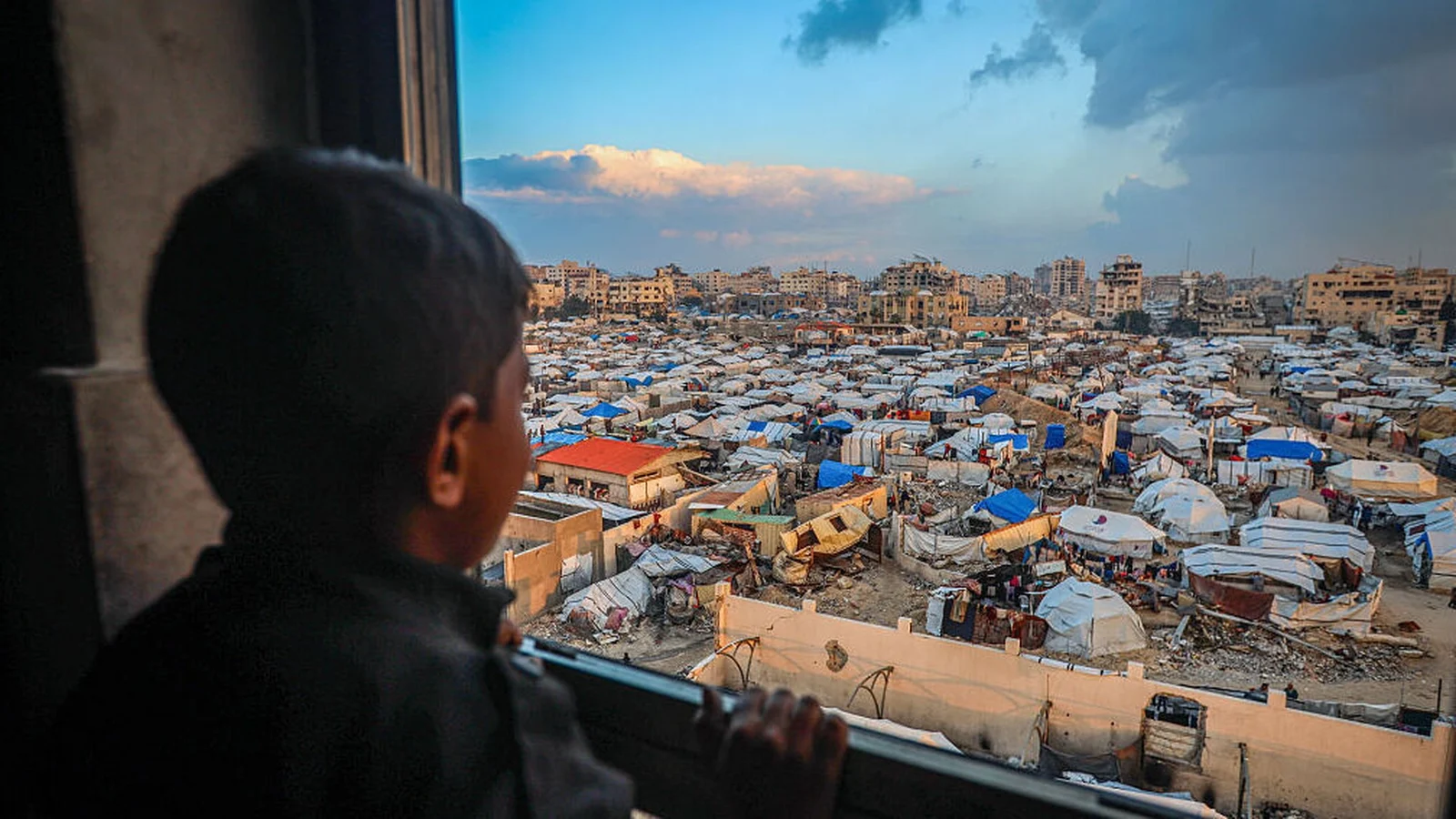
Walk the avenues around Nuseirat and you meet a city of quotidian survival: a grocer carefully measuring rice into paper bags; teenagers in a damaged courtyard kicking a deflated soccer ball; the scent of roasted coffee and za’atar wafting from a stall where people try to barter for fresh fruit. Over all, the intermittent call to prayer rises from minarets that still stand amid fractured buildings.
Yet everything here moves under the calculus of scarcity. Fuel is a currency, electricity a luxury. People plan around the hours when generators can run: when to charge a phone, when to cook, when to run a fan for a child with a fever. Hospitals are the fulcrum of this daily negotiation—small sanctuaries where the humanitarian crisis is most sharply visible.
Ripple Effects Beyond Gaza
The pressure at Al-Awda is part of a larger regional turbulence. In Lebanon, the Israeli military announced that it had killed a member of Iran’s Quds Force, identified as Hussein Mahmoud Marshad al-Jawhari, accusing him of plotting attacks from the Syria-Lebanon corridor. The strike reportedly took place in the Ansariyeh area. Israel has been conducting near-daily strikes in Lebanon in recent months—part of what it calls an effort to stem the influence of Iran-backed groups, notably Hezbollah.
“We are constantly on alert,” said a Lebanese medic who asked not to be named, speaking from the shadow of a checkpoint outside the south. “The war’s breath reaches us even if we are not in the headlines.”
The wider diplomatic backdrop includes a US-backed ceasefire last November that sought to halt open conflict between Israel and Hezbollah and required the disarmament of armed groups in certain border areas. Whether such agreements will hold under renewed tit-for-tat strikes is unclear.
Violence and Its Human Toll in the West Bank
Closer to home for many Palestinians, the West Bank remains volatile. In a tragic incident this week, a man from the occupied West Bank carried out a stabbing and car-ramming attack in northern Israel that killed two people and left the attacker wounded. Israeli police and emergency services reported that a 68-year-old man and a young woman died in separate episodes. Magen David Adom, Israel’s emergency service, confirmed the fatalities.
The violence there is part of a grim pattern. United Nations figures show that this year has been one of the most violent on record for attacks by civilians against Palestinians in the West Bank, with more than 750 injuries attributed to settler violence. Between 7 October 2023 and 17 October 2025, UN data records more than 1,000 Palestinians killed in the West Bank—most in operations by security forces, and some in clashes or settler attacks. In the same period, 57 Israelis were killed in Palestinian attacks. Numbers like these are not just statistics; they are communities rearranged and families redefined.
What Do We Do With This News?
As a global reader, what are you meant to feel when you learn that a hospital’s fate can hinge on two and a half days of diesel? Outrage, yes. But also a pressing sense of the fragility of systems we take for granted: the electricity that powers neonatal incubators, the supply chains that deliver vaccines, the diplomacy that keeps borders open for humanitarian aid.
Ask yourself: how do we prioritize the sanctity of hospitals in conflict zones? How do international institutions move from episodic-deliveries to reliable lifelines? And how do stories from places like Nuseirat become more than a momentary headline? These are policy questions, but they are also moral ones.
“Aid is a bandage when what’s needed is steady, surgical care,” said one international health expert, Dr. Lina Haddad, who has worked in Gaza for a decade. “Short deliveries of fuel help, but what we need is predictable access—so hospitals can plan, staff can rest, and families can hope.”
Back at Al-Awda, a young father named Omar cradled his newborn in the dim after the WHO delivery. “We are grateful for this fuel,” he said, rubbing the baby’s tiny fingers, “but gratefulness is not the same as certainty.” His words lingered as the generator hummed its thin, essential song into the night.
Closing Thoughts
Numbers and dispatches will continue to arrive: promises of more fuel, accusations from officials, strikes across borders, and the steady count of casualties. But in the rooms between those headlines are people—midwives, patients, managers like Mehanna and Salha—who measure hope by the hours a generator can run. They teach us that resilience is not merely endurance; it is the stubborn insistence on dignity in a world that often forgets what that word truly costs.