In the Desert Quiet: The Search for Nancy Guthrie and the Limits of Evidence
The Sonoran sky over Tucson was a clean, sharp blue the morning the glove was found — an ordinary Arizona day, stunned into significance by an extraordinary object. A well-worn glove, abandoned in a roadside field more than three kilometers from the suburban house where 84‑year‑old Nancy Guthrie was last seen, promised the kind of forensic breakthrough detectives dream about. Instead, it landed like a thud in a case that has already upended a family and riveted a world watching the slow-motion unraveling of an apparent abduction.
“We had hope,” Sheriff Chris Nanos told reporters as the investigation slid into its third week. “We thought this glove might give us a name. But for now, it’s a dead end.”
What was hoped for — and what came back
When the glove’s DNA was submitted to CODIS, the Combined DNA Index System that federal and local agencies use to compare genetic profiles, there were no matches. For detectives the silence of that database was deafening; for a family on the edge, it narrowed the seams of optimism.
CODIS is a powerful tool — a national repository that holds the DNA profiles collected from convicted offenders, arrestees in many states, and crime scene evidence. It’s considered a cornerstone of modern criminal forensics. But it is not, and never was, a magic wand. “CODIS contains millions of profiles,” says Dr. Leila Moretti, a forensic geneticist who has worked with law enforcement for two decades. “It helps in countless cases, but the system only works if the person who left DNA is already in the database or if their relatives are, and that simply isn’t always the situation.”
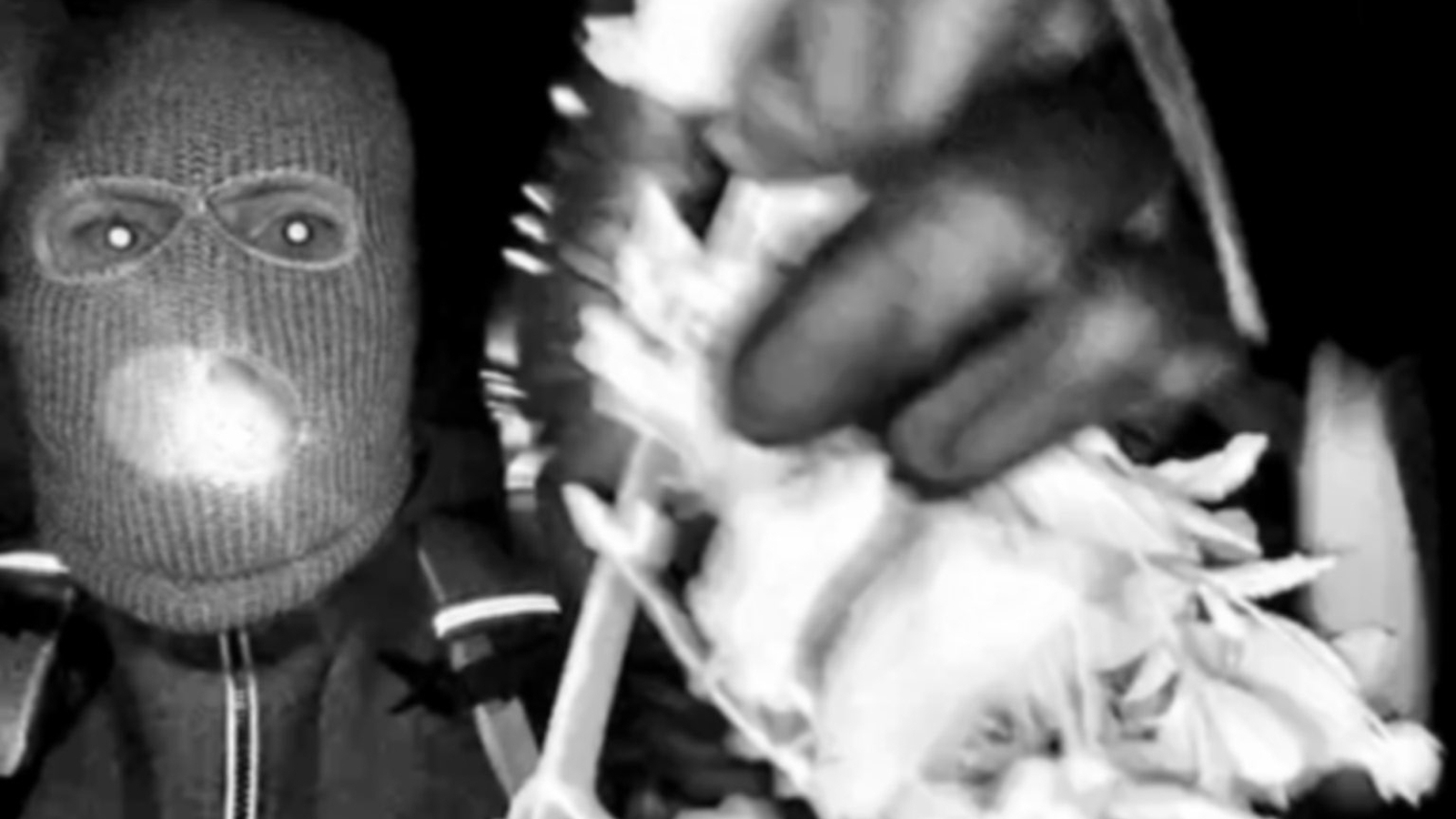
That caveat matters when thinking about the man seen on surveillance video near Nancy Guthrie’s door: masked, with a bulky backpack and what appeared to be a holstered handgun. He tried to tamper with a doorbell camera in the early hours of January 31 — a brazen, daylight‑adjacent move in a fast‑changing neighborhood of Tucson that blends quiet cul‑de‑sacs with desert scrub and the distant silhouette of saguaros.
Old-fashioned detective work fills the gaps
With DNA failing to yield a name, detectives returned to the labor of classical policing: interviews, footage, shoeboxes of receipts. They were helped, in part, by corporate America’s ubiquity. Investigators canvassed local Walmarts after spotting a distinctive backpack in the footage. They showed sales clerks and store managers a photo of the item, hoping to trace a purchase.
“We had a picture, and it’s amazing what people remember when you give them a face,” said Detective Maria Reyes, who worked the case through late nights. “It’s why we go back to the scene, back to the sellers, back to every clerk who might have rung that package across a register.”
At a small gun shop on the city’s north side, co‑owner Phillip Martin recalled an FBI agent arriving with a short list of names. “He came in with a list of fewer than 20 people who might’ve bought a similar holster or weapon,” Martin said. “I checked our records — none of those names popped up. You feel like you’re piecing together a puzzle but without the corner pieces.”
Law enforcement personnel have also used a technology that sounds like it belongs in a science fiction novel: a “signal sniffer” that generates heat maps. Parsons Corp., the company behind the system, provided units for aerial and ground searches, producing visual overlays of where devices and movements clustered. “It’s another way to see patterns our eyes wouldn’t catch from the ground,” a Parsons spokesperson told reporters. “But it’s a tool, not a definitive answer.”
The human cost: vulnerability, visibility, and a family in public sorrow
For the Guthrie family, the investigation isn’t an abstract puzzle. Nancy, who is frail and requires medication and a pacemaker, was dropped off at home after dinner with family on January 31 and was reported missing the next day. Sheriff Nanos has been explicit in his characterization of the case: Nancy could not have walked away on her own.
“She’s very limited in mobility,” Nanos said. “This was not a wandering case. This was a removal.”
That reality has focused both law enforcement and public attention on worst-case scenarios. Two ransom notes have surfaced in the weeks since her disappearance; both were initially routed through media outlets. There has been no verified contact between alleged perpetrators and the family, and no proof of life has been offered to ease the ache of waiting.
“It’s a nightmare you can’t wake up from,” said Jenna Alvarez, a neighbor who brought sandwiches to investigators the first day they searched the Guthrie house. “We make small talk over fences here — talk about the bad storms, the coyotes — and then this. It feels surreal.”
Nanos has publicly ruled out immediate family members as suspects, seeking to steady a family already pulled under the glare of relentless coverage. Savannah Guthrie, the NBC “Today” co‑anchor, and Nancy’s other children have repeatedly pleaded on television and social media for anyone with information to come forward. Their faces have become fixtures on screens worldwide, evoking both immense sympathy and a vexing intensity to the scrutiny of every lead.
What this case illuminates
Beyond the immediate anguish of a missing mother and the flurry of forensic testing, this case raises broader questions about safety, aging and technology. How do communities protect their elders? How do we balance privacy with the utility of ubiquitous cameras? When a high‑profile family is involved, what are the ethical lines for newsrooms and for members of the public?
“We’re living in an era where everything is recorded but not everything is searchable,” Dr. Moretti said. “The limits of databases, the patchwork of surveillance, and the vulnerabilities of an aging population converge in cases like this.”
Consider: the population of Americans aged 65 and older is growing rapidly, and with it the number of elders living independently. The realities of mobility limitations, medication needs and medical devices like pacemakers make certain individuals uniquely vulnerable. Communities must ask themselves how to make suburbs, rural stretches and small neighborhoods safer without turning every porch light into a surveillance post.
How you can help — and what to watch for
Investigators continue to sift evidence: DNA traces recovered from the porch have been confirmed as belonging to Nancy, officials have said, and other samples are still being analyzed. The sheriff’s office emphasizes that CODIS is only one of many databases and investigative leads being pursued. Ground searches, forensic follow‑ups and human witnesses remain essential.
If you live near Tucson or saw anything in late January that seemed out of place — a car parked oddly, a person moving with unusual purpose, a backpack abandoned by the roadside — authorities urge you to call. “Small details become big in investigations,” Detective Reyes warned. “A moment you dismiss as nothing might be the thread we need.”
And for the rest of us, watching from living rooms around the world, there are questions worth sitting with. How do we respond when someone’s private tragedy becomes public drama? How do communities balance vigilance with compassion? What do we owe elderly neighbors who are privately vulnerable?
For now, Nancy Guthrie’s front porch is a scene cordoned off and studied — a modest threshold that, for a family and a community, has become the center of an anxious universe. The glove in that field was a promise of clarity that did not come. Detectives keep working. Neighbors keep watching. A daughter keeps asking the world to help bring her mother home.
“We’re not giving up,” Savannah and her siblings have said in public appeals. “If you know anything — anything at all — please call.”