Europe’s long-running migration fault lines are set to flare again today as EU interior and justice ministers gather for an emergency meeting prompted by the crisis in Ceuta.
The session will be convened by Minister for Justice Jim O’Callaghan, with Ireland chairing as it holds the EU Presidency.
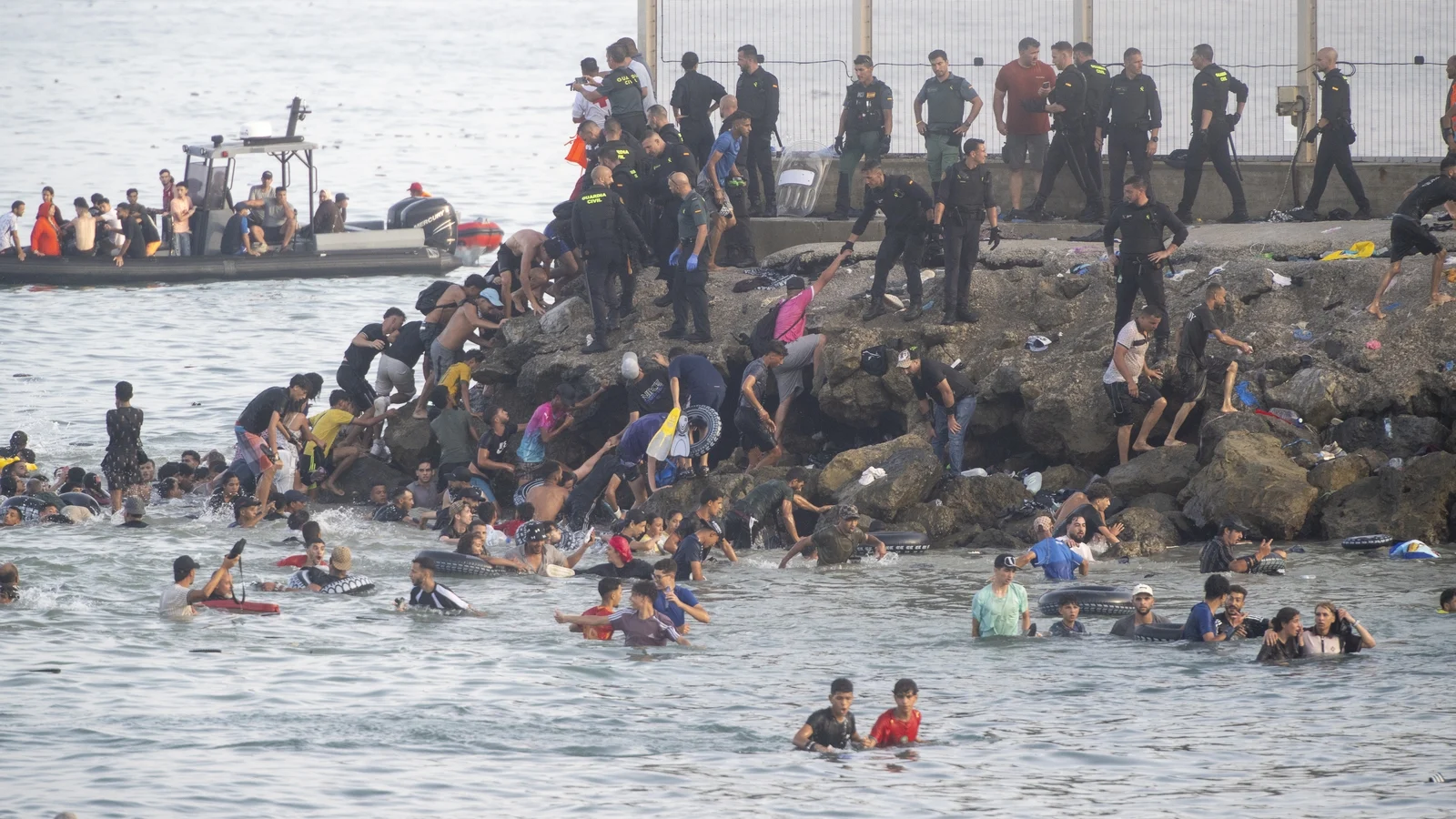
Immigration shot to the top of the agenda for Ireland’s term after images showed more than 50,000 people swimming across from Morocco into Spain’s North African territory of Ceuta.
Spanish authorities have attributed the sudden surge — involving mostly young men — to disinformation circulating on social media, and said 48,000 people were swiftly returned to Morocco.
Hard-line voices have been led most prominently by Italy and Denmark, where Prime Minister Mette Frederiksen warned that “uncontrolled immigration poses a threat to Europe”.
Both countries last week pushed for Spain to be suspended from the Schengen free-travel area because of the Ceuta situation — an idea Madrid flatly rejected and which is legally impossible under EU rules.
Those calls helped spur Spanish Prime Minister Pedro Sánchez to raise the issue with the EU and press for today’s emergency talks.
Mr Sánchez — whose government backs a relatively open approach, including a major drive to grant legal status to undocumented migrants already in Spain — set out his position in a letter sent on Saturday to the heads of the EU’s institutions.
Denouncing what he described as a “selfish” posture among some member states, Mr Sánchez was the first to urge an emergency gathering to craft a “common response” to such border shocks.
Spanish Prime Minister Pedro Sánchez called for today’s meeting (file pic)
Within hours, 22 countries — led by Italy, Denmark, Germany and Hungary — issued a counter-letter that also demanded urgent talks, but aimed to keep pressure on for a tougher line on immigration.
France, a key EU power, conspicuously kept its distance, arguing the initiative risked using events in Ceuta for political purposes. Paris also underlined that most of those who crossed into the Spanish territory had already gone back to Morocco.
A preview of the tensions emerged in preparatory discussions among EU ambassadors yesterday. Spain’s representative expressed “frustration” at what was seen as insufficient backing from other capitals, according to one EU diplomat.
At the same time, the diplomat said that even as partners reiterated their “solidarity” with Madrid, some governments were questioning whether Spain’s recent policies may have projected the message that “the doors are open”.
European Commission President Ursula von der Leyen welcomed the meeting as an opportunity to draw “lessons” and shape a “common European response” to the pressures of irregular migration.
On the eve of the talks, Ms Von der Leyen urged the EU to “double down” on five priorities: preventing irregular migration through cooperation with partner states; strengthening the bloc’s external borders; rolling out early warning systems; dismantling smuggling networks; and reinforcing returns.
Calling today’s discussion a “first step,” she said she expected EU leaders to take up the matter again at their next summit, currently scheduled for October.
Spain signalled yesterday that it intends to use the meeting to press for expanded use of controversial return hubs, approved by the European Parliament earlier this year.
Under that model, rejected asylum seekers would be transferred to third-party countries while arrangements are made for deportations to their home countries.
Mr O’Callaghan has said he would not rule out return hubs, though Taoiseach Micheál Martin said last month that Ireland has no plans at present to adopt them.