When Greenland Became a Word on the World Stage
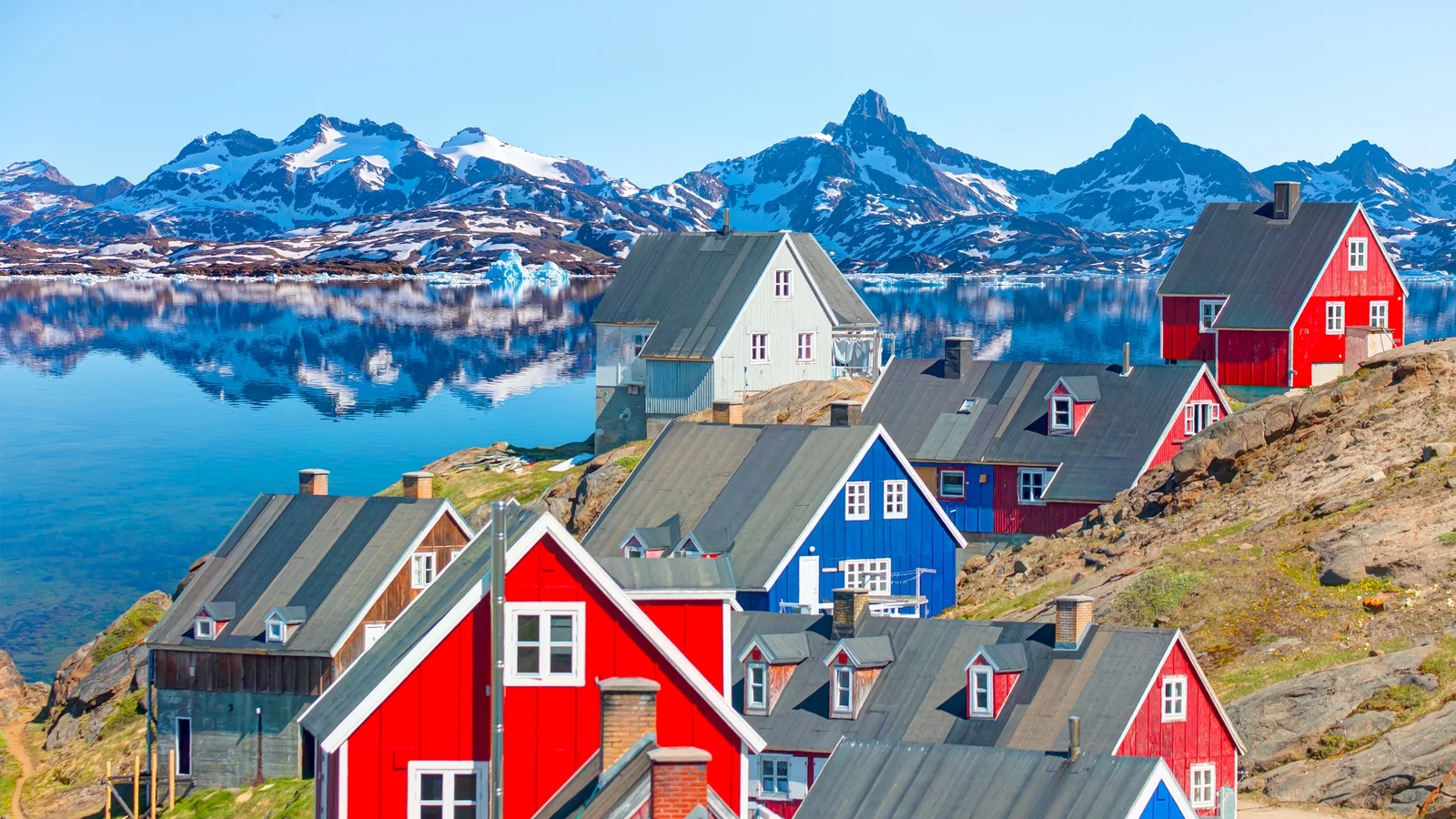
On a bright, bitter morning in Nuuk the houses stood like a string of beads along the fjord—reds and yellows and blues against a backdrop of looming ice. A woman pushed a stroller past a café whose windows fogged with steam; a fisherman in a wool cap read the latest headlines on his phone and shook his head. For the 56,000 people who call Greenland home, the place is both intimate and immense: small communities clustered on a coastline that skirts a continent-sized ice sheet.
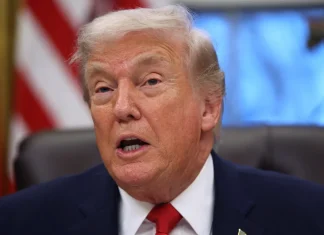
Then a headline arrives from thousands of miles away and the private rhythms of island life become entangled in big-power talk. “We need Greenland from the standpoint of national security,” came the line from the President of the United States aboard Air Force One, repeated with the bluntness of command. “We’ll worry about Greenland in about two months … let’s talk about Greenland in 20 days.”
The words ricocheted around a world that has long been paying closer attention to the Arctic. For some they were a blunder; for others a reminder that geography rarely stays quiet. For Greenlanders they were a provocation.
A firm reply from Nuuk
“That’s enough now,” Jens-Frederik Nielsen, Greenland’s prime minister, wrote on Facebook. “No more pressure. No more insinuations. No more fantasies of annexation. We are open to dialogue. We are open to discussions. But this must happen through the proper channels and with respect for international law.”
It was not only the prime minister who reacted. Across Europe capitals issued pointed reminders: Denmark—responsible for Greenland’s foreign affairs under the constitutional arrangement of the Kingdom of Denmark—stood firm; Britain’s prime minister said plainly the destiny of Greenland belonged to Greenland and Denmark; France’s foreign ministry described borders as not being changed by force.
Why a piece of ice matters to empires
Greenland is vast—about 2.16 million square kilometers, roughly four times the size of Texas—but almost 80% of that landscape is the Greenland Ice Sheet. What catches global attention is the narrow slice of coastline that opens to the North Atlantic and the Arctic Ocean, and the strategic lines that pass through it.
- Population: roughly 56,000 people, concentrated in just a few coastal towns.
- Military presence: the United States operates Thule Air Base in northwest Greenland, a facility with weather and missile-tracking roles dating back to the Cold War.
- Environment: as the Arctic warms faster than the global average, new shipping lanes and access to untapped resources become possible.
That combination—strategic location, changing ice, and known deposits of rare-earth and critical minerals—turns Greenland into a geopolitical prize in some calculations. “It’s not just about land,” said an Arctic security analyst I spoke to over a crackling phone line. “It’s about monitoring the northern approaches, about satellite and missile tracking, about resource access. Whoever controls Greenland has a vantage point.”
Voices from the fjord and the capital
Back in Nuuk, responses were human-sized, textured and often wry. “We’ve been here a long time,” said Aput, an elder who sells smoked halibut at the market. “Our houses are small, our dogs are many. We don’t want to be a trophy in someone else’s history book.” Her voice carried the quiet steadiness of someone whose life is measured by sea ice and seasons, not policy briefs.
A fisherman named Lars told me, “Of course countries will look at Greenland. But our people—our language, our schools—these are not for sale. Please don’t treat us like a map coordinate.” When I asked whether talk of annexation changed how he felt about Denmark, he shrugged. “Denmark is part of our history, yes. But the future? We will decide that.”
Social media and symbolism
The moment was amplified by the strange theatre of social media. An image of Greenland bathed in American flag colors, posted by a former White House official with the one-word caption “SOON,” generated outrage. “Disrespectful,” Nielsen wrote in reply. “Our country is not for sale, and our future is not decided by social media posts.”
Danish diplomats attempted a steadier tone. Jesper Moeller Soerensen, Denmark’s ambassador in Washington, offered what he termed a “friendly reminder” that Denmark has worked closely with the United States on Arctic security and that the two nations remain close allies. “We are allies and should continue to work together as such,” he said.
What the world sees—and what should worry us
This episode is more than a diplomatic squall. It is a window into a larger story: the reawakening of strategic competition in the Arctic among NATO countries, Russia and China; the scramble for access to minerals and new shipping lanes as ice retreats; and urgent questions of indigenous rights and self-determination in places whose voices have too often been sidelined.
China has been increasing its Arctic activity in recent years—research partnerships, mining interest, and shipping ambitions—prompting warnings from several Western capitals. Russia, meanwhile, continues to fortify parts of its Arctic coastline. In such a crowded geopolitical field, every outburst of rhetoric matters.
“No one decides for Greenland but Greenland and Denmark,” Finland’s president wrote on social media, echoing a line that has been taken up across Scandinavia. It is a simple sentence with heavy implications: international law, post-war norms and the principle of self-determination still count for something.
Looking past headlines: the human stakes
Pause for a moment and consider what is at risk if loud voices override local ones. Greenlanders face economic choices—mining projects promise jobs but also threaten fragile ecosystems; climate change brings both disruption and new opportunity, altering access to fish stocks and transport routes. Social cohesion can fray if decisions are made in faraway capitals without meaningful consent.
“You can bring money and machines,” said a young teacher in Sisimiut. “But we will lose ground that we can’t get back: language, traditions, the way we understand the sea. Development must be in partnership, not imposed.”
Questions to carry forward
What does it mean for a people to control their future when the world’s powers suddenly discover value in their backyard?
How do notions of security—to one country a strategic advantage, to another a threat—get balanced against rights of self-determination?
And perhaps most urgently: as climate change redraws coastlines and opens access to resources, who gets to decide what happens next?
Closing thoughts
The headlines may move on, but the conversation about Greenland will continue. For now there are firm words from Nuuk and Copenhagen, reminders from allies, and the tired, wary faces of people who watch ice calve into cold water and wonder what comes next. “We are not a chess piece,” said a shopkeeper on the main street in Nuuk. “We have names and stories. Remember them.”
In a world where distance is no protection and every coastline can be measured for value, these small statements of dignity—spoken in simple, stubborn tones—are an argument worth hearing. They remind us that when geography and power collide, the human story must not be the footnote.