In the Desert Light: The Search for Nancy Guthrie and a Community Holding Its Breath
Early mornings in the Tucson suburbs are usually a study in stillness: low-slung stucco houses, the silhouettes of saguaros on the horizon, the tang of mesquite and orange blossom in the air. Lately, that quiet has been pierced by helicopters, by the rumble of law-enforcement vehicles, and by the low, insistent tremor of a family’s plea on repeat across television screens.
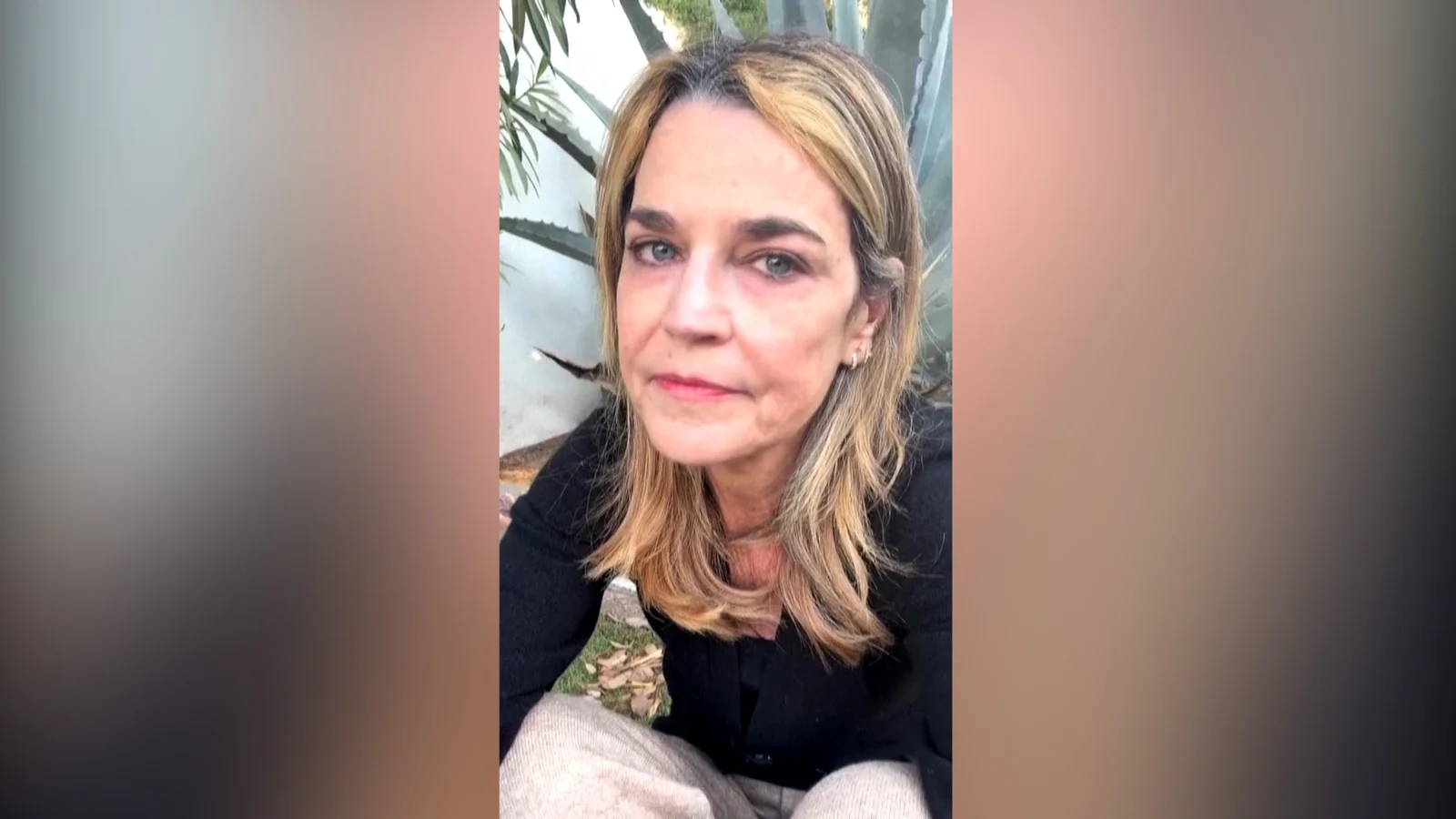
Nancy Guthrie — 84 years old, fragile, dependent on daily medication and a pacemaker — vanished from her home near Tucson on January 31. Her daughter, Savannah Guthrie, known to millions as the co-anchor of NBC’s Today show, has been the most visible voice in a campaign both private and public: “We still have hope,” Savannah told viewers in one of several raw, direct video appeals. “To whoever has her or knows where she is: it’s never too late to do the right thing.”
A timeline of worry
According to authorities, family members dropped Nancy off at her residence after a meal on the 31st. When she didn’t answer the next morning, relatives reported her missing. Investigators quickly concluded she could not have left on her own — her mobility was severely limited — and have treated the case as an abduction.
What followed reads like a modern investigative thriller: doorbell-camera footage showing a masked man in a ski mask, wearing a holster and carrying an overstuffed backpack; traces of blood on the front porch later confirmed to be Nancy’s; at least two purported ransom notes delivered to media outlets; and a flurry of searches that included a federal court-ordered search of a house in an affluent neighborhood less than three kilometres from Nancy’s home.
The small piece of evidence that could change everything
Of all the items collected by search teams in a roadside field about three kilometres from Nancy’s house — roughly 16 gloves among them — one glove has drawn the most attention. FBI investigators say the glove appears to match the pair worn by the masked man caught on camera. A private laboratory in Florida provided preliminary DNA testing on that glove, and the sample is now in federal hands, en route to the Combined DNA Index System — CODIS — for a national search.
“That single sample could produce a match as soon as it’s run through CODIS,” said a forensic analyst who has worked on similar cases. “It’s not guaranteed, but the potential for a break in the case is real. CODIS comparisons often take around 24 hours once the FBI officially receives the sample.”
Investigators stressed that most of the gloves collected were likely dropped by searchers, but the one submitted for analysis “is different,” according to the FBI. The agency says the evidence requires rigorous quality control before a match is announced — the kind of careful deliberation that can feel agonising when a family is waiting for answers.
Voices from the neighborhood
Neighbors describe a community shaken and organizing in equal measure. “You don’t expect this here, not around these parts,” said María Ortega, who has lived two doors down from the Guthrie residence for 20 years. “We walk our dogs at dawn. We wave to one another. Now, every rustle in the brush makes me turn my head.”
At a small cluster of coffee shops and taquerías a few blocks away, residents — retirees and young families alike — swapped updates and wild theories. “We’re all glued to the news,” said Tom Reynolds, a retired teacher. “You try to keep hope, but it’s like watching your hands fumble in the dark.”
Volunteers have scoured washes and brushlands, leaving water and notes pinned to mesquite trees. That community energy has been palpable. “People want to do something,” a local search coordinator said. “They’re combing the hills, handing out flyers, calling tips. The compassion is real.”
What the science can — and can’t — tell us
Forensic advances have transformed investigations in recent decades. A single DNA trace can point to a suspect, confirm a lineage, or clear an innocent person in hours. But the process is meticulous: samples must pass quality control and be officially logged before a CODIS run. Even when there’s a match, authorities then have to build a case that stands up in court.
“DNA can give you a name, but not always a motive,” cautioned Dr. Elena Moreno, a criminal justice professor who studies forensic evidence. “It tells you who may have been there. It doesn’t always tell you how events unfolded. That’s why you pair lab work with witness accounts, digital forensics, and good old investigative legwork.”
And there are other practical challenges here: elderly victims with health conditions are particularly vulnerable. In the U.S., hundreds of thousands of missing-person reports are filed each year; most are resolved quickly, but cases involving seniors or people with medical dependencies are particularly time-sensitive because of health concerns.
The family’s public grief
Savannah Guthrie has returned to the public spotlight not as a news presenter but as a daughter — her voice threaded with gratitude, fear and an unyielding belief in human decency. She and her siblings have posted videos pleading for their mother’s return, saying they are even willing to discuss ransom demands if it would bring Nancy home.
“There’s not been any proof of life,” Pima County Sheriff Chris Nanos told reporters, “but there’s not been any proof of death either.” Those words hang in the space between despair and hope, a liminal place where families and investigators must live until facts arrive.
Broader echoes: safety, media, and the modern missing-persons crisis
This case sits at the intersection of several broader conversations: the vulnerability of older adults, the power and pitfalls of viral media, and the relentless march of forensic technology. It asks uncomfortable questions of communities everywhere: how do we safeguard the elderly? How does intense media scrutiny affect investigations and families? And how should we balance the urgent need for public tips with the caution required by law enforcement?
“There’s a global lesson here,” said Dr. Moreno. “As populations age, societies must think more deliberately about elder safety and community support networks. This isn’t just a local tragedy — it’s a reminder.”
How you can help — and what to watch for
If you think you have information, local authorities ask that you contact the Pima County Sheriff’s Office or the FBI. Tips, no matter how small they may seem, can change the shape of an investigation.
- Keep an eye on official law-enforcement releases to avoid amplifying rumours.
- Share verified appeals from the Guthrie family or investigators rather than speculative posts.
- If you’re in Tucson, watch for community search efforts organized by authorities to ensure volunteers are coordinated and safe.
What to carry forward
Stories like this feel unbearably close — a beloved elder gone, a public figure’s private heartbreak played out on national television. They also force us to reckon with how we treat vulnerability in our neighborhoods and, more broadly, what tools we ask of science and community to keep people safe.
As you read this, think of the porch where Nancy’s blood was found, the grainy footage of a masked figure, the glove in a roadside field, and the voice of a daughter saying, simply, “We still have hope.” What would you do if your neighbor was gone? How would you want your community to respond?
The investigation continues. So does the waiting. So does the search for a woman who, in the desert dawn, disappeared from a life built on small routines and the love of her family. For now, the story is unfinished, and every new tip, every careful step in the lab, could be the one that brings an answer — and maybe, finally, a return.