A fragile silence: the ceasefire that breathes but does not live
On the cracked asphalt leading to the Allenby Bridge, at the edge of the Jordan Valley, an idling convoy of trucks looks like a promise paused. Drivers clutch tea cups, elders count cigarettes, and the sun climbs on an ordinary morning that has become anything but ordinary for the people who depend on what those trucks carry.
“We have been waiting long enough to believe in a crossing,” said Mariam Abu Saleh, a Gaza-based aid coordinator who once managed food distribution in her neighbourhood and now coordinates remotely from Amman. “Every time the trucks move a little, hope moves with them. Every time the trucks stop, a whole community freezes.”
The cause of that freeze is the precarious truce brokered under U.S. auspices and announced on 10 October. It halted overt combat, for now, between Israeli forces and Hamas fighters in Gaza — a pause that has offered breath to a territory devastated by a war that erupted after the 7 October attack on Israel. But breathing does not mean healing, and the truce’s second act is held hostage to accusations and counter-accusations.
One phase, many conditions
At the heart of the disagreement is a disagreement about implementation. Hamas has said repeatedly that the agreement cannot move into its second phase while Israel continues what it calls “violations” of the deal. Under the initial terms, Palestinian militants would release remaining captives — living and dead — and Israel would ease restrictions, reopen crossings like Rafah with Egypt, and allow a significant increase in humanitarian supplies into Gaza.
So far, the human ledger looks both like progress and an unfinished equation. Nearly 2,000 Palestinians have been released from Israeli detention and the bodies of hundreds more returned. Of the hostages taken into Gaza, all have been freed save for one body. Yet, according to Gaza’s health ministry — figures the UN regards as reliable — at least 70,366 people in the territory have died in the course of the conflict. Since the ceasefire came into effect, the ministry reports 377 Palestinians have been killed by Israeli action; Israeli military tallies note three soldiers killed during the same window.
“Numbers tell a story of their own, but they do not tell the whole story,” cautioned Dr. Amal Nasser, a public-health expert who has tracked wartime mortality in Gaza for a decade. “Each statistic is a family. Each figure is a classroom emptied. A ceasefire that does not deliver medicine, fuel and structural safety is a pause, not a remedy.”
Allenby bridge: a practical opening, a political test
This week, Israeli officials said that the Allenby (King Hussein) Bridge crossing — the main land route between Jordan and the Israeli-controlled West Bank — would allow aid trucks destined for Gaza to proceed after security inspections. Israel had closed the crossing to aid after a Jordanian truck driver fatally shot two Israelis at the border in September. Passengers were mostly allowed through days later; humanitarian shipments were not.
“Aid trucks will proceed under escort and security, following a thorough security inspection,” one Israeli official said in a terse statement. The words were practical, dry, meant to reassure — but in Gaza they read as a tentative lifeline.
For years, Rafah has been the human artery between Gaza and Egypt; reopening it fully was central to the ceasefire’s initial steps. “Rafah is not just a crossing point,” said Hossam Badran, a member of Hamas’s political bureau, in a sharply worded statement. “Under the agreement Israel should have reopened Rafah and allowed a significant increase in the volume of aid. They have not. The second phase cannot begin as long as the occupation continues its violations.”
Lines drawn on the map, lines drawn in sand
One of the trickiest practical issues has been troop positions. Under the truce, Israeli forces pulled back to a so-called “Yellow Line,” although operational control over large swathes of the territory persists. On Sunday, Israel’s military chief, Lieutenant General Eyal Zamir, called that demarcation “the new border line.”
Words like “border” and “occupation” carry heavy political freight. “To my neighbours, to my children, a yellow line on a map is not peace — it is a border tattooed by a soldier,” said Omar al-Khateeb, a teacher in Khan Younis whose house still bears the marks of airstrikes. “Lines on maps do not feed hospitals.”
Badran publicly denounced Zamir’s remarks as evidence of bad-faith compliance: “The statements clearly reveal the criminal occupation’s lack of commitment to the ceasefire agreement,” he said. The accusation highlights a deeper problem: agreement texts on paper can hinge on perceptions of intent and good faith in execution.
What the second phase promises — and why it matters
The second stage of the plan is more than a security choreography. It envisages disarming Hamas, the further withdrawal of Israeli forces, the establishment of a transitional Palestinian authority, and the deployment of an international stabilization force. For Israel, the phase cannot begin until the remains of the last captive, identified as Ran Gvili, are handed over.
Hamas has framed disarmament as something that can occur — but only within a political transformation it deems meaningful. “We will hand over weapons to the government of a future Palestinian state once the occupation ends,” Badran said. That is a conditionality that reaches beyond military steps into the realm of statehood and sovereignty.
Voices from the ground
“My brother was taken in October,” said Salma, who asked to be identified by first name for safety reasons. “We saw him on a grainy clip and we prayed. When they came back — most of them — we buried them. The ceasefire brought his classmates back, but it did not bring back our roofs or our schools.”
International mediators — Egypt, Qatar and the United States among them — find themselves as anxious stewards of a fragile blueprint. “Diplomacy needs leverage to work,” said Ambassador Rachel Adler, a veteran mediator who has worked on Middle East ceasefires. “Mediators can cajole, but without both sides accepting the text in practice, words remain an instrument of delay.”
Why the world should care
This is not a local argument only. It is a test of how the international community manages ceasefires in an era of urbanized conflict, asymmetric power, and an increasingly volatile regional balance. Will international bodies accept piecemeal progress — more aid here, a guarded withdrawal there — or demand that steps be completed in a coherent sequence to prevent a relapse into violence?
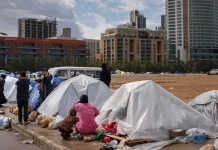
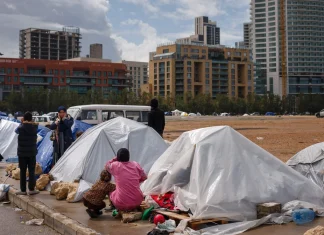
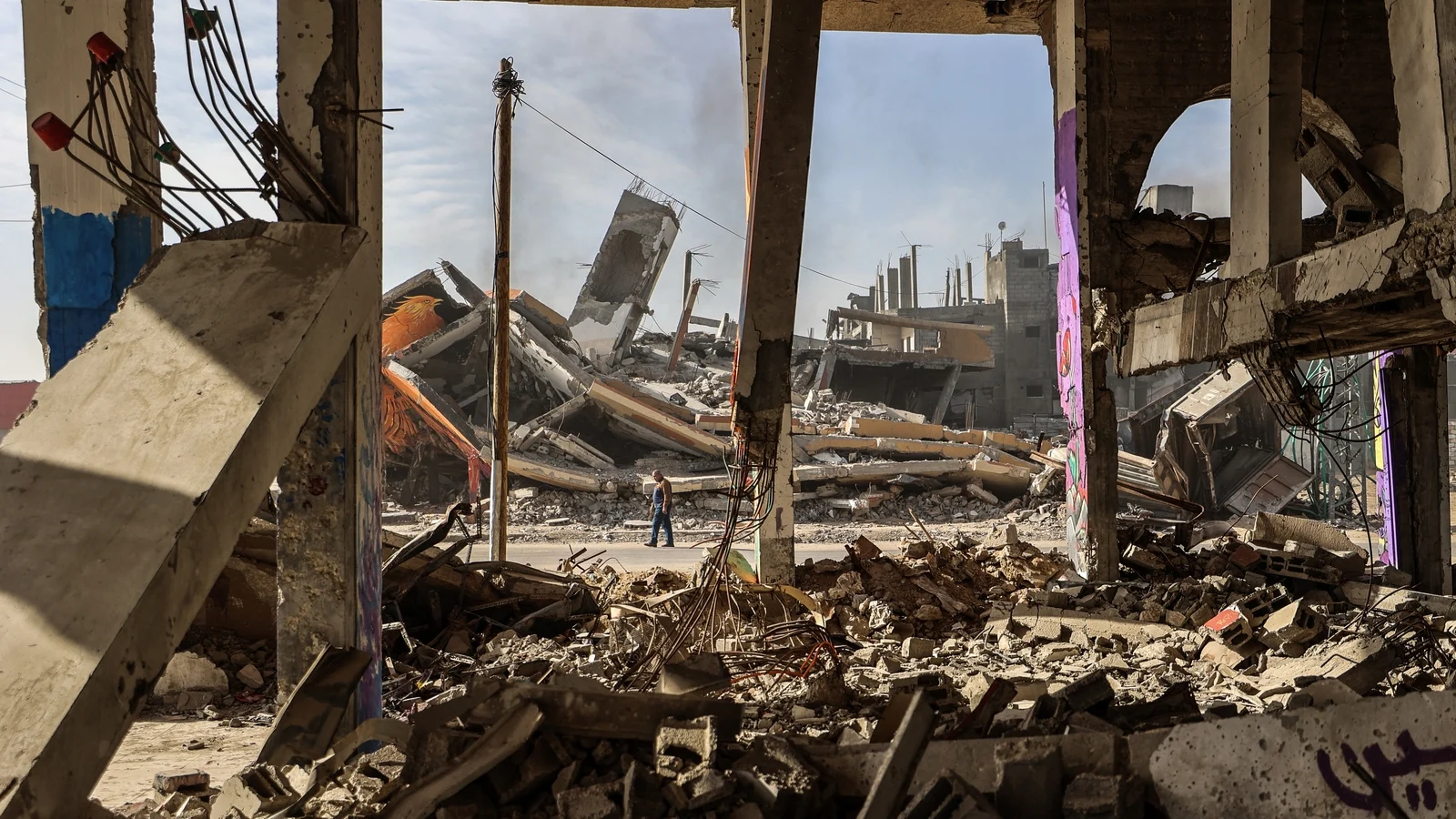
And there is a human cost to indecision. Hospitals in Gaza are skeletal echoes of their former selves. Generators and fuel are lifelines. Schools double as shelters. Without consistent and substantial aid, public health, sanitation, and the fragile economy tilt toward collapse.
Questions we carry forward
As the Allenby bridge opens to aid — if only partially — the world watches a truce that can either be stitched into lasting calm or unravel again under small violations and big distrust. Which will prevail: the patience of those waiting at the crossings, or the impatience of political agendas?
Ask yourself: when a ceasefire is announced, do we measure it by the absence of bombs or by the return of normal life? If the latter, this truce remains a work in progress, one whose success relies on more than promises and press statements; it requires sustained access to food, medicine, shelter and the dignity of return.
In the end, the story of this ceasefire will be written in the detail of deliveries — trucks crossing borders, babies receiving vaccinations, a classroom reopening — and in the courage of negotiators to press hard on both sides to honour what they agreed. Until then, the silence along the crossings is less a victory and more a fragile, breath-held truce.