The Quiet That Followed the Gavel: Jimmy Lai, Apple Daily and the New Normal in Hong Kong
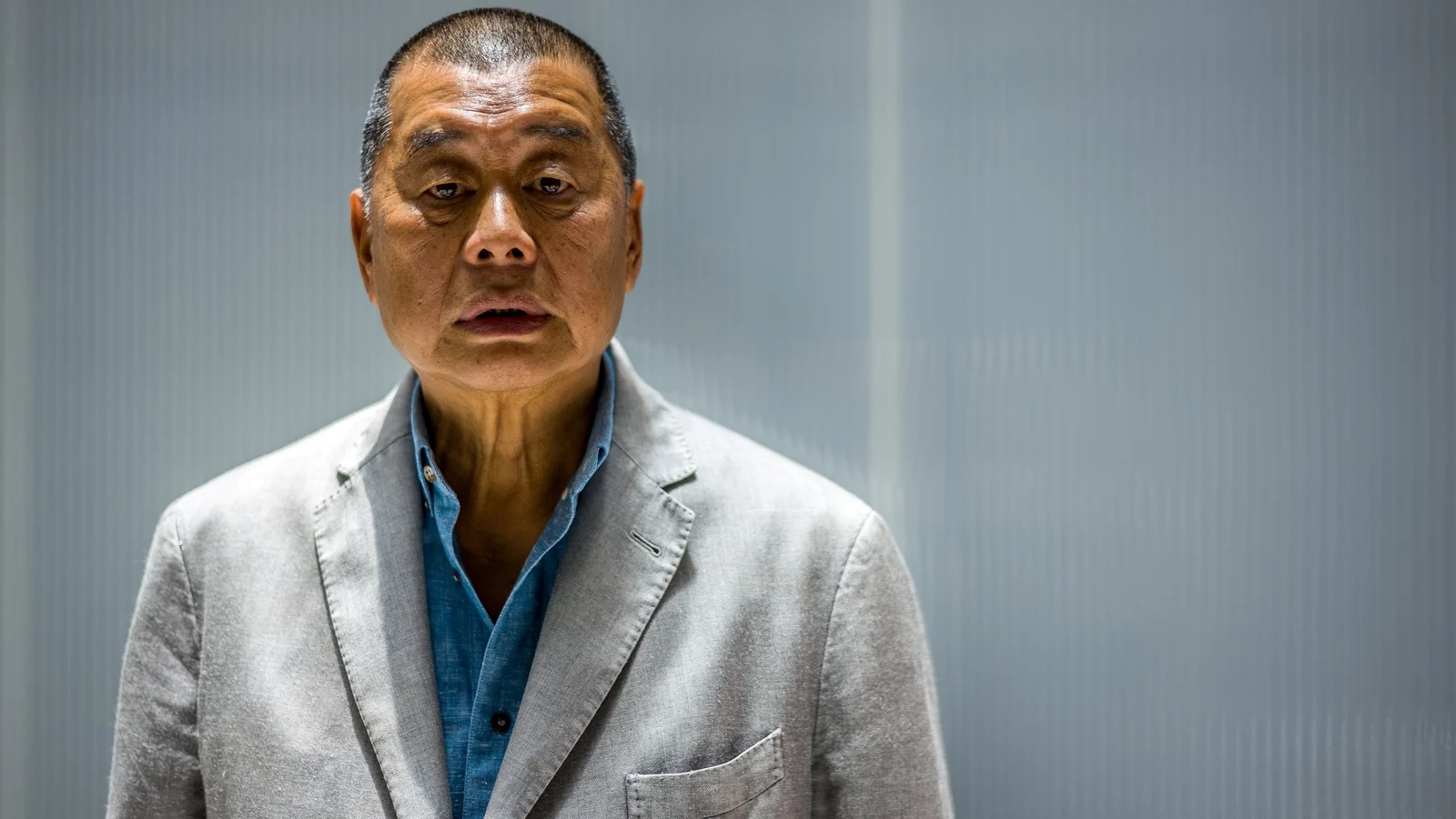
When the verdict was read, there was no dramatic gasp from the packed courtroom. No collapse or outcry. Jimmy Lai sat with his arms folded and a face like river rock — weathered, unyielding — as a decades-long story of defiance met a legal punctuation mark that will echo far beyond Hong Kong’s harbor.
For those who followed the rise and fall of Apple Daily, the outcome felt at once inevitable and unbearably consequential. The 78-year-old media entrepreneur, who built a tabloid that once roared across Hong Kong’s streets, was convicted this week on charges that represent the clearest example yet of the tightened leash over dissent since Beijing imposed the National Security Law in 2020.
More than a trial — a signal
The charges against Lai included collusion with foreign forces — essentially, the accusation that he solicited outside powers to take punitive actions — and a string of publications deemed “seditious” under an old colonial statute dusted off for a modern era. If sentencing follows the harshest interpretation, Lai could face life behind bars.
“This case wasn’t merely about one man or one paper,” said an EU diplomat who watched the proceedings from the public gallery. “It was a message: lines have been redrawn, and anyone who crosses them will be exposed.”
The National Security Law, enacted by Beijing in June 2020, criminalizes secession, subversion, terrorism and collusion with foreign forces. Since its introduction, Hong Kong police have used it to make more than 200 arrests for national security-related offenses — a figure that refuses to sit quietly in conversations about the city’s future.
Outside the court: worried faces, flags folded
At dawn, ahead of the hearings, a small cluster of former Apple Daily staff and supporters gathered near the West Kowloon court complex. They brought with them memory as much as protest: battered press badges, yellow umbrellas folded like relics, and stories of late nights at the newsroom when deadlines were holy and optimism thick in the air.
“I wanted to see him, to know if he’s okay,” said Tammy Cheung, who worked at the paper for nearly 20 years. Her voice broke on the word ‘okay’ and then steadied. “He’s thinner. He’s older. But he looks the same in his eyes — still the man who’d rather be in the fray than on the fence.”
Lai’s family — his wife and son among them — sat quietly in the public benches. Watching him were diplomats from the United States, members of the European Union mission, and consular observers from other countries who queued under the morning sky, a reminder that this trial had become tangled not only in local law but in international diplomacy.
What the prosecution said — and what Lai’s supporters say back
Prosecutors leaned on a catalogue of Apple Daily content. They pointed to 161 items — opinion pieces, editorials, and online talk shows — which they argued fomented disaffection toward the government. They portrayed Lai as a long-standing critic of the mainland, intent on finding leverage in Washington and abroad to pressure Beijing.
“From the evidence presented, it’s clear the defendant cultivated foreign sympathy as a weapon,” the judge said in court. The ruling read like a line drawn in legal sand: a redefinition of permissible political expression.
But Lai’s defenders and press freedom groups view the prosecution through a different lens. “This was a political prosecution wrapped in legalese,” said an independent press freedom advocate who asked not to be named for safety reasons. “They took a newspaper’s editorials and turned dissent into a crime.”
The Committee to Protect Journalists called the verdict a travesty, with critics characterizing it as a symbol of the erosion of liberties once guaranteed under Hong Kong’s Basic Law. The British government — noting Lai’s UK citizenship — called for clemency and continued access to medical treatment. The EU and US have both expressed deep concern.
A life remembered in headlines and nicknames
Jimmy Lai was never just a businessman. He cultivated an image — the “born rebel,” as he once called himself — that fit comfortably with Hong Kong’s tradition of audacious entrepreneurs who speak bluntly to power. He made his name in fashion before pouring profits into media and activism, feeding a paper that sold not only news but a worldview: brash, partisan, and unafraid.
Apple Daily’s closure in mid-2021 after police raids and asset freezes remains one of the starkest episodes of the crackdown. Printing presses fell silent. Journalists dispersed. The paper’s final issue was a collage of defiance: a headline that read “Farewell” and a front page filled with tributes from readers who queued for hours to buy a piece of a disappearing public square.
Health, confinement and the human toll
Supporters say Lai’s health has deteriorated in custody: weight loss, brittle nails and dental issues that his family says are visible. Authorities counter that he’s received appropriate care and that any solitary confinement has been at his own request. The details are messy, personal and, for many, painfully human.
“We debate geopolitics and sovereignty while a man sits in a cell losing his teeth,” said Mei Lin, a retired schoolteacher who came to the court steps with a thermos of tea. “What I’m afraid of is less for him than for what his fate means for the children who want to speak up tomorrow.”
Why this matters beyond Hong Kong’s skyline
Look past the dock and you see a global pattern: governments using national security to curtail speech; the pressure on journalists amplified by technology; democracies grappling with how — or whether — to respond to such shifts. Hong Kong’s transformation is not occurring in a vacuum.
Ask yourself: what does a free press look like when laws are reshaped around the idea of permanence for state power? When are opinion and persuasion considered legitimate political action, and when do they cross an invisible line into criminality?
These are not academic questions. They are living, breathing dilemmas. In the months and years ahead, sentencing in Lai’s case will become a focal point for activists, diplomats and ordinary Hongkongers who are watching what freedoms will remain in the city’s civic commons.
Looking ahead
Lai has the right to appeal. Whether that will alter the course of his life or the trajectory of Hong Kong’s press is unclear. What is clear is that the city has changed: its newsroom culture, its streets, its politics — all reshaped by a law conceived in Beijing but felt intimately in every office, classroom and living room in the territory.
“People worry this is the end of an era,” said an academic who studies media freedom. “But history moves in cycles. The question now is where thin red lines have been drawn, and how citizens and international partners respond.”
As you read this from wherever you are — a city coast, a small island, a capital far removed from Victoria Harbour — consider the role of newspapers, of editors who offend and entertain in equal measure, of communities that once gathered around newsstands. What price are societies willing to pay for stability? And what liberties will they trade away while reassuring themselves that the trade was necessary?
Jimmy Lai’s case is a story about one man and a paper. It is also a mirror showing how fragile the promises of an open society can be when the balance of power shifts. For Hong Kong, for journalists worldwide, and for anyone who values the messy, noisy work of public debate, the verdict is not an end but an invitation — to look harder, to ask more, and to decide what kind of future is worth defending.