Europe’s audacious financial gamble: Turning frozen rubles into a lifeline for Ukraine
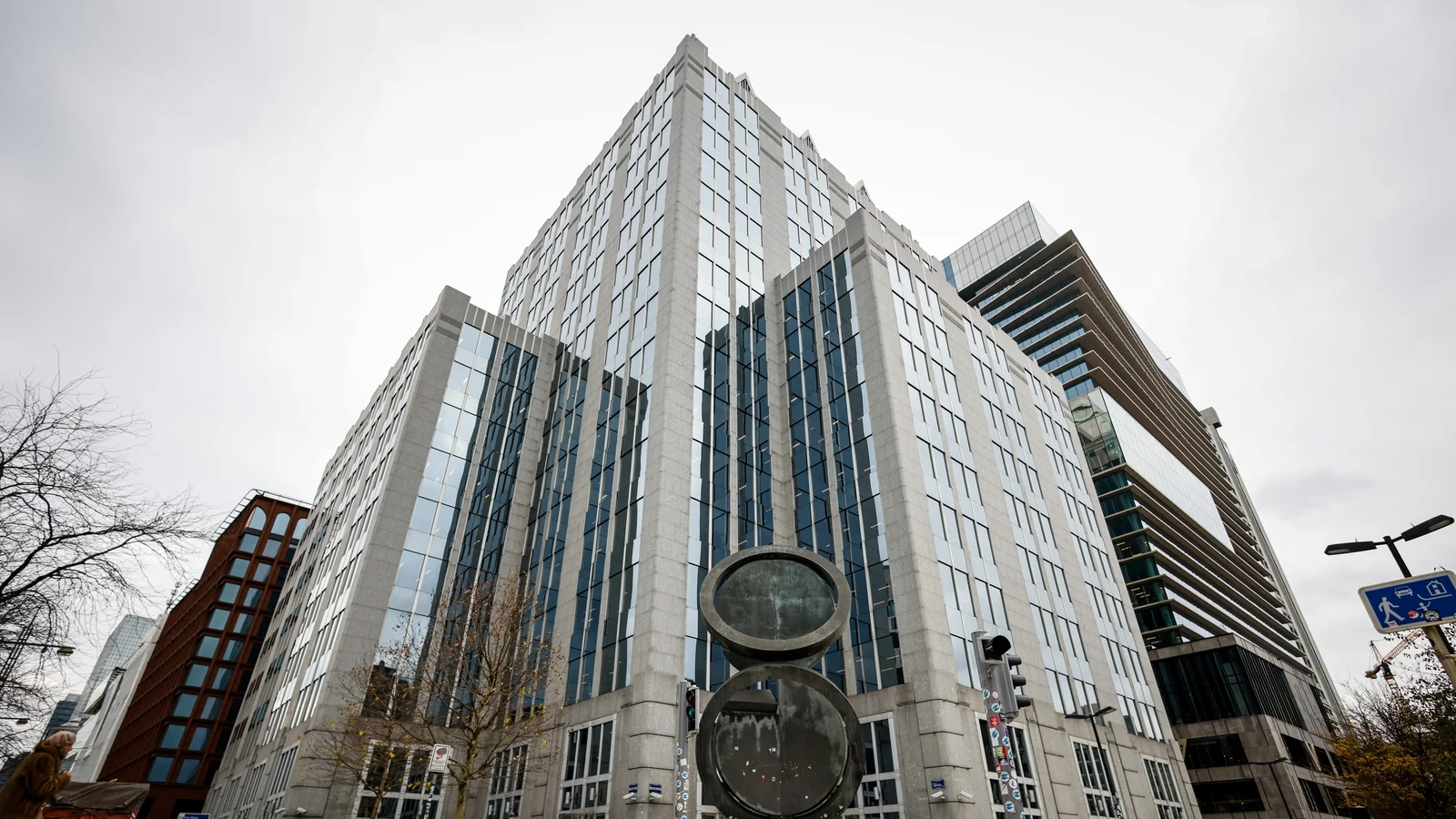
On an overcast morning in Brussels, beneath the glass façade of a gray office block where traders once moved in a steady hum, a curious alchemy is being proposed: money that belongs to one state, immobilised by sanctions, being repurposed to help another survive. It is not outright confiscation, European officials say—rather, a legal and financial sleight of hand that would let Ukraine spend now what Russian sovereign assets currently sit idle across the West.
If it sounds like an episode of high finance meets geopolitics, that is because it is. The proposal from the European Commission imagines converting a large slice of frozen Russian central bank cash into a “Reparations Loan” for Kyiv, disbursed in stages during 2026 and 2027. The numbers are staggering: roughly €210 billion of Russian sovereign assets are frozen within Europe, and up to €165 billion could be harnessed under the plan without being formally seized.
How would the mechanism actually work?
Picture Euroclear, the Belgian central securities depository tucked amid Brussels’ stately avenues. After Russia’s invasion of Ukraine, bonds held on behalf of the Russian central bank matured in Euroclear. Under current EU sanctions the proceeds could not just flow back to Moscow. So Euroclear parked the cash with the European Central Bank, earning overnight returns.
Under the Commission’s blueprint, that idle cash would instead be exchanged for zero-coupon bonds issued by the European Commission. These bonds would carry no periodic interest payment because, legally, the Russian central bank would still own the capital; what changes is that the interest — the yield the assets would otherwise create — would not flow back to Moscow. In practice, Euroclear would hold high-rated EU bonds in place of the ruble-denominated deposits, and the proceeds would be channelled into an EU-backed loan to Ukraine.
“It’s a clever workaround,” said a senior EU diplomat involved in the talks. “We’re not taking ownership away from Russia under international law. We’re effectively replacing where the bank’s money sits, so Ukraine can draw on funds it will only be formally owed once a peace settlement and reparations are agreed.”
Numbers, timelines and practicalities
Understanding the scale helps. Independent tallies and EU sources put globally frozen Russian sovereign holdings at around $300 billion (about €257 billion). Europe holds the lion’s share: roughly €210 billion, with about €185 billion tied up in Euroclear. Of that, roughly €176 billion has already converted to cash; the remainder—about €9 billion—consists of securities due to mature in 2026 and 2027.
The Commission initially wanted to limit the scheme to the Euroclear-held amount. Belgium, however, urged that another roughly €25 billion frozen across EU jurisdictions be included, most of which — approximately €18 billion — sits in French banks. That portion complicates the exercise because unlike the Euroclear cash, these assets currently generate interest that legally belongs to Russia.
Meanwhile, the EU and its partners already extended a Group of Seven loan to Ukraine totaling €45 billion last year; €25.3 billion of that has been disbursed so far. Some of the remaining loan tranches are scheduled for early 2026 to keep Kyiv solvent until the proposed Reparations Loan could take effect in the second quarter of that year.
The Commission’s working assumption is to free up about €90 billion for disbursement in 2026–2027, though the infrastructure could stretch to more if needs demand; the Commission estimates Ukraine’s financing gap for those two years at roughly €135.7 billion and expects non-EU partners to contribute the shortfall.
Who bears the risk?
Here, the plan gets very political. EU member states would share liability for the scheme. The key worry is a scenario in which EU governments would be obliged to return frozen funds to Russia (for instance, if a future unanimity vote lifted sanctions) while Ukraine has already spent the loan; that would leave EU treasuries on the hook.
Recognising this, EU capitals agreed on December 12 to keep immobilised Russian assets frozen indefinitely. “We have removed the accidental vote risk,” a European finance official said. “That was the single biggest vulnerability in the architecture.” With the indefinite freeze in place, the immediate likelihood that guarantees would be triggered falls dramatically—liability would only crystalize if EU governments themselves by choice unfreeze the assets before reparations have been paid by Russia.
Voices from the corridors and the street
In Brussels, the plan is debated with a mix of legal rigor and moral urgency. “We are threading a needle between international law and moral responsibility,” said a Belgian legal scholar who has advised several EU ministries. “Sovereign assets are protected by centuries of customary law. Any solution must respect those norms while enabling justice for Ukraine.”
In Kyiv, the mood is understandably different. At a small bakery near Maidan Square, the owner—who asked to be identified only as Olena—brushed flour from her hands and said, “If this means a hospital gets fuel, a child gets medicine, then I support it. We don’t need philosophical debates when the frontline needs electricity.”
Not every voice is convinced. From Moscow, the Kremlin has blasted the proposal as theft, warning of retaliation. “They are stealing our property,” a statement from a Russian foreign ministry spokesman read. “There will be consequences.”
Legal and geopolitical ripple effects
Beyond the immediate fiscal mechanics lie broader implications. If successful, the scheme could set a precedent for how democracies respond to aggression: turning immobilised enemy assets into resources for rebuilding and reparations. That would be a novel chapter in international practice—one that could reshape expectations about accountability after interstate conflict.
But it also raises thorny questions: Are we comfortable recalibrating long-established protections for sovereign assets in pursuit of a moral cause? Could this move be invoked by other states in future disputes? And what does it mean for global financial stability if sequestration becomes a tool of policy?
“There is a tension between rule of law and moral rectitude,” said an international law professor in The Hague. “This proposal tries to square that circle. How other states react will determine whether this becomes a one-off emergency measure or a new norm.”
Where does this leave us?
As negotiators put pen to paper and lawyers test the boundaries of customary practice, one thing is clear: the West is experimenting with creative finance as an instrument of geopolitics. Whether the Reparations Loan becomes an elegant solution that delivers fuel, salaries and medicine to Ukraine—or whether it trips into legal challenges and tit-for-tat retaliation—remains to be seen.
But perhaps the bigger question is moral and simple: when a neighbour is under attack, what are the obligations of the international community? Do we stand by until justice is formally decreed, or do we find lawful, pragmatic ways to give a country the means to survive and rebuild now?
As Brussels debates and Kyiv waits, the eyes of financial markets and foreign ministries are on what could be a defining moment for how the global order responds when war meets the balance sheet. What would you do if you were in charge—hold fast to old rules, or bend them for a cause you believe to be just?