Between Two Fires: Ukraine’s Quiet Pivot as the Middle East Burns
There is an odd kind of hush that falls over Kyiv at dusk now: not silence, exactly, but the kind of concentrated noise that feels like a city holding its breath. Street vendors still sell hot dumplings on the main drag; a grandmother feeds pigeons in Maidan; a mural of a sunflower peels in the rain. Yet deeper in the city’s defence neighbourhoods, the conversation has shifted. The war that began on the eastern horizon four years ago has found a new, distant theatre to intersect with — and Kyiv’s diplomats and drone pilots have been quietly stepping onto it.
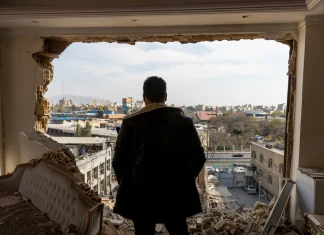
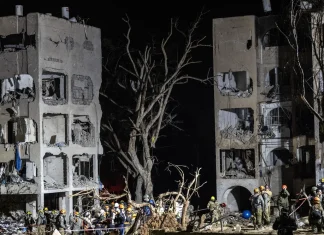
When reports emerged late last month of a dramatic strike on Tehran — the reported death of Iran’s supreme leader and the immediate US-Israeli military response that followed — the reverberations were felt far beyond the Gulf. They reached the crumbling façades of eastern Ukraine, the grain terminals of Odesa, the command rooms where men and women in camouflage calibrate interceptors against cheap, lethal drones.
Why a Gulf War Matters in Eastern Europe
At first glance the link is logistical: oil prices, shipping routes, and a sudden scramble for alternatives. But the entanglement runs deeper. Iran had supplied Russia with thousands of Shahed “kamikaze” drones over the past four years — weapons that have killed and maimed Ukrainian civilians and forced entire communities to live on edge. Those same weapons are now a key instrument in the new Gulf hostilities.
“For us, these devices are familiar. They are a language of war we have been forced to learn,” says Kateryna, a former engineer turned drone-defence specialist who now runs a small training unit outside Kyiv. “When Gulf states call for help, they are not asking about theory. They ask how to listen to the sky.”
Ukraine’s response has been swift and pragmatic. President Volodymyr Zelensky, negotiating on multiple fronts, has authorized the deployment of over 200 drone experts to the Gulf — teams sent to the UAE, Qatar, Saudi Arabia, Kuwait and Jordan, according to Ukraine’s defence minister. These are technicians with battlefield-tested experience in intercepting Shaheds and their Russian cousins; they know the jittery signature of a loitering munition and the art of turning a $20,000 drone into a problem you can solve.
From Hands-On Combat to Quiet Diplomacy
It’s a subtle diplomatic gambit: move from being a perpetual recipient of aid to being a provider of critical expertise. “Our people understood early on that to stay relevant, Ukraine must be useful in more ways than one,” Oleksandr Kraeiv, a Kyiv-based foreign policy analyst, told me. “We’re offering capabilities, not just asking for them.”
In the Gulf, where statecraft is often practical and transactional, that move has value. An Emirati security analyst I spoke with — a man who has spent three decades watching Tehran and Moscow jockey for influence across a chessboard of pipelines and ports — described Kyiv’s teams as “precise and humble. They teach, they leave, and we sleep easier.”
Silence from Moscow, Noise on the Market
Yet the calculus is complicated by bigger players and bigger money. While Russia expressed public sorrow over the Tehran strike, it has so far avoided a rupture with the United States. Part of the reason is tactical, part of it cynical: Vladimir Putin and his government are careful not to push Washington into tougher positions that might favour Kyiv at the negotiating table.
Meanwhile, market forces have become a war of their own. The Gulf strikes and infrastructure disruptions sent Brent crude climbing from roughly $65 a barrel before the crisis to near $100 at the height of panic; it has since settled around $90. Buyers, hungry for reliable supply, dialled Russia. The Centre for Research on Energy and Clean Air (CREA) estimates Russia enjoyed some €625 million in additional oil export revenues in the two weeks after the initial strikes on Iran.
“Money is oxygen in this conflict,” a European diplomat said, speaking on condition of anonymity. “Every dollar Russia gains from higher oil prices funds its battlefield operations. That’s the blunt arithmetic of war.”
These market shifts also influenced policy. On 10 March, Washington announced a temporary easing of sanctions on Russian oil exports for one month — a move intended to tame surging prices but one that, predictably, fed a narrative in Kyiv that the world’s priorities had shifted away from ending Russia’s war in Europe to stabilizing global fuel markets.
The Thin Thread of Negotiations
It bears repeating: diplomacy did not grind to a complete halt. Trilateral talks among Ukrainian, Russian and US representatives — a format revived with cautious optimism earlier this year — had been pencilled in for Abu Dhabi at the start of March. They didn’t happen. The last sitting took place in Geneva on 18 February. The Gulf strikes wrecked the timetable.
“These talks were already fragile,” a senior EU official told me. “They were in the danger zone. Pulling them back together will require space that right now does not exist.”
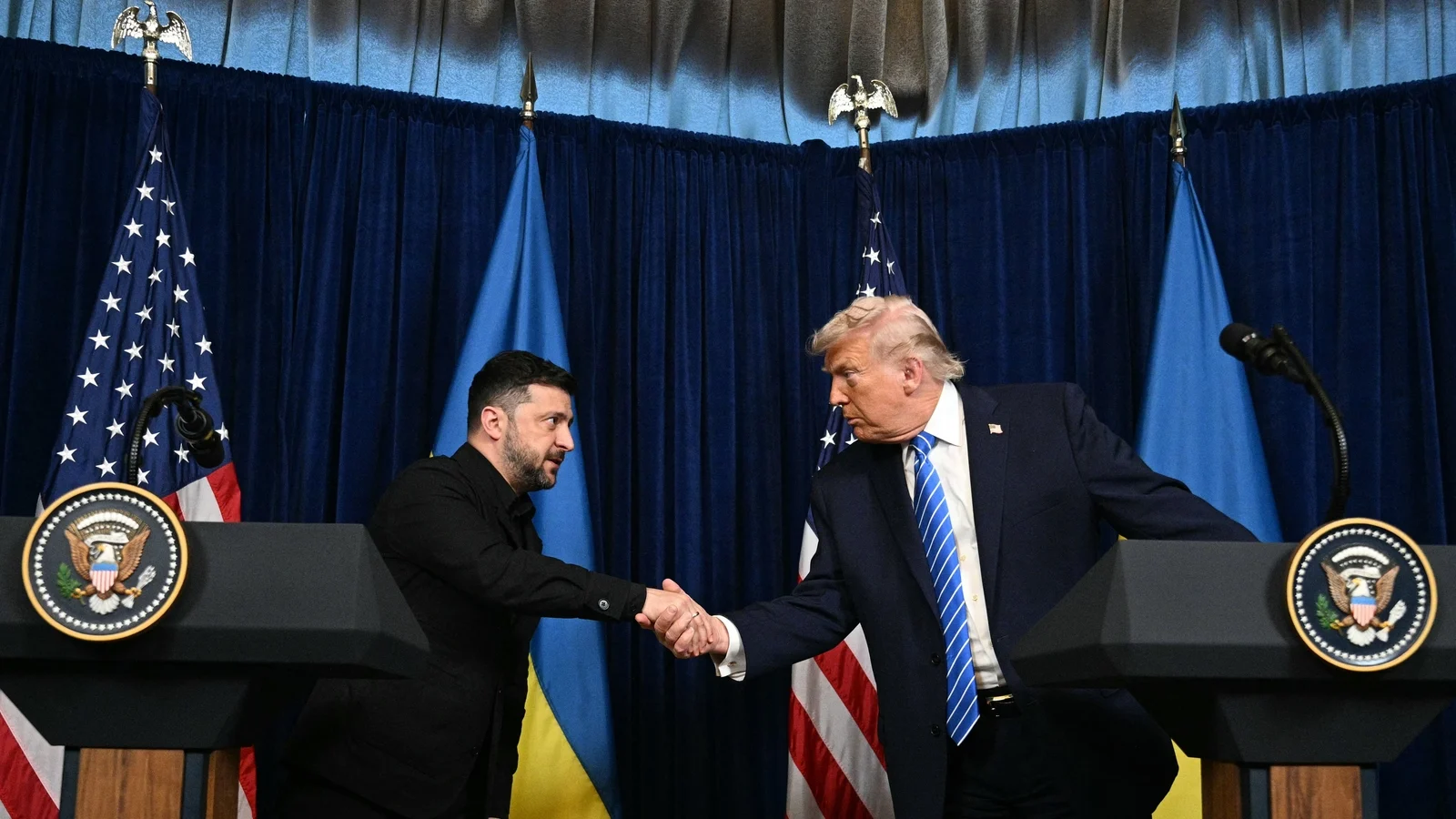
Small steps continue. Kyiv and Washington met in Florida recently for follow-up discussions that negotiators say will continue behind closed doors. But the consensus among analysts in Kyiv is bleakly pragmatic: until the horizon in the Middle East stabilizes, a formal resumption of the trilateral peace track for Ukraine looks unlikely.
Local Cost, Global Consequence
On the ground in Ukraine, people measure these geopolitical shifts in minutes and in prices. A farmer outside Mykolaiv told me that the shipping delays and higher fuel prices have pushed fertilizer costs through the roof. A nurse in Odesa worries about a new generation of patients with limb injuries from drone attacks. A young father in Lviv, who recently returned from helping fit anti-drone nets on a Gulf oil platform, says he sleeps better knowing the work he did might keep merchant vessels safer.
These are not abstract variables on a graph. They are livelihoods, classrooms, gardens, and funerals. And they underscore a damning question: when the world’s attention splinters between theatres of war, which conflicts become priorities, and which are consigned to slow attrition?
Where Do We Go From Here?
Ukraine is attempting something both old and new: to convert its trauma and expertise into diplomatic capital. By exporting knowledge instead of only pleading for materiel, it hopes to remain indispensable to a shifting coalition of partners. Yet there is no guarantee that relevance will translate into the arms and backing Kyiv needs for the long haul.
So here is what I find myself asking you, the reader: What responsibility does a global community have when its crises intersect? When an oil spike in the Gulf buys time for an aggressor in Europe, who pays the moral price? And how do small nations — those bearing the brunt of violence — ensure their stories and needs do not get swallowed by the chatter of great powers?
In the weeks ahead, listen for the quiet dispatches — the Ukrainian teams teaching Gulf technicians to patch a radar array; the diplomats in muted conference rooms trying to stitch a fragile ceasefire; the families recalibrating their budgets because fuel is no longer a background fact but a household decision. These are the human moves of geopolitics. They are granular. They are poignant. And they will shape the map of tomorrow.
Further reading and context
-
Shahed drones and their proliferation: an overview of shadowborne loitering munitions and their battlefield impact.
-
Oil markets 101: why disruptions in the Strait of Hormuz send global prices surging and who benefits.
-
Trilateral diplomacy: the fragile architecture of talks involving Ukraine, Russia and the United States.