Rewrite the following news content into a completely original, vivid, and immersive blog post of at least 800 words, tailored for a global audience.
Write not as a machine, but as a seasoned, passionate journalist with a knack for storytelling. Use your own words, insight, and creative perspective—do not paraphrase. Instead, fully reimagine the article with fresh structure, lively narrative, and a real human voice.
Bring the story to life with:
Warmth, nuance, and emotional resonance—let your writing breathe.
Real-sounding, diverse quotes (from officials, locals, experts, or everyday people).
Relevant statistics, facts, and up-to-date data to ground the story in reality.
Local color: cultural details, references, and anecdotes that offer unique flavor and place readers in the heart of events.
Fluid, varied sentence structures—some short, some lyrical, some punchy.
Strong transitions that make the story flow naturally and keep readers engaged.
Direct engagement: ask the reader thought-provoking questions, challenge assumptions, or invite reflection.
Connections to larger themes, social trends, or global issues—don’t just report; help readers see the bigger picture.
Formatting Instructions (for WordPress or similar platforms):
Main sections: use
for bold, clear headings
Subsections: use
where appropriate
Tone & Voice:
Your goal is to sound unmistakably human—curious, compassionate, and insightful. Let the story pulse with life. Use empathy and observation to invite readers into the world behind the headlines. Be creative and bold; never generic or formulaic.
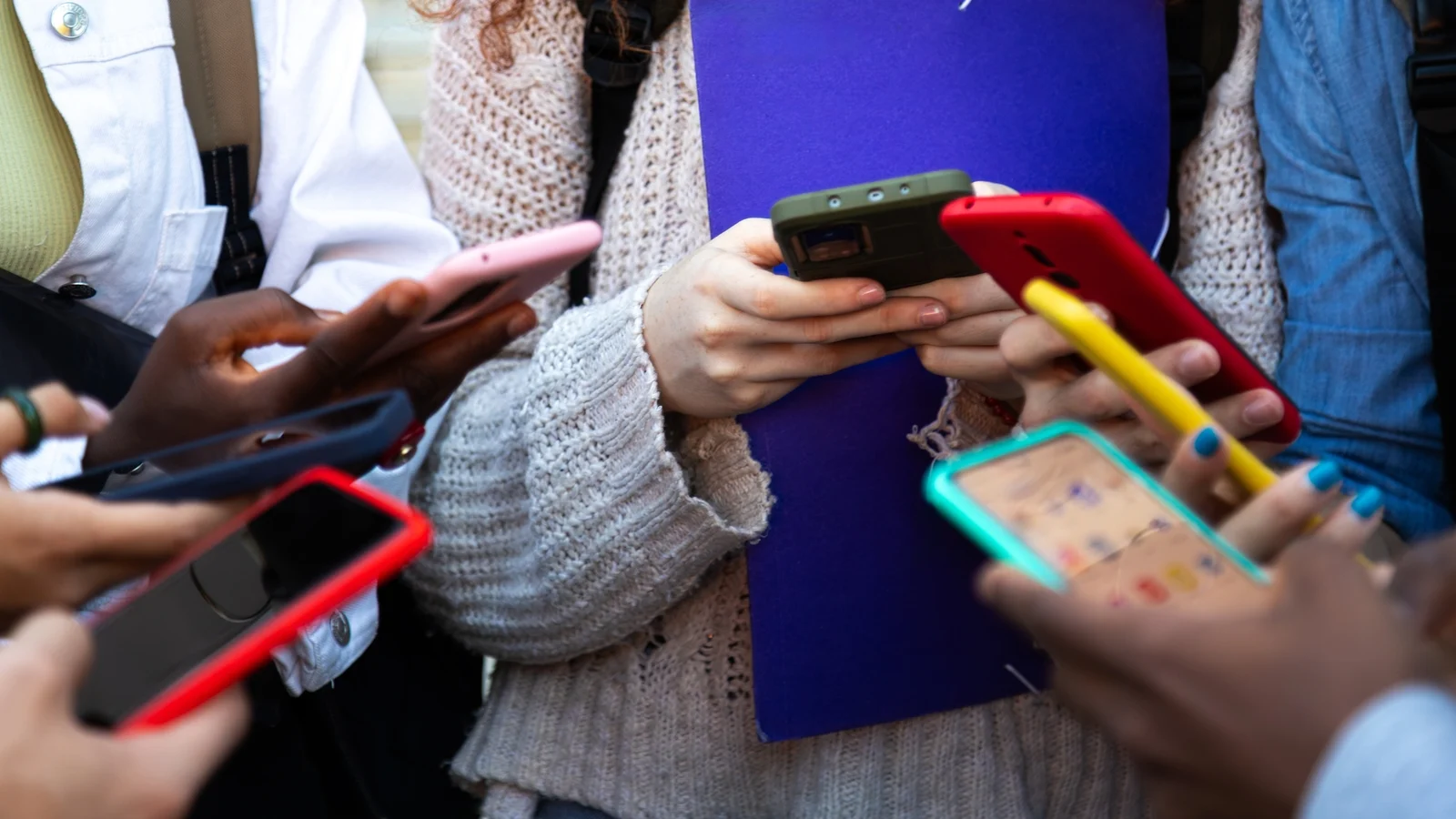
Australia’s world-first social media ban for under-16s came into force in December. At the time, there was a sense that any similar moves in Ireland would be part of an EU-wide response.
But in recent weeks, EU member states such as Spain, France, Denmark and Greece have started to go it alone and move ahead with bans of their own.
It has put a renewed focus on what the Government here is planning to do to keep children safer online.
What are other countries doing?
This week, Spain became the latest European country to propose social media restrictions for teenagers, with Prime Minister Pedro Sanchez saying that children needed to be protected from the “digital wild west”.
“Spain will ban access to social media for minors under the age of 16. Platforms will be required to implement effective age verification systems, not just checkboxes, but real barriers that work.
“Today, our children are exposed to a space they were never meant to navigate alone. Space of addiction, abuse, pornography, manipulation, violence. We will no longer accept that,” Mr Sanchez said.
Under the proposed rules, Spanish law would be changed to make tech executives face criminal liability for failing to remove illegal or hateful content.
Spain has become the latest European country to propose social media restrictions for teenagers
X owner Elon Musk responded to the proposals by branding Mr Sanchez a “tyrant and traitor”.
The prime minister’s coalition government lacks a parliamentary majority and often struggles to pass legislation which means the proposed restrictions may not become a reality.
Spain has now joined France, Denmark, Greece and Portugal in announcing plans to introduce national age limits.
The UK government has launched a consultation on whether to implement a social media ban for under-16s.
How is the Australian ban working?
Last month, the Australian government said that its social media ban was “working”, pointing to the fact that more than 4.7 million under-16 accounts had been either deactivated or removed since the restrictions began.
“We stared down everybody who said it couldn’t be done, some of the most powerful and rich companies in the world and their supporters,” Communications Minister Anika Wells said at the time.
A recent report from Australian broadcaster ABC outlined how Meta said it has removed 173,000 users from Facebook and 330,000 from Instagram, while Snapchat said it has locked or disabled more than 415,000 accounts.
Meta said it has removed 173,000 users from Facebook and 330,000 from Instagram in Australia
“It is unclear, however, whether this accounts for teenagers who have reactivated their accounts or created new ones. It is likely that this is an overestimation as well,” according to the report.
Official figures may show that the ban is working, but in reality many Australian children have said that they have been able to continue to use their social media accounts because they set them up originally using fake dates of births.
Some say they have been able to regain access to suspended accounts by cheating photo ID checks using a variety of methods.
Before the ban, there was an increase in the downloading of virtual private networks (VPNs) which allow users to hide their location.
Tech experts say however that these networks are of limited use when it comes to trying to avoid the ban because many social media platforms can detect VPNs.
What is the Government here planning?
Minister for Communications Patrick O’Donovan said this week that he will bring a memo to the Cabinet next month on a new age verification system.
He said a ‘digital wallet’ has been built, but that work was needed from different departments before the legislation is in place.
The age verification system will be based on a person’s PPS number but Minister O’Donovan said that this information would not be held by online platforms, but rather a third party.
The age verification system will be based on a person’s PPS number
“I would appeal to the Opposition in particular, and I would also appeal to commentators and people who might see this as being an infringement on people’s rights to realise that what we’re trying to do here is protect children, and there should be no right trumping the right of a child to be protected online,” Mr O’Donovan said.
He also expressed his frustration that work had not progressed at EU level on age verification, describing it as “regrettable”.
Privacy concerns
Many legal commentators and campaign groups have warned that if an Australian-style ban were to be introduced in Ireland, it could be in breach of EU charters.
Banning a group of people from something, based solely on their age, could be legally problematic.
The Irish Council for Civil Liberties (ICCL) and Digital Rights Ireland (DRI) have expressed concerns about any plan that would introduce state-run digital identity checks for internet users.
The groups have described such a move as a disproportionate response that veers into the realm of authoritarianism. They have warned of the dangers of handing over sensitive personal data to get access to the internet
Campaigners say there are better ways of protecting children online such as making platforms turn off algorithms by default; and by introducing tougher regulations for online advertising.
Campaigners say there are better ways of protecting children online such as making platforms turn off algorithms by default
‘Beholden to big tech’
TikTok, Meta, X and YouTube parent Google all have their European headquarters in Ireland. They are big employers and pay billions in corporation tax here.
Critics repeatedly accuse the Government of being slow to take on big tech because of its economic importance to the country.
In the Dáil on Wednesday, PBP Solidarity TD Paul Murphy criticised the Government for not taking a tougher stance with X over the ability of its Grok AI tool to generate sexualised deepfake images of adults and children.
He claimed the Irish approach to big tech was a case of “see no evil, hear no evil”. He accused the Government of not wanting to do anything about the production of child abuse material because “big tech investment is more important … than standing up to these people”.
It was met with an angry response from the Taoiseach who described Mr Murphy’s claims as “reprehensible and shocking”.
“How dare you!” Mr Martin said. “Who the hell do you think you are.. that you have moral superiority over everyone else?”
While that exchange was playing out on the floor of the Dáil, in a nearby committee room executives from Meta, TikTok and Google were appearing before the Oireachtas Media Committee.
X had also been invited to attend but had refused to appear, a move that was branded as “disgraceful and disrespectful” by the committee chair Alan Kelly.
The issue of age verification was addressed by Meta and TikTok in their opening statements.
Meta repeated its preference for age checks to be done at the app store level, and also voiced support for the establishment of a Digital Age of Majority at EU level, below which parents would decide which apps they want their children to have access to.
TikTok said it believes that a multi-layered approach to age assurance, in which multiple techniques are used, is needed to protect teens.
In the coming weeks, TikTok said it will begin to roll out enhanced technology in Europe to support how its moderation teams detect and remove accounts that belong to someone under the age of 13.
In the coming weeks, TikTok said it will begin to roll out enhanced technology in Europe
Days after that committee appearance, the European Commission issued a damning report accusing TikTok of having an “addictive design” which could harm the physical and mental wellbeing of minors and vulnerable adults.
It said the platform had been guilty of “multiple” violations of the EU’s Digital Services Act (DSA).
A TikTok spokesperson hit back describing the commission’s preliminary findings as presenting a categorically false and entirely meritless depiction of its platform.
“We will take whatever steps are necessary to challenge these findings through every means available to us,” TikTok said.
Conflict with the US
Any moves to restrict social media access in Europe will no doubt be met with criticism from the Trump Administration.
Republicans have made no secret of the fact that they believe the EU is already too strict on tech regulation, accusing the bloc of trying to censor American companies and stifle free speech.
On Tuesday, the Judiciary Committee of the US House of Representatives, which is chaired by Donald Trump ally Jim Jordan, published a report entitled “The Foreign Censorship Threat Part II”.
It accused EU regulators, including Coimisiún na Meán, of “censoring” online content ahead of elections.
The European Commission dismissed the claims as “pure nonsense” and “completely unfounded”. The following day, the Judiciary Committee held a hearing that heard further criticism of EU tech regulation.
The European Commission
Witnesses included Irish human rights Irish lawyer, Lorcan Price, who said: “There can be no doubt that the European Digital Services Act is the tip of a massive censorship industrial complex.
“The enormous fines levied on X corporations by the European Commission since the last hearing has proved, beyond all doubt, that the EC [European Commission] means to strangle free speech by a systemic assault on US companies,” he added.
Comedy writer Graham Linehan also testified calling on for the US to put pressure on the Government here to open a debate on gender recognition legislation.
Safer Internet Day
The 23rd Safer Internet Day will be marked here, and across the EU, on Tuesday.
In the more than two decades since the initiative was launched, so much has changed in the online world.
From the arrival of the smart phone and social media, to the explosion in artificial intelligence, the cyber space of today bares little resemblance to the internet of 20 years ago.
The increase in access to devices, apps and websites has been matched by a massive rise in the harms faced by children.
Also throughout the last 20 years, regulators and legislators have continuously struggled to keep up with the rapid pace of technological evolution. The bans and laws being proposed right now are facing criticism both here in Ireland and abroad.
By the time they do finally get passed, it is likely that new risks and threats, that we do not even yet know about, will have emerged.
Read more
Australia social media ban for under 16s to take effect
Social media groups face Europe backlash as Spain weigh teen bans
‘Uncontrolled’ internet access like serving children ‘gin and tonic’ – Minister
Social media ban would push minors to unsafe areas online, says TikTok
Spain to seek social media ban for under-16s, says prime minister