When the Lights Went Out: Iran’s Winter of Protest and the Quiet before the Storm
Walk into Enghelab Square in Tehran and you can still smell the ash. Not from a single bonfire, but from months of anger that have been burned into the city’s memory—slogans wicked into walls, banners flapping where shops once hung glistening textiles, and a new billboard looming over the center that shows a U.S. aircraft carrier sinking beneath a smudge of black smoke. “If you sow the wind, you will reap the whirlwind,” its English words hiss like a cautionary tale to anyone who reads it.
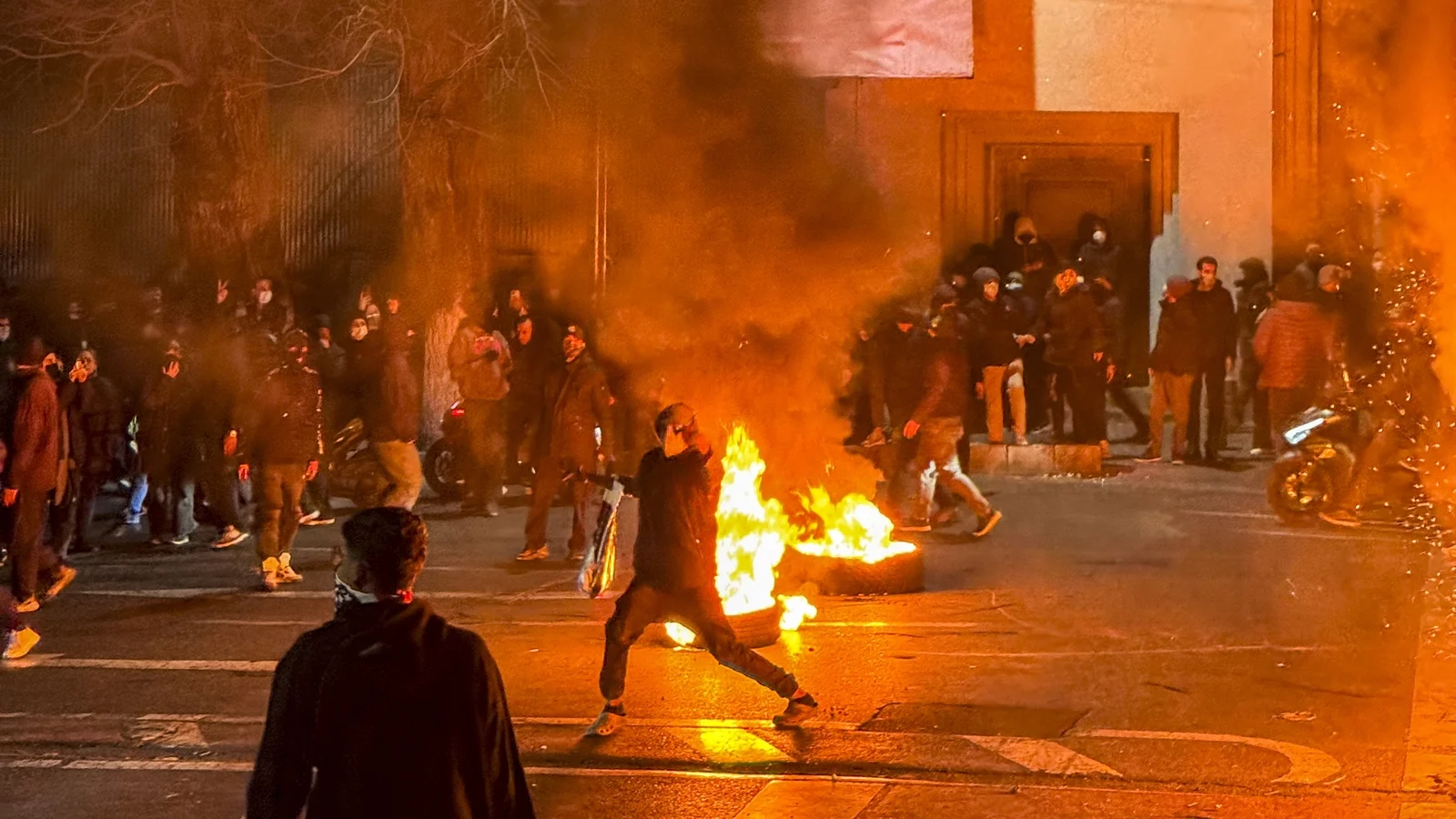
This is not a tidy, one-paragraph story with neat causes and clear consequences. It began in late December as a chorus of economic complaints—jobs lost, prices skyrocketing, daily life hollowed by hardship—and by early January it had transformed into something far larger: mass street demonstrations that filled avenues and parks, voices rising against a system older than many of the protesters themselves.
The shadow of the blackout
Then the lights went out—not the streetlamps, but the internet. For 18 days and counting, Iran has been shrouded by a near-total communications blackout that officials insist is a matter of “security,” and rights groups warn is the cover for one of the most severe crackdowns in recent memory.
Netblocks, the internet-monitoring group, says the shutdown has “obscured the extent of a deadly crackdown on civilians,” tightening what it calls the “filternet” and allowing state narratives to move through a narrowed channel. “A blackout doesn’t just stop memes and videos,” a researcher at Netblocks told me. “It stops evidence. It stops coordination. And it stops the outside world from seeing what happens next.”
Counting the uncountable
How many lives were lost? There is no easy answer. A US-based rights organization, the Human Rights Activists News Agency (HRANA), says it has confirmed 5,848 deaths tied to the protests, including 209 members of the security forces—yet it also lists 17,091 possible additional fatalities still under investigation. Arrests, HRANA reports, exceed 41,000.
Iranian authorities, offering their first official tally, put the death toll at 3,117 and said most were security personnel or civilians killed by violent “rioters.” The discrepancy speaks to the blackout’s effect: we are reading from different dictionaries of truth, each defined by access.
- HRANA confirmed deaths: 5,848 (plus 17,091 possible)
- Iran official toll: 3,117
- Arrests reported by HRANA: at least 41,283
- Internet shutdown: 18 days and ongoing, per Netblocks
“These numbers are not just statistics,” said Leila, a rights activist who asked to speak on background because her family is still inside Iran. “They are names. They are funerals. But when the networks are down, names become rumors and funerals do not get counted.”
Tensions beyond the border
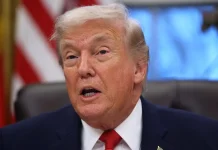
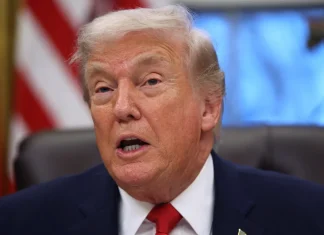
Meanwhile, the protests have rippled outward. The U.S. publicly keeps military options on the table—President Donald Trump has repeatedly said he would rather “not see anything happen,” while insisting a “massive fleet” is headed to the region “just in case.” U.S. media reported the deployment of the aircraft carrier USS Abraham Lincoln to the area, a move that brought an immediate, thunderous warning from Tehran.
“The arrival of such a battleship is not going to affect Iran’s determination and seriousness to defend the Iranian nation,” said Esmaeil Baghaei, an Iranian foreign ministry spokesman. The state has also plastered anti-American imagery across public spaces and mobilized allies: Hezbollah, the Lebanon-based group historically backed by Tehran, organized rallies supporting the Islamic Republic and warning against “American-Zionist sabotage.”
There is a poetry—and a danger—in the choreography of these actors. Inside Iran, the central conflict is about governance, dignity, and economic survival. Outside Iran, the same events are being read as pieces on a geopolitical chessboard.
Voices from the streets
Sitting in a teahouse near an alley where a protest once marched, Mahmoud, a shopkeeper whose storefront glass carries a spiderweb crack from a baton-throwing night, shrugged at the mention of outside military intervention. “We don’t need boats or bombs to change things,” he said, rubbing his fingers over a chipped cup. “We need to be able to speak to each other. We need to know people don’t disappear into the dark.” His voice was quiet but steady, as if rehearsing what should be obvious: agency, not invasion.
A young woman who gave her name as Zahra, a university student, laughed when asked whether she thought foreign troops could help. “They could lift the carrier into our living rooms, but they cannot lift the fear from our mothers’ hearts,” she said. “Change, if it comes, has to be for us and by us.”
The anatomy of a modern crackdown
What we are witnessing is now a template seen in other countries: protest movements grow from economic grievance into demands for political reform; states respond with force and information controls; outside powers posture, and diaspora media scramble to stitch the story together. But each replay reveals fresh cruelties—arrest numbers in the tens of thousands, funerals held quietly at dusk, journalists blocked or expelled, rights workers hunted.
“These are not spontaneous hiccups,” a veteran human-rights researcher told me. “They are deliberate strategies: silence the networks, flood the streets with masked forces, push a narrative that frames all dissent as foreign-instigated. It’s an old playbook with new tools.”
What the world should watch
We can watch the immediate signs: the billboard in Enghelab Square, the rallies in Beirut where Hezbollah voices speak, the tweets that momentarily slip through the filtration. But there are larger currents at work: the erosion of civic space, the normalization of internet shutdowns, and the geopolitical feedback loop that makes local grievances global flashpoints.
Ask yourself: when a state chooses to sever its people’s digital lifeline, who holds it to account? How do we verify a death toll when witnesses cannot share their testimony? And perhaps more fundamentally—what responsibility do distant governments have when their military presence risks becoming a catalyst rather than a cure?
After the sirens
Winter has a way of revealing what summer conceals: the bones of buildings, the sturdiness of friendships, the fragility of systems. Whether these protests will end in reshaping the political landscape, in repression that for a time smothers dissent, or in something in between remains uncertain. The only thing we can say for sure is that when the blackout ends and the first videos reappear, the world will see scars and stories that were once hidden.
“We are not helpless,” Zahra told me as she left the teahouse, shoulders squared against the cold. “We are tired, yes. Angry, yes. But not helpless. That is what they fear the most.” Her confession lingers: a reminder that beyond the charts and carrier movements and diplomatic sparring, this story is, at its core, about people who want to be seen and heard.
Will the world listen? Or will we wait for the next blackout to learn the same lesson anew?