Smoke, Shuttered Shops and a Country on the Edge: Inside Iran’s Latest Wave of Protests
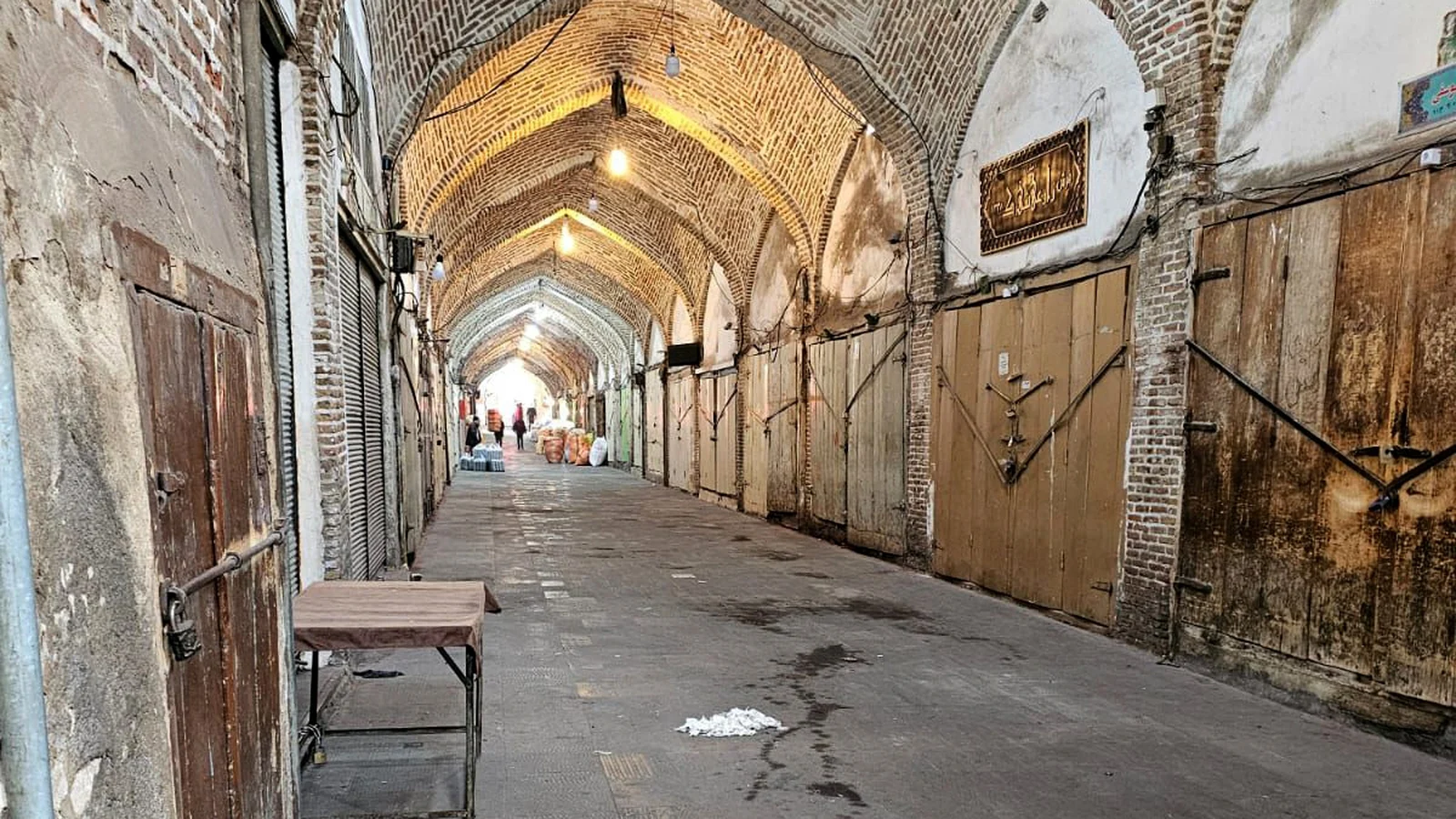
On a cold morning in Tehran, the familiar hum of the bazaar was broken by an uneasy silence. Stalls that usually overflow with saffron, dried limes and bolts of Persian carpet stood shuttered. Shopkeepers peered through metal slats as young people gathered at the square, their breath visible in the air and their voices rising like a single, brittle chord.
What began as a one-day shutdown of the Tehran bazaar on December 28 — a sign of frustration after the rial tumbled to new lows — has spilled across Iran. In little more than a week, neighborhoods and university campuses, remote towns and provincial capitals have become stages for confrontation. According to Norway-based Iran Human Rights (IHR), at least 45 protesters have been killed so far, including eight minors, hundreds wounded, and more than 2,000 people detained. Internet-monitoring group NetBlocks reported a nationwide blackout today, as authorities tightened the information flow.
Where the anger started — and where it has gone
The immediate spark was economic: a sudden slide in the currency, rising prices and a government move to change subsidies that hit already stretched households. But what is playing out in city squares is not only about money. “This is about dignity as much as it is about bread,” said Zahra, a 34-year-old mother in Abadan who joined demonstrations with her teenage son. “We can’t afford to pay for medicine or school supplies. When our children chant in the streets, it’s because they see no future.”
From the oil-rich south to the mountainous west, protests have proliferated. Rights groups and local monitors say demonstrations were recorded in 348 locations across all 31 provinces, and regional groups reported heavy activity and strikes in Kurdish-populated areas of western Iran. HRANA (Human Rights Activists News Agency) and Hengaw posted video showing shuttered shops and streets emptied by strike calls in Ilam, Kermanshah and Lorestan.
Symbols toppled, slogans returned
Alongside the economic grievances, the protests have taken on political symbolism. In the Fars province, crowds celebrated as they pulled down a statue of General Qassem Soleimani — once hailed as a national hero by the state after his 2020 death. Videos verified by news agencies showed jubilant groups around the toppled monument, a moment that both startled and galvanized observers inside and beyond Iran’s borders.
Chants that once felt taboo now echo more boldly: “This is the final battle,” protesters shouted in some cities, some invoking the exiled royal claimant, Reza Pahlavi, while others aimed their anger at the highest levels of clerical authority. University halls have become a front line — Amir Kabir University postponed final exams after students joined marches.
How the state is responding
Tehran’s response has been a mixture of calls for calm, crackdowns and information control. President Masoud Pezeshkian urged “utmost restraint,” asking security forces to avoid violence and to open channels for dialogue. Yet footage from multiple cities shows security personnel firing on crowds; rights organizations have accused forces of unlawful use of force, of raiding hospitals to detain the wounded, and of employing live ammunition against civilians. Amnesty International said the protests have been met with “unlawful force,” and IHR warns that the scope and brutality of the crackdown appear to be increasing.
Authorities have framed the unrest as the work of “rioters,” and the judiciary chief warned there would be “no leniency” for those involved. Iranian state outlets reported at least 21 deaths, including security forces; independent tallies differ, underscoring how information is contested and contested hard. NetBlocks’ report of an internet blackout today only deepens that contest, making it harder for journalists, families and aid organizations to track what is happening in real time.
Voices from the streets
“We have been patient for too long,” said Reza, a 22-year-old student in Kermanshah, his voice hoarse from shouting. “When your currency is worthless and your relatives abroad send help that never arrives, you either accept silence or you make noise.”
An older shopkeeper in Tehran, who asked not to be named, reflected on the bazaar’s historic role. “The bazaar is where people trade — but also where they meet, argue and plot. Shutting our doors was our language today. The government knows the symbol.”
In a quieter, frightened tone, a nurse in Abadan told a reporter, “We are treating young people shot in the streets. Then the police come to the hospital and take them away. How are we supposed to keep helping when we are punished for it?”
What experts say
Economists and political analysts see a confluence of pressures. “Years of sanctions, a battered economy, and a system that has little leeway in fiscal policy after an expensive regional posture — these are the structural stresses,” said Dr. Leyla Hosseini, an economist familiar with Iranian markets. “Subsidy reforms were probably necessary from a policy standpoint, but when implemented in fragile contexts, they become political detonators.”
Security analysts point to the cycle of information blackouts and repression as risk factors for escalation. “Cutting the internet doesn’t stop protests; it disorients families and amplifies distrust,” said James Carter, a researcher on digital repression. “It can also push movements underground where they become harder to influence and more volatile.”
Local color: the smells, sounds and small rebellions
Walk the streets and you’ll feel the contradictions. A carpet seller in Tehran will hand you a teacup and a pamphlet printed with slogans. A grandmother in Kermanshah will cross herself and whisper prayers for those who fell. In the south, the sound of boat horns once used to signal market opening now cuts through demonstrators’ chants. At night, neighborhoods hum with whispered plans for the next day’s actions.
These are not anonymous crowds. They are mothers, bakers, students, retired teachers. They are people who remember when petrol was cheap, when remittances reached families more reliably, when exams and semesters were uninterrupted. They are people who have learned to measure a country’s stability not only by GDP, but by whether their children can imagine staying or must plan to leave.
Why the world is watching — and what’s at stake
This wave of unrest arrives at a complex moment for the region and the world. Iran is still navigating the economic impact of years of sanctions, a fractured relationship with Western powers, and a tense regional environment after recent conflicts. Domestic policies — from subsidy recalibrations to security responses — are resonating globally because of Iran’s economic size, its strategic location, and the diaspora communities that amplify events abroad.
So what happens next? Will calls for restraint be heeded and a path to dialogue opened? Or will months of unrest become the new normal, with deeper polarization and more bloodshed?
- At least 45 protesters killed, including eight minors (IHR).
- Over 2,000 arrests reported, hundreds injured (IHR).
- Protests documented in 348 locations across all 31 provinces (HRANA).
- Nationwide internet blackout reported by NetBlocks.
Questions to carry with you
When a market closes and a statue falls, what does a nation lose — and what does it reveal? How do economic measures intended to stabilize a country instead inflame political fault lines? And as the world scans satellite feeds and policy statements, how should we listen to the ordinary voices calling out at street corners?
For now, the streets remain alive with anger and hope. For the families who have lost sons and daughters, the numbers in a report are a shorthand for grief. For a shopkeeper who locked his doors, a closed shutter is a protest sign. For an exhausted nurse, every life saved is a small defiance against the forces seeking to silence hospitals and silence voices.
These are the human currents beneath the headlines. They are messy, painful, and resolutely present. They deserve not just breathless coverage, but careful attention, real dialogue, and the stubborn insistence that dignity — economic and political — matters. Do you hear them?